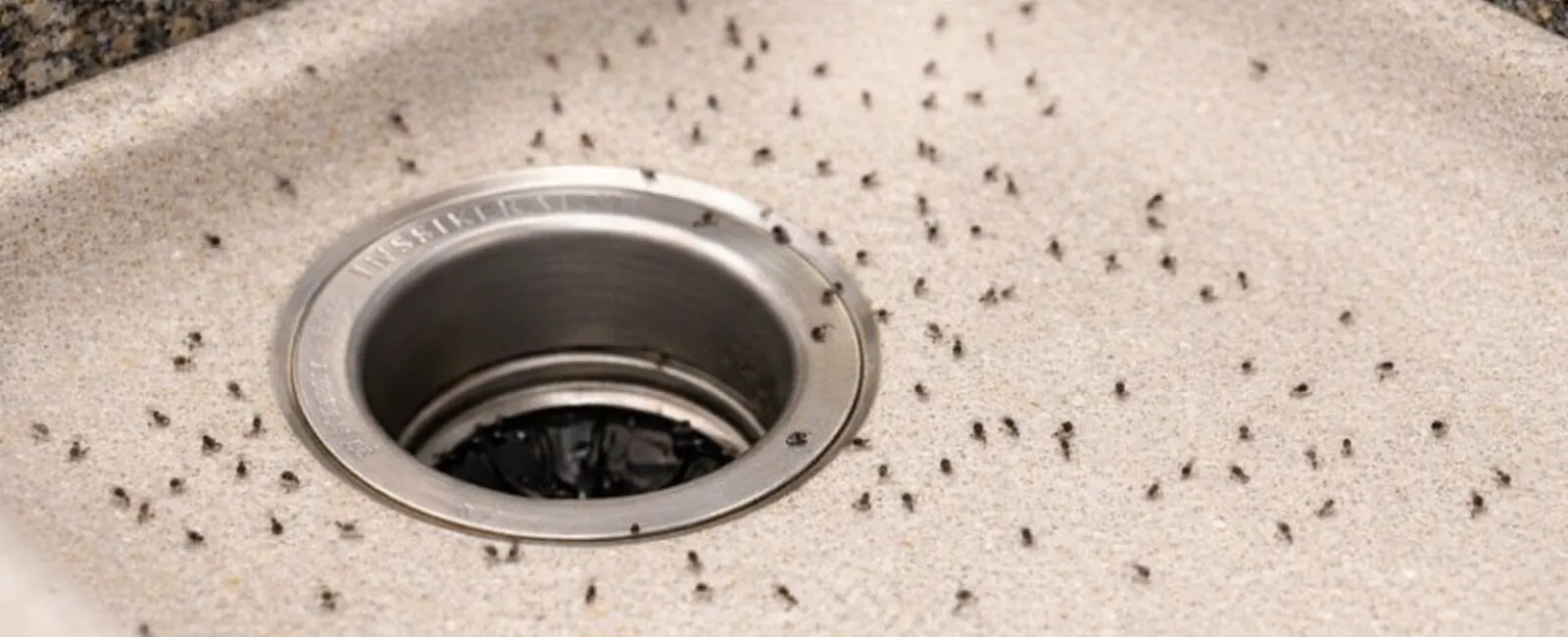
You've tried the apple cider vinegar trap. You've poured boiling water down the sink. You've even bleached every surface in your kitchen. And yet, those tiny fruit flies keep appearing around your drain like they own the place.
If you're dealing with fruit flies in your drain that won't go away no matter what you try, you're not alone. This is one of the most common complaints we hear from homeowners, especially during Georgia's humid summer months when these pests thrive.
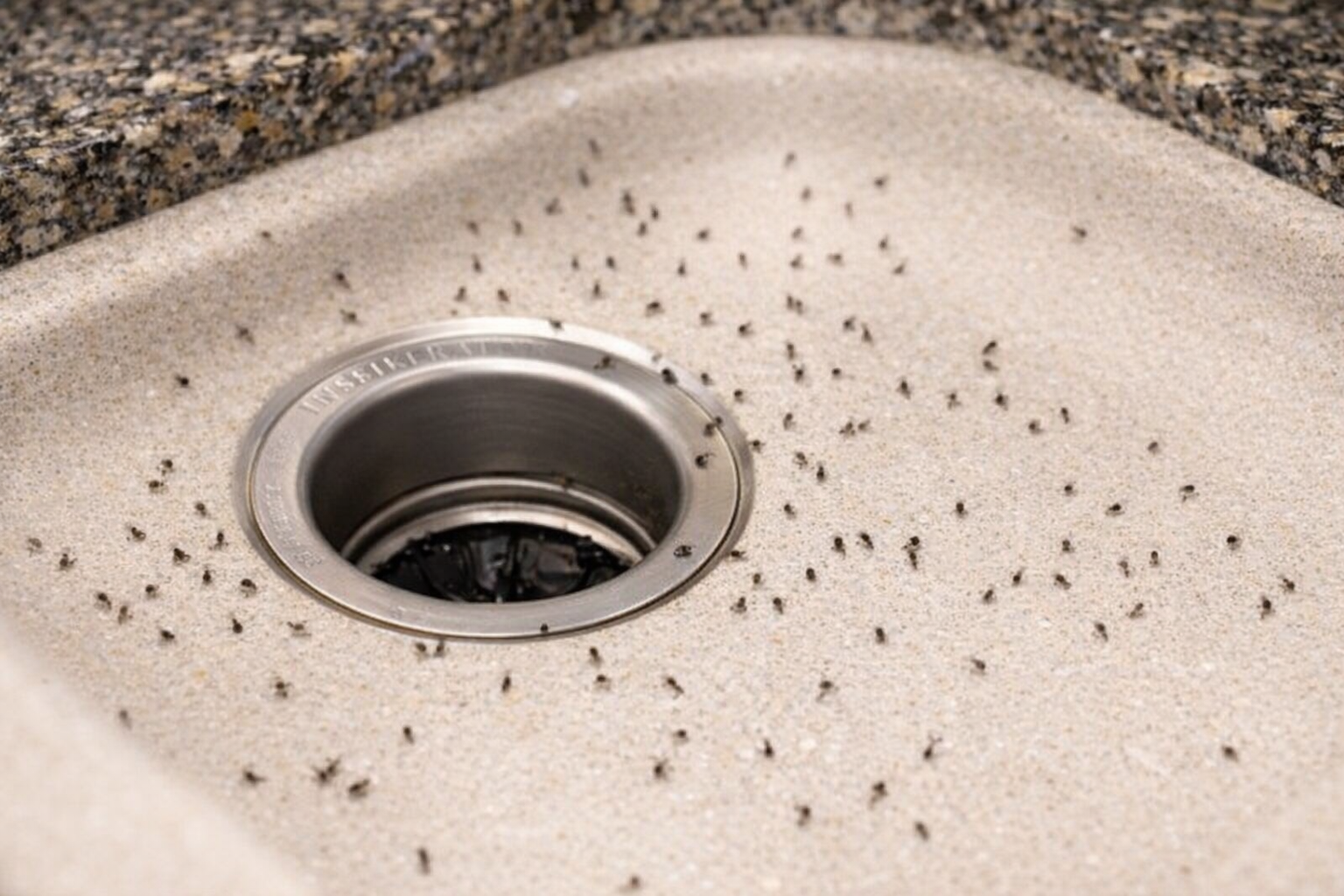
Here's what most guides won't tell you: the flies you're seeing might not even be fruit flies, and the source of your infestation might not be where you think it is. Let's break down exactly what's happening in your pipes and what actually works to eliminate these pests for good.
Fruit Flies vs. Drain Flies: Which Do You Actually Have?
Before you can effectively get rid of flies around your sink, you need to identify what you're dealing with. Many homeowners use "fruit flies" and "drain flies" interchangeably, but they're different insects that require different approaches.
- Fruit flies (Drosophila melanogaster) are tiny, tan-colored flies with distinctive red eyes. They measure about 1/8 inch and are attracted to fermenting organic matter, particularly ripe or rotting fruit, vegetables, and sugary liquids. While they can breed in drains, they're primarily drawn to exposed food sources.
- Drain flies (Psychodidae), also called moth flies or sewer gnats, are fuzzy, grayish flies with large, leaf-shaped wings. They hold their wings roof-like over their bodies when resting. Unlike fruit flies, drain flies breed exclusively in the organic film that builds up inside pipes.
Here's a quick identification test: If the flies are hovering around your fruit bowl, garbage can, or open wine bottles, you likely have fruit flies. If they're clustered around your sink drain, shower drain, or floor drains, especially in the morning, you're probably dealing with drain flies.
Why Fruit Flies Keep Coming From Your Drain
Understanding why fruit flies come from drains requires knowing what's actually happening inside your pipes. Your kitchen sink drain isn't just a hole; it's an ecosystem.
Over time, organic matter accumulates on the interior walls of your drainpipes. Food particles, grease, soap residue, and other debris create a slimy biofilm that coats the pipe surfaces. This buildup provides the perfect breeding ground for both fruit flies and drain flies.
Female flies can lay up to 500 eggs at a time in this organic material. The eggs hatch within 24-30 hours, and the larvae feed on the biofilm for about a week before emerging as adult flies. A single infestation can cycle through multiple generations in just a few weeks, which is why the problem seems to get worse over time.
Atlanta's warm, humid climate makes this problem particularly persistent. Our temperatures rarely drop low enough to naturally kill off fly populations, and the humidity keeps drain environments moist and hospitable year-round.
What to Pour Down Your Drain for Fruit Flies
If you're searching for what to pour down the drain for fruit flies, you'll find dozens of DIY remedies online. Here's an honest assessment of what works, what doesn't, and why.
Boiling Water
Pouring boiling water down your drain can kill adult flies and eggs on contact, but it has significant limitations. The water cools quickly as it travels through pipes, and it doesn't remove the biofilm where flies breed. You might see temporary relief, but the flies will return within days as eggs in untouched areas hatch.
Vinegar and Baking Soda
The classic vinegar-and-baking-soda combination creates a fizzing reaction that can help loosen minor buildup. Pour half a cup of baking soda down the drain, then follow with one cup of white vinegar. Wait 15 minutes, then flush with hot water. While this method is safe for pipes and may help with light buildup, it's not strong enough to eliminate established biofilm or heavy infestations.
Enzyme Drain Cleaners
Enzyme-based drain cleaners for fruit flies are among the most effective DIY options. These products contain beneficial bacteria that digest organic matter, essentially eating away the biofilm where flies breed. Unlike chemical cleaners, enzyme treatments continue working over time and are safe for all pipe types. For best results, apply as directed on the package for several consecutive nights.
Bleach
Many homeowners wonder, does bleach kill fruit flies? Technically, yes, bleach will kill flies and larvae on contact. However, bleach is not recommended as a drain treatment. It can damage older pipes, harm septic systems, and create toxic fumes when mixed with other cleaning products. More importantly, bleach doesn't remove biofilm; it just kills what it touches on the surface while the breeding ground remains intact deeper in the pipe.
Chemical Drain Cleaners
Harsh chemical drain cleaners like Drano can clear clogs, but aren't designed for fly control. They may kill some flies, but can also corrode pipes, especially if used repeatedly. Professional plumbers generally advise against using chemical drain cleaners regularly.
Signs You Need Professional Drain Cleaning
While minor fly problems might respond to DIY treatments, certain situations require professional drain cleaning services:
- Persistent infestations that don't improve after 2-3 weeks of consistent DIY treatment indicate that the breeding source is beyond the reach of surface treatments.
- Flies in multiple locations throughout your home, especially near floor drains, shower drains, or basement drains, suggest a more extensive plumbing problem.
- Slow drains, combined with fly problems, indicate a significant buildup that's both attracting pests and impeding water flow.
- Recurring problems that clear up temporarily but return every few weeks point to an underlying issue that hasn't been fully addressed.
- Sewage odors accompanying the fly infestation can indicate problems with your P-trap, vent pipe, or deeper sewer line issues that require professional diagnosis.
How Professional Drain Cleaning Eliminates Flies
Professional drain cleaning addresses fly infestations at the source by physically removing the biofilm where flies breed. Here's what a professional service typically involves:
- Video inspection allows plumbers to see inside your pipes and identify exactly where buildup has accumulated and how extensive the problem is.
- Mechanical cleaning using specialized tools like drain snakes or augers physically scrapes biofilm from pipe walls, removing the breeding habitat entirely.
- Hydro jetting uses high-pressure water to scour the interior surfaces of pipes, blasting away even stubborn buildup that's accumulated over the years. This method reaches areas that surface treatments can't access.
Once the breeding environment is eliminated, there's nothing for flies to feed on or lay eggs in. Combined with proper maintenance, professional cleaning provides lasting relief from fly infestations.
When to Call a Plumber for Fruit Flies
Dealing with flies in your drains can be frustrating, especially when DIY methods don't work. If you've been battling fruit flies in your sink for more than a few weeks without improvement, or if the infestation seems to be spreading to other drains in your home, it's time to bring in a professional.
Our licensed plumbers can diagnose exactly what's causing your fly problem, whether it's biofilm buildup, a dry P-trap, a cracked drain line, or even a deeper issue with your sewer system. Professional drain cleaning services eliminate the source of the infestation so you can finally enjoy a fly-free kitchen.
With over 25 years serving the community, we've helped thousands of homeowners resolve stubborn drain problems. We offer same-day service and upfront pricing, so you'll know exactly what to expect before any work begins.
Frequently Asked Questions
Can fruit flies come up through drains?
Yes, both fruit flies and drain flies can emerge from the sink and floor drains. They breed in the organic buildup inside pipes and emerge as adults through the drain opening. If you're seeing flies consistently near your drains, especially in the morning, the drain is likely their breeding source.
What kills fruit flies in drains instantly?
Boiling water and bleach can kill fruit flies on contact, but neither provides lasting control because they don't remove the biofilm where flies breed. For lasting elimination, you need to remove the organic buildup inside the pipes through enzyme treatments or professional drain cleaning.
Why do I have fruit flies but no fruit?
Fruit flies don't only breed in fruit; they're attracted to any fermenting organic matter. Common sources include drain buildup, garbage disposals, recycling bins, empty bottles, mops and sponges, and even damp areas under appliances. Your drain may be the hidden breeding source.
How long does it take to get rid of fruit flies in drains?
With consistent treatment, you should see significant improvement within 1-2 weeks. However, because fruit fly eggs hatch every 24-30 hours and the life cycle takes about 8-10 days, you'll need to continue treatment for at least 2-3 weeks to break the breeding cycle completely.
Do drain flies mean I have a broken pipe?
Not necessarily. Drain flies typically indicate organic buildup in your pipes, which is normal over time. However, if you're also experiencing sewage odors, recurring clogs, or flies in unusual places, there may be a crack or break in your drain line that's allowing them to breed. A professional inspection can determine if there's structural damage.
Will a plumber help with drain flies?
Yes. Professional drain cleaning is one of the most effective solutions for persistent fly infestations. Plumbers can remove the biofilm buildup that surface treatments can't reach, eliminating the breeding environment entirely.