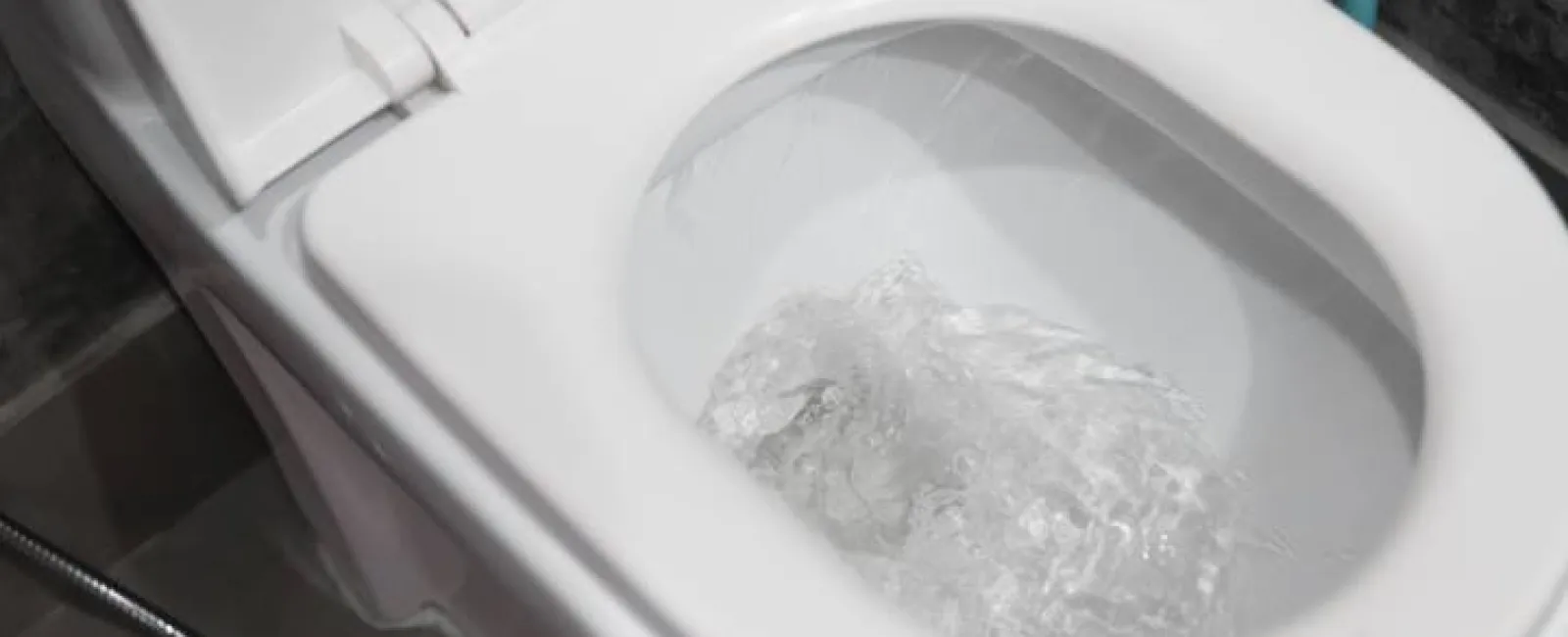
If your toilet runs or flushes for 5-30 seconds at random times with no one using it, you're dealing with ghost (phantom) flushing. It can happen every few minutes, a few times a day, or only at night, which makes it frustrating to track down. Each cycle wastes water and can significantly increase your utility bill.
Ghost flushing happens when water slowly leaks from the tank. As the water level drops, the fill valve turns on briefly to refill it, producing a flush or running-toilet sound.
The good news is that ghost flushing is usually caused by a few common issues and is often fixable in under an hour with basic tools. The following sections break down the most common causes, how to diagnose each, and when professional repair makes more sense than DIY.
What Is Ghost Flushing? (The Critical Distinction)
Ghost (phantom) flushing, what you have: The toilet runs or flushes for 5-30 seconds at random intervals, then stops on its own. No one touches the handle. The behavior is intermittent, not continuous. Constantly running toilet, different problem: Water runs nonstop after a flush until you jiggle the handle or intervene. This is usually a stuck handle or flapper issue, not ghost flushing.
Why ghost flushing happens: Water slowly leaks from the tank into the bowl. As the tank level drops, the fill valve turns on briefly to refill it, then shuts off once the tank reaches the proper level. This repeats whenever enough water leaks out, creating the start-stop "flushing by itself" pattern.
Key diagnostic clue: If the toilet turns on and off by itself without anyone touching it, you're dealing with a slow leak from the tank to the bowl, always.
The 5 Causes of Ghost Flushing (Ranked by Frequency)
Based on diagnosing thousands of ghost-flushing toilets, here are the five causes, ranked from most to least common. Starting with #1 gives you the highest probability of finding your problem quickly.
Cause #1: Worn or Damaged Flapper Valve (70% of Cases)
The flapper is the rubber seal at the bottom of the toilet tank that lifts during a flush and seals the flush valve afterward. A failing flapper is the most common cause of ghost flushing.
Why flappers fail: Flappers sit in chlorinated, mineral-heavy water 24/7. Over time, the rubber degrades, warps, or builds up mineral deposits. Even a tiny leak lets water slowly drain from the tank into the bowl, triggering the fill valve intermittently.
How to diagnose a flapper problem:
Food coloring test (most reliable): Remove the tank lid and add 8-10 drops of food coloring to the tank. Wait 15-20 minutes without flushing. If any colored water appears in the bowl, even faintly, the flapper is leaking and must be replaced.
Visual inspection: Check the flapper for:
Cracks or splits
Warping or poor seating
White mineral buildup on the sealing edge
Brittle rubber that flakes or breaks
Slime or mold on the seal
Any of these means the flapper is bad.
DIY fix: Shut off the water supply, flush to empty the tank, unhook the old flapper from the overflow tube pegs, install the new flapper, and reconnect the chain. Total time: 5-10 minutes.
Pro tip: Buy a chlorine-resistant or heavy-duty flapper. They cost a few dollars more but last much longer, especially when used with in-tank cleaners.
If your toilet is ghost flushing, start here. Most of the time, this alone fixes it.
Cause #2: Flapper Chain Problems (15% of Cases)
The chain connects the flush lever to the flapper. It needs a small amount of slack to let the flapper seal fully. Chain issues cause ghost flushing in two ways.
Too-short chain: If there's little or no slack, the chain holds the flapper slightly open, allowing a slow leak from tank to bowl. The tank drains gradually, triggering intermittent refills.
Too-long or tangled chain: Excess slack lets the chain slip under the flapper as it closes, preventing a full seal. This often causes intermittent ghost flushing depending on how the chain lands.
How to diagnose: Remove the tank lid and flush while watching the flapper. After it closes, check:
About ½ inch of slack (ideal)
No tension holding the flapper up
No excess chain pooling under the flapper
Chain hanging straight, not twisted
If the flapper can't sit flat because of the chain, that's the problem.
DIY fix and costs: Unhook the chain from the flush lever and move it to a different hole to add or remove slack. Aim for about ½ inch of slack when the flapper is closed.
If the chain is corroded or won't adjust correctly, replace it. Chains cost under $3 and install in seconds.
Pro tip: Whenever you replace a flapper, check the chain. A new flapper with a poorly adjusted chain will still ghost flush.
Cause #3: Deteriorated Flush Valve Seat (8% of Cases)
The flush valve is the assembly at the bottom of the tank that the flapper seals against. Its top edge, the valve seat, must be smooth for a watertight seal. Over time, the seat can corrode, build up mineral deposits, or become damaged, allowing leaks even with a new flapper.
How to diagnose flush valve seat problems: Check this after replacing the flapper and adjusting the chain if ghost flushing continues. Shut off the water, flush to empty the tank, and inspect the valve seat. Run your finger around the rim and look for:
Rough or pitted areas
Hard mineral buildup or scaling
Cracks or chips
An uneven surface that prevents flat flapper contact
Minor buildup: Light mineral deposits can sometimes be fixed. Gently smooth the seat with 400-600 grit sandpaper, then wipe clean.
Severe damage: If the seat is cracked, deeply pitted, or badly corroded, the flush valve must be replaced. Cleaning won't work.
DIY fix and costs: Replacing a flush valve requires draining the tank, disconnecting the supply line, unbolting the tank from the bowl, removing the old valve, installing a new one with fresh gaskets, and reassembling. Expect 45-90 minutes.
Note: Many plumbers recommend a full toilet rebuild kit ($35-$60) that replaces the flush valve, flapper, and fill valve at once to prevent repeat failures.
If you're not comfortable removing the tank or handling water connections, this is a job for a professional.
Cause #4: Fill Valve Issues (5% of Cases)
While less common than flapper issues, a failing fill valve can cause ghost flushing. The fill valve controls how water enters the tank and shuts off using a float. When it doesn't shut off properly, it can cause symptoms that mimic a slow leak.
How fill valves cause ghost flushing: If debris blocks the inlet or internal parts wear out, the fill valve may leak slightly rather than fully close. The tank overfills, excess water spills into the overflow tube, and drains into the bowl. The valve then cycles on and off, trying to maintain the water level, creating intermittent running sounds.
How to diagnose: Remove the tank lid and check the water level. It should stop about 1 inch below the top of the overflow tube. If water is touching or flowing into the overflow tube, the fill valve isn't shutting off properly.
Next, watch the fill valve when the toilet is idle:
If you see water trickling or hear faint hissing, it's leaking
-
Lift the float manually
If water stops → float needs adjustment
If water continues → fill valve is failing
DIY fix and costs:
Step 1: Adjust the float - Use the adjustment screw or clip to lower the shutoff point, so water stops 1 inch below the overflow tube. Flush and recheck.
Step 2: Replace the fill valve (if adjustment fails) - Shut off the water, flush the tank, disconnect the supply line, remove the lock nut, install the new valve, and reconnect everything.
If the water level is correct and you still have ghost flushing, the problem is almost certainly elsewhere, most often the flapper or flush valve seat.
Cause #5: Water Pressure Fluctuations (2% of Cases)
This is the rarest cause of ghost flushing, but it can happen in homes with excessively high or unstable water pressure. Pressure above 80 PSI can force water past properly functioning flappers or create micro-leaks at tank connections.
How to diagnose water pressure problems: High pressure affects the whole house, not just one toilet. Common signs include:
Water hammer (loud banging when faucets shut off)
Ghost flushing in multiple toilets
Faucets spraying or sputtering
Leaks at pipe joints or supply connections
Measure pressure using a $10 to $15 gauge at an outdoor hose bib.
Ideal: 40-60 PSI
Excessive: 80+ PSI
Professional solution: Install a pressure-reducing valve (PRV) on the main water line. This is not a DIY repair; it requires working on the home's primary supply piping.
Benefits: Protects fixtures, reduces leaks, extends appliance life, cuts water waste
If your pressure is high or fluctuating, a professional assessment is the correct next step. High pressure won't just cause ghost flushing; it will shorten the life of your entire plumbing system.
The Hidden Cost of Ignoring Ghost Flushing
Many homeowners ignore ghost flushing, but the cost adds up fast.
- Water waste: A ghost-flushing toilet can waste 200+ gallons per day. That's 73,000 gallons per year, roughly the volume of a small swimming pool.
- Cost impact: At typical Atlanta water rates (~$0.007 per gallon), that's $500-$600 in wasted water per year. About $40-$50 per month for a problem that usually costs under $20 to fix.
- Accelerated wear: Constant refilling wears out flappers and fill valves much faster, leading to more frequent failures and higher repair costs over time.
- Environmental impact: In water-stressed areas of Georgia, wasting 73,000 gallons per toilet each year puts unnecessary strain on local water resources.
Bottom line:
$5 flapper → saves $500+ per year
$20 DIY rebuild → pays for itself in weeks
Ghost flushing isn't a harmless quirk; it's one of the most expensive "small" plumbing problems you can ignore.
Expert Ghost Flushing Repair Throughout Metro Atlanta
At Dalmatian Plumbing, we diagnose and repair ghost-flushing toilets every day throughout Atlanta and its surrounding communities. While ghost flushing seems mysterious, our experienced plumbers can identify the cause in minutes using diagnostic techniques honed over decades of service calls.
Our plumbers also provide honest assessments about whether repair or replacement makes more sense. If your toilet is 15+ years old and has developed multiple problems, the cost of ongoing repairs often exceeds the price of installing a new, water-efficient toilet that will save you money for years. We'll walk you through the math and help you make an informed decision based on your situation and budget.
Tired of ghost flushing keeping you awake and wasting your money? Stop letting a $5 flapper cost you $50 per month in wasted water. Call Dalmatian Plumbing or schedule toilet repair service online. We'll diagnose your ghost flushing problem, fix it fast, and get your toilet running normally again.