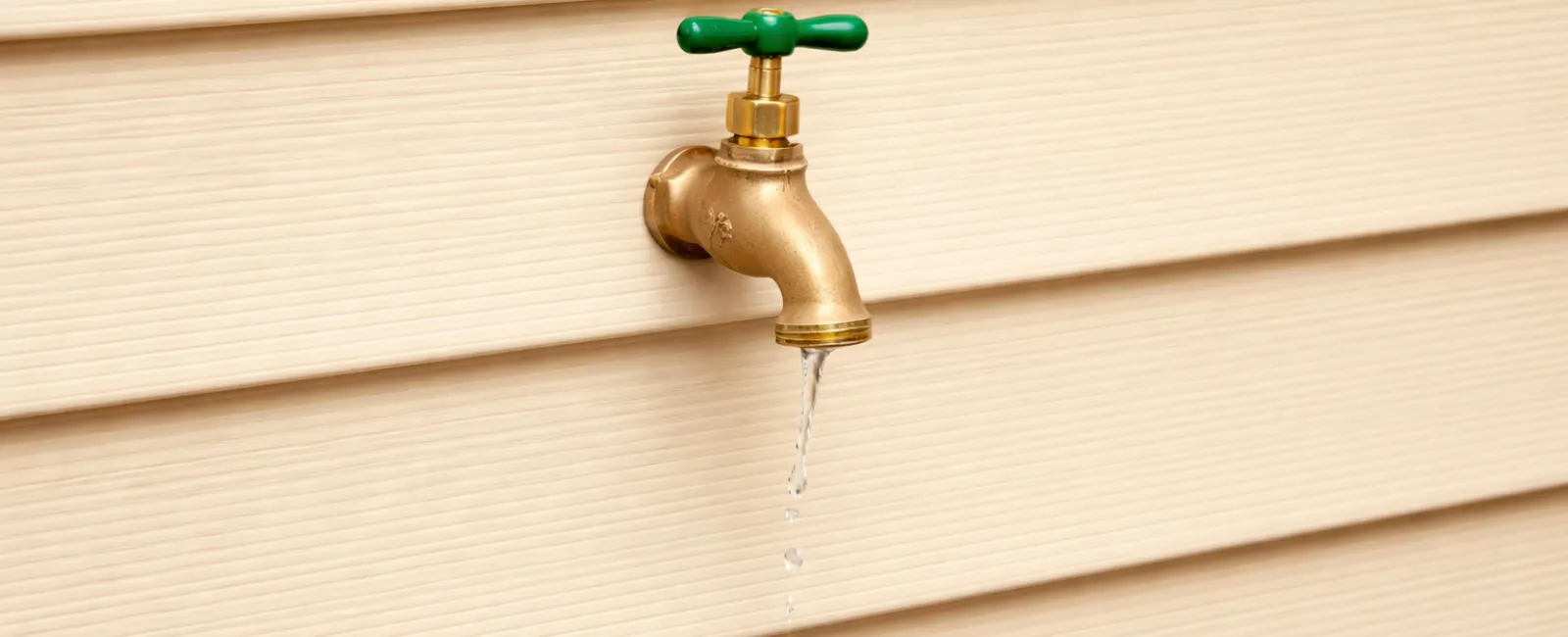
You turn on the hose to water the garden and notice water spraying from places it shouldn't, around the handle, from the spout, even when it's off, or worse, seeping from where the faucet meets your home's exterior wall. An outdoor faucet leaking might seem like a minor annoyance, but it's often a symptom of internal damage that can lead to serious consequences if left unaddressed.
Outdoor faucets, also called hose bibs, spigots, or sillcocks, endure more stress than any other fixture in your plumbing system. They're exposed to temperature extremes, physical impact, and constant use during warmer months. When they start leaking, understanding what's causing the problem helps you recognize whether you're dealing with a simple worn part or a more serious issue that requires immediate attention.
Common Causes of an Outdoor Faucet Leak
When your outside faucet is leaking, the water has to be escaping from somewhere specific. The location of the leak often indicates what's failing inside the fixture. Here's what typically causes outdoor spigot leaks and what each symptom means for your plumbing system.
Leaking From the Handle or Stem
If water drips or sprays from around the handle when you turn the faucet on, the problem usually involves the packing nut or the seals around the valve stem. The packing nut sits directly behind the handle and compresses a washer or packing material to create a watertight seal around the stem.
Over time, this packing material compresses, dries out, or deteriorates, especially on outdoor faucets that experience temperature swings between seasons. When the seal fails, water escapes around the stem whenever pressure is applied to the line. You might notice this as a steady drip or, in more severe cases, a spray of water around the handle area.
While a loose packing nut can sometimes be tightened, worn packing material or damaged stems require replacement parts and proper reassembly. Incorrect repairs can actually worsen the leak or damage the valve stem, turning a minor issue into a need for complete outdoor faucet repair.
Dripping From the Spout When Turned Off
A faucet that continues dripping from the spout after you've turned it off typically has a worn washer or damaged valve seat. Inside every outdoor faucet, a rubber or neoprene washer presses against the valve seat to stop water flow when you close the handle. When this washer wears thin, hardens, or becomes misshapen, it can't create a complete seal.
The washer's condition depends heavily on how the faucet has been used over the years. Turning the handle too forcefully, leaving the faucet partially open, or simply years of regular use all contribute to washer deterioration. The valve seat itself can also become corroded or pitted, preventing even a new washer from sealing properly.
What seems like a simple drip actually wastes significant water over time. A faucet dripping once per second wastes over 3,000 gallons per year. Beyond the water bill impact, the constant moisture around your foundation creates conditions for mold growth, wood rot, and soil erosion, which can affect your home's structural integrity.
Leaking From the Vacuum Breaker
Many modern outdoor faucets include a vacuum breaker, a small device on top of the faucet body that prevents contaminated water from being siphoned back into your home's water supply. Building codes in most areas require these devices on outdoor faucets, particularly those used with hose attachments.
Vacuum breakers contain small internal seals and springs that can fail over time. When they do, you'll notice water leaking from the top of the faucet body, often appearing as a small stream or spray when the water is turned on. Some homeowners mistake this for a handle leak, but the repair approach is entirely different.
Vacuum breaker replacement requires matching the correct part to your specific faucet model. Using an incompatible component can compromise the backflow prevention function, potentially creating a health hazard. Professional faucet fixture repair ensures the replacement meets code requirements and functions correctly.
Leaking From the Wall or Foundation
The most serious type of outdoor faucet leak occurs where the fixture connects to your home, either at the exterior wall or where the supply pipe enters the foundation. Water appearing at this junction often indicates a cracked pipe, failed sealant, or damage to the faucet body itself.
This type of leak frequently results from freeze damage. When water inside the faucet or supply pipe freezes, it expands with enough force to crack metal and split pipe joints. The damage may not become apparent until spring, when you first use the faucet and water pressure reveals the breach. By then, water may have already been seeping into your wall cavity or foundation for weeks.
Wall and foundation leaks require immediate professional attention. The visible drip outside often represents only a fraction of the water escaping; much of it may be flowing inside your walls, into crawl spaces, or along your foundation. A licensed plumber can assess the full extent of the damage and determine whether the faucet can be repaired or needs to be replaced, along with any damaged supply piping.
Frost-Free Faucets: Different Design, Different Problems
Many Atlanta-area homes have frost-free outdoor faucets (also called freeze-proof or anti-siphon faucets). These fixtures have a longer body that extends 6 to 12 inches into the wall, with the actual valve and washer assembly located inside, where temperatures stay above freezing. The design prevents the water-holding portion of the faucet from freezing during cold snaps.
However, frost-free faucets can still develop leaks, and diagnosing them is more complicated than with standard faucets. Because the washer assembly sits deep inside the wall, a leak from a worn washer may appear at the exterior but actually originates several inches inside your home. Water running along the faucet body can make it difficult to pinpoint the exact failure point.
Frost-free faucets also fail when homeowners leave hoses attached during winter. The trapped water prevents the faucet from draining properly, allowing ice to form inside the extended body. This can crack the faucet from the inside, creating leaks that only appear months later when the fixture is used.
Repairing frost-free faucets requires removing the entire stem assembly, a process that involves working blind inside the wall cavity. The stem length must match exactly, and the washer must seat properly against the valve seat you can't see or access directly. This is why professional faucet repair is particularly important for frost-free designs.
The Real Risks of Ignoring an Outdoor Faucet Leak
It's tempting to ignore a leaky outdoor faucet, especially if it only drips when the water is on or the leak seems minor. But outdoor faucet leaks carry risks that extend well beyond wasted water.
Foundation and Structural Damage
Water pooling near your foundation soaks into the soil and can migrate under your home. Over time, this moisture causes soil expansion and contraction that stresses foundation walls, potentially leading to cracks, settling, and structural damage. Homes with crawl spaces face additional risks; water can travel along exterior walls and drip into the crawl space, creating conditions for mold growth and wood rot.
Increased Water Bills
Even a slow drip adds up. A faucet leaking at one drip per second wastes approximately 5 gallons per day, over 1,800 gallons per year. Faster leaks waste far more. If your outdoor faucet supplies an irrigation system or connects to a timer, a leak can run continuously without anyone noticing until the water bill arrives.
Freeze Damage Escalation
A leaking outdoor faucet is more vulnerable to freeze damage than one in good repair. Water escaping from worn seals can freeze in and around the faucet body, expanding and causing additional cracks. A minor leak in the fall can become a burst pipe by winter.
Landscape and Property Damage
Constant water flow erodes soil, damages landscaping, and can undermine walkways, patios, and driveways. The moisture also attracts pests and creates muddy areas that become breeding grounds for mosquitoes.
Why Professional Repair Makes Sense
Outdoor faucet repair might seem straightforward, but several factors make professional service the smarter choice for most homeowners.
First, proper diagnosis matters. A leak from the handle area might stem from a loose packing nut, worn packing material, a damaged stem, or corrosion inside the faucet body. Each cause requires a different repair approach. Without experience, it's easy to replace the wrong part, reassemble components incorrectly, or overlook damage that will cause the leak to return.
Second, outdoor faucets connect to your home's pressurized water supply. Improper repairs can result in leaks inside walls, damaged supply lines, or faucets that fail completely when you need them most. The water damage from a failed repair often exceeds the cost of professional service many times over.
Third, older homes may have faucets with obsolete parts or non-standard connections. A professional plumber can identify compatible replacement components or recommend upgrade options that will provide years of reliable service. Modern frost-free faucets with built-in backflow prevention offer better freeze protection and code compliance than older designs.
Finally, a trained technician can assess whether your leak indicates broader plumbing issues. A faucet that developed problems after a cold snap may have companion damage to interior pipes. Unusually high water pressure can cause premature wear on outdoor faucets and other fixtures throughout your home. Professional faucet and fixture repair includes evaluation of these contributing factors.
When to Call a Plumber for Your Leaky Outdoor Faucet
Some outdoor faucet situations clearly require professional attention:
- Water is leaking from the wall or foundation. This indicates potential pipe damage inside your home's structure that needs immediate assessment.
- The faucet was exposed to freezing temperatures. Freeze damage often isn't visible externally. A plumber can determine whether internal cracking has occurred.
- You notice water damage, mold, or moisture near the faucet in your home. The leak may be larger than what's visible outside.
- The leak persists or worsens. A leak that won't stop or grows over time suggests progressive failure that will only become more expensive to address.
- You have a frost-free faucet. The internal design makes these fixtures difficult to repair correctly without proper tools and experience.
- Your outdoor faucet is old or corroded. Older faucets may not be worth repairing—replacement with a modern fixture often provides better long-term value.
Get Your Outdoor Faucet Fixed Right
A leaking outdoor faucet is more than an inconvenience; it's an ongoing source of water waste, property damage, and a risk of expensive emergency repairs if left unaddressed. The longer a leak continues, the greater the chance of complications that turn a simple fix into a major project.
Dalmatian Plumbing has provided faucet and fixture repair services to Atlanta-area homeowners for over 25 years. Our licensed technicians accurately diagnose outdoor faucet leaks, recommend the most cost-effective solution, and complete repairs that last. Whether your spigot needs a new washer, a replacement vacuum breaker, or a complete fixture upgrade, we'll explain your options and get your outdoor plumbing working properly again.
Don't let a leaky outdoor faucet become a larger problem. Contact Dalmatian Plumbing today to schedule an inspection and have your outdoor faucet repaired before the next season puts additional stress on your plumbing system.