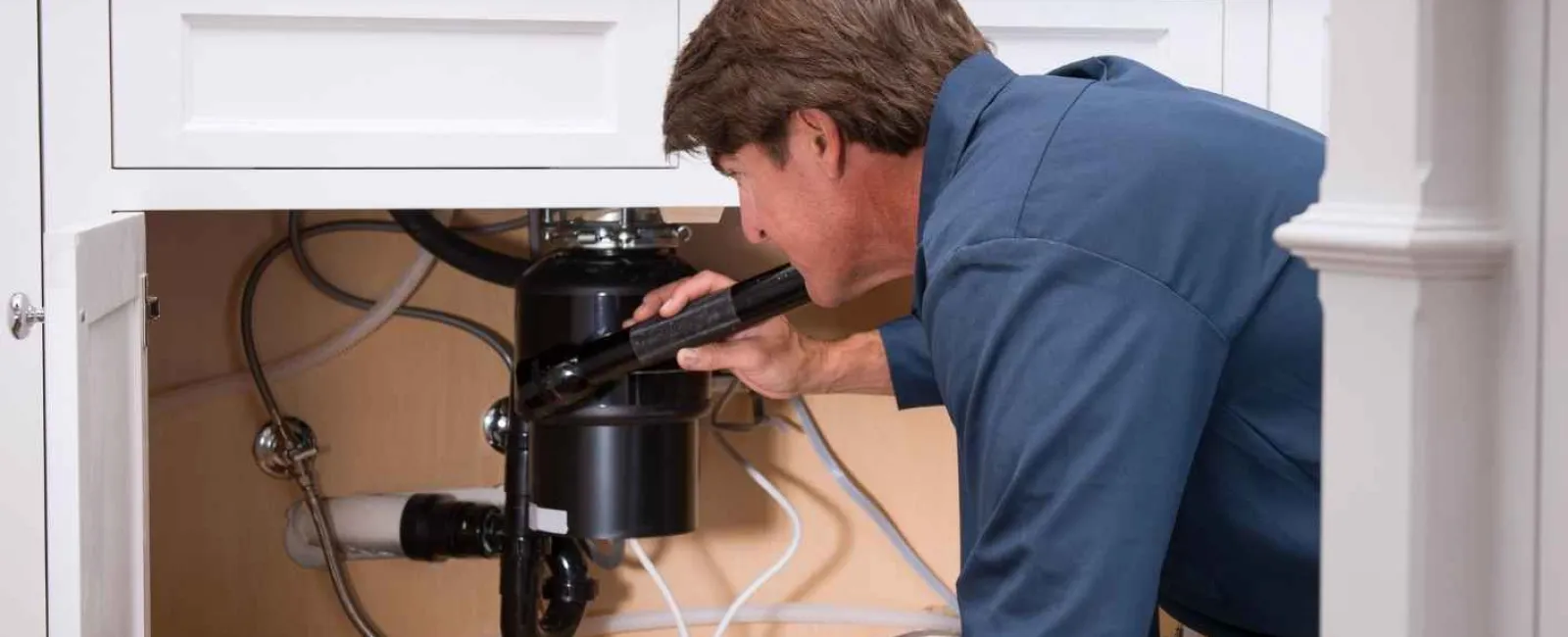
Your first instinct is
usually to start looking up dishwasher repair because the dishwasher is the
thing that obviously failed.
In a lot of cases, the
dishwasher is doing its job perfectly fine. The water simply has nowhere to go.
And that often means the real reason your dishwasher is not draining sits on
the plumbing side of the connection, not inside the appliance itself.
Here is how to tell the
difference, plus the plumbing problems that most commonly leave you with a
dishwasher that won't drain.
First Question to Ask: Appliance or Plumbing?
Before assuming the dishwasher
needs an appliance tech, take a quick look at the kitchen sink while the
dishwasher is running.
If the sink drains slowly,
gurgles, or has standing water of its own, the cause is almost certainly
plumbing-related. The dishwasher drain line ties into the same system that
handles your sink, your garbage disposal, and the branch line running into your
main drain. Anything blocking that path stops the dishwasher from draining.
If the sink drains perfectly
fine and only the dishwasher has standing water, the issue might be inside the
appliance. Even then, it is worth ruling out the plumbing-side causes below,
because they are the ones we see most often in Atlanta-area homes.
Plumbing Cause #1: A Clogged Kitchen Drain Line
The most common reason a
dishwasher will not drain is a partial clog deeper in the kitchen drain line.
Food scraps, grease, soap scum, and starches like rice or pasta collect along
the pipe walls over time. The buildup narrows the pipe until water cannot move
through fast enough.
When that happens, the
dishwasher pump tries to push wastewater out, but the drain line backs it right
up into the tub. You'll often notice the sink draining slower than usual in the
days or weeks leading up to it.
This is the same buildup that turns a slow sink into a backed-up dishwasher. By the time the appliance is affected, the clog is usually well past the point where store-bought fixes help, and it's one of the clearer signs you need professional drain cleaning rather than another bottle of drain opener. Most of this buildup traces back to everyday kitchen habits and items that shouldn't go down the drain in the first place.
Plumbing Cause #2: The Garbage Disposal Connection
In most Atlanta-area kitchens,
the dishwasher drain hose connects directly into the side of the garbage
disposal. That means anything wrong with the disposal also becomes a dishwasher
problem.
Two issues come up most often:
•
The disposal is clogged or jammed, so the drain hose
has nowhere to empty.
• The knockout plug inside the disposal was never removed when it was installed, blocking the dishwasher connection completely.
The second one is more common than you'd think, especially in homes with a newer disposal installed after the original one. If your dishwasher has never drained properly since a recent disposal change, the knockout plug is the first thing a plumber will check. Other disposal-side problems, like a disposal that hums but won't actually spin, can also leave water with nowhere to go.
Plumbing Cause #3: A Clogged Air Gap or Failed High Loop
If your kitchen has a small
cylindrical fixture on the counter near the faucet, that is your air gap. It
exists to keep dirty sink water from siphoning backward into the dishwasher.
The catch is that the air gap
has a narrow internal channel, and food particles passing through it can get
stuck. When it clogs, water either backs up into the dishwasher or starts
leaking out the top of the air gap onto the counter.
Some kitchens skip the air gap
entirely. In Atlanta, code allows the dishwasher drain hose to be looped high
under the counter instead, called a high loop, which serves the same purpose.
If the high loop has come loose or was installed incorrectly, you get the same
result as a clogged air gap: a dishwasher that will not drain.
Plumbing Cause #4: A Backed-Up Branch or Main Drain Line
Sometimes the dishwasher is the
first appliance in the house to show symptoms of a much bigger issue deeper in
your drain system. If your kitchen branch line or your main sewer line is
partially blocked, wastewater backs up into the lowest or weakest connection
point, which is often the dishwasher.
This is most likely when more than one fixture is acting up. If the kitchen sink and the dishwasher are both slow, and you notice the laundry drain gurgling or a toilet bubbling, you may be looking at a main line issue rather than something local to the kitchen.
These situations need a professional drain inspection. When more than one fixture is slow at the same time, it's often one of the first signs your main sewer line is clogged and worth getting eyes on right away.
Signs Your Dishwasher Problem Is Really a Plumbing Problem
A few patterns point clearly
toward plumbing rather than the appliance itself:
•
The kitchen sink drains slowly or holds standing water
at the same time.
•
Water from the dishwasher cycle is coming up into the
sink.
•
The disposal sounds normal, but water still pools in
the dishwasher.
•
The air gap is leaking onto the counter.
•
More than one drain in the house is acting up at the
same time.
If any of those match what
you're seeing, the dishwasher itself is probably fine. Replacing or repairing
the appliance will not fix the underlying issue, and the next dishwasher will
have the same problem on day one.
Why This Is Worth Calling a Plumber For
Drain issues that affect the
dishwasher rarely stay isolated to the dishwasher. The same clog or buildup
that is stopping it from draining is usually working its way through the rest
of the kitchen plumbing, and sometimes the main line.
A licensed plumber can identify
exactly which section of the line is blocked, clear it with the right
equipment, and confirm the rest of the system is flowing the way it should.
Need Someone to Take a Look?
Dalmatian Plumbing has been clearing kitchen drains and diagnosing dishwasher backup issues across the Atlanta area for over 25 years. Our technicians average more than 75 years of combined experience, every truck is stocked with the parts needed for same-day service, and we're rated 4.9 stars across 600+ Google reviews. Call us or visit our drain cleaning page to schedule a visit.