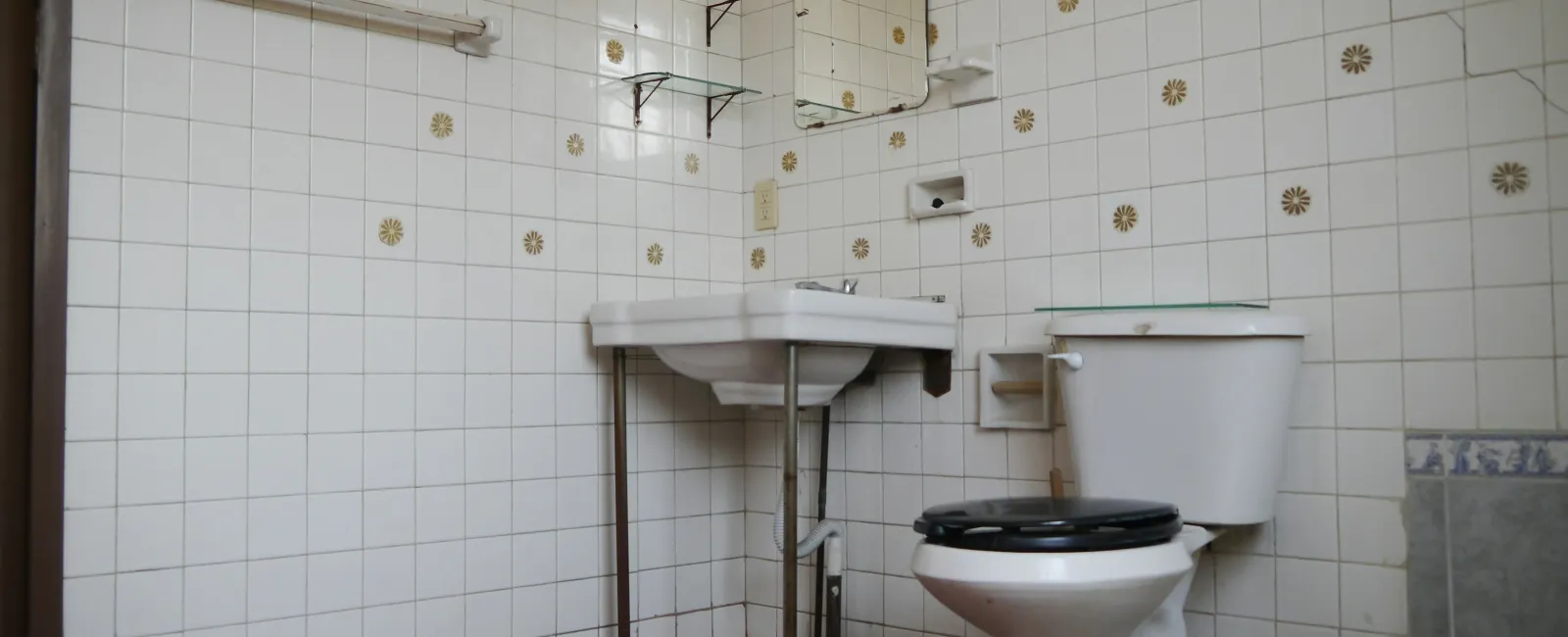
A toilet tank covered in moisture is easy to mistake for a leak. The tank feels wet to the touch, water drips onto the floor, and the area around the toilet base stays damp. In most cases, what looks like a leak is actually condensation, and the cause is more about humidity and water temperature than a failed seal or crack.
That said, toilet tank condensation is not always harmless. When it is heavy, persistent, or has been present for an extended period, it can cause real damage to the flooring, subfloor material, and the surrounding bathroom structure.
Why Toilet Tanks Sweat
The mechanism behind toilet tank condensation is the same as the moisture that forms on a cold glass of water on a warm day. The tank holds cold water from the supply line. When the air in the bathroom is warm and humid, that air comes into contact with the cold surface of the tank. The air cools at the point of contact, loses its ability to hold moisture, and that moisture condenses on the outside of the tank.
The toilet tank is particularly prone to this because it is continuously refilled with cold supply water after every flush, keeping the tank surface consistently cooler than the surrounding air. In a humid bathroom, that temperature difference is enough to produce a steady film of moisture on the tank exterior.
Why It Is More Common in Humid Summers
A humid climate makes toilet tank condensation a seasonal problem for many homeowners. Summer humidity levels in the metro area are consistently high, often reaching 70 to 90 percent during the warmest months. When bathroom ventilation is limited, and the home's interior is air-conditioned, the combination of humid air and cold tank water creates near-ideal conditions for condensation.
Homes without exhaust fans in bathrooms, or with undersized or inconsistently used exhaust fans, retain the most moisture in the air. First-floor bathrooms in homes with slab foundations also tend to see more condensation because supply water temperatures are lower, increasing the differential between the tank surface and the ambient air.
Is Toilet Tank Condensation a Plumbing Problem?
In most cases, the condensation itself is not a plumbing failure. The tank, the supply line, and the internal components are functioning normally. The issue is environmental: too much humidity in contact with a cold surface.
However, there are situations where a plumbing issue contributes to or worsens the problem. A toilet that runs continuously keeps the tank in a constant refill cycle, which means the tank surface stays colder than normal and condensation forms more heavily. Similarly, a fill valve that is not shutting off fully allows a trickle of cold water to keep the tank temperature lower than it should be.
If the toilet is also running or cycling on its own, that is a separate issue worth addressing.
What Toilet Tank Condensation Can Damage
Light seasonal condensation that produces a damp exterior on the tank is generally low risk. The concern grows when condensation is heavy enough to drip consistently onto the floor, or when it has been present long enough to repeatedly wet the same surfaces.
Bathroom Flooring
Water that drips from the tank or pools around the toilet base is absorbed into the flooring material over time. Vinyl flooring can lift or bubble at the seams. Tile grout absorbs moisture and can develop mold. Hardwood or laminate flooring warps and discolors. In each case, the damage is cumulative and tends to go unnoticed until it is well established.
Subfloor Material
Beneath the visible flooring is a subfloor layer, typically plywood or OSB board, that is particularly vulnerable to repeated moisture exposure. Subfloor material that stays wet begins to soften, delaminate, and eventually rot. By the time the surface flooring shows visible damage, the subfloor beneath it may already be compromised. Subfloor replacement in a bathroom is a significant and disruptive repair.
Mold Growth
The base of a toilet, the caulk line around it, and the floor area immediately surrounding it are common locations for mold to develop when condensation has been dripping consistently. Mold can establish itself in as little as 24 to 48 hours in a damp environment and quickly spread into grout lines, caulk, and subfloor material. Bathrooms that smell musty, with no obvious source, may have mold growing at the toilet base due to chronic condensation.
For more on mold in bathrooms and what causes it, see our post on how to remove mold from the shower and bathroom.
Toilet Base and Floor Seal
Repeated moisture at the base of the toilet can deteriorate the caulk seal. Once that seal is compromised, water has a direct path to the subfloor beneath the toilet. It can also be difficult to distinguish condensation damage at the toilet base from a wax ring failure, since both produce moisture in the same location. A plumber can identify which is the actual source.
If you are seeing water specifically at the toilet base, see our post on water pooling around the toilet base for how to distinguish between condensation, a wax ring failure, and a supply line leak.
Factors That Make Condensation Worse
Several conditions contribute to heavy or persistent toilet tank condensation:
- No exhaust fan in the bathroom, or an exhaust fan that is not used during and after showers
- High indoor humidity levels not controlled by air conditioning or a dehumidifier
- A continuously running toilet that keeps supplying water cycling through the tank
- A fill valve that is not shutting off fully, keeping the tank cooler than normal
- First-floor bathrooms with ground-level supply lines that carry particularly cold water
- Older homes with single-pane windows that allow warm outdoor air to enter more readily
Severity Reference
|
Situation |
Risk
Level |
Action |
|
Occasional light moisture on tank exterior in summer |
Low |
Monitor; improve bathroom ventilation |
|
Regular dripping onto floor during humid months |
Moderate |
Address ventilation; consider plumber evaluation |
|
Visible water pooling on floor around toilet base |
High |
Call a plumber; floor and subfloor may be at risk |
|
Staining, warping, or soft flooring around toilet |
High |
Call a plumber immediately; damage already present |
|
Mold visible on or around toilet base or floor |
High |
Call a plumber; mold remediation may be needed |
|
Condensation present year-round, not just summer |
Moderate to High |
Plumber evaluation to assess underlying cause |
When to Call a Plumber
Contact a licensed plumber for toilet tank condensation if:
- Water is dripping consistently onto the floor rather than just leaving a damp film on the tank
- The flooring around the toilet base shows discoloration, softness, or lifting
- You notice a musty smell in the bathroom that has developed over time
- Mold is visible at the toilet base, in the grout, or along the caulk line
- The toilet is also running or cycling on and off on its own
- Condensation is present year-round rather than only during humid summer months
- You cannot identify the source of water at the toilet base with certainty
A plumber can assess whether a running toilet or fill valve issue is worsening the condensation, evaluate the condition of the wax ring and base seal, and inspect for any floor or subfloor damage that has already occurred. In cases where condensation has been heavy for an extended period, that assessment is worth having before damage progresses further.
Call Dalmatian Plumbing for Toilet and Bathroom Plumbing Issues in Atlanta
Dalmatian Plumbing serves homeowners across the Atlanta metro area with licensed, background-checked plumbers and same-day service availability. If you are dealing with persistent toilet condensation, water at the toilet base, or any signs of floor damage in the bathroom, do not wait for the problem to worsen.
Call us or contact us online to schedule a
visit. Our work is backed by a 100% satisfaction guarantee and over 75 years of
combined plumbing experience serving Atlanta-area homeowners.