Sink Leaking? Here Is What Might Be Causing It
You open the cabinet under the kitchen sink to grab something and find the floor of it wet, or spot a puddle that has been sitting there long enough to warp the wood. It is a common discovery, and the first question is always the same: where is this coming from?
A leak under the kitchen sink can come from several different sources, and the cause matters. Some leaks are slow and gradual, others are steady and ongoing, and some only appear when the water is running or the dishwasher is cycling. Each pattern points to a different part of the plumbing under that cabinet.
This guide walks through the most common causes of a kitchen sink leak underneath, what each typically means, and why a licensed plumber is the right call to resolve it correctly.
Why Kitchen Sink Leaks Are Easy to Miss
The cabinet under a kitchen sink is one of the more overlooked spaces in the home. Cleaning supplies, trash bags, and other items often fill the space, and most homeowners do not open it frequently enough to notice a slow leak developing.
By the time water is visible on the cabinet floor, the leak has often been present for some time. That means wood shelving, the cabinet base, and sometimes the subfloor beneath it have already been exposed to moisture. Mold can begin developing in as little as 24 to 48 hours in a damp enclosed space, making early discovery and fast action important.
If you notice a musty smell coming from under the sink before you see water, that is often the first sign that a slow leak has been present longer than it appears.
The Most Common Sources of a Kitchen Sink Leak
The plumbing under a kitchen sink includes several components that can each develop their own failure points. Here is what to look for and what each typically means.
P-Trap and Drain Pipe Joints
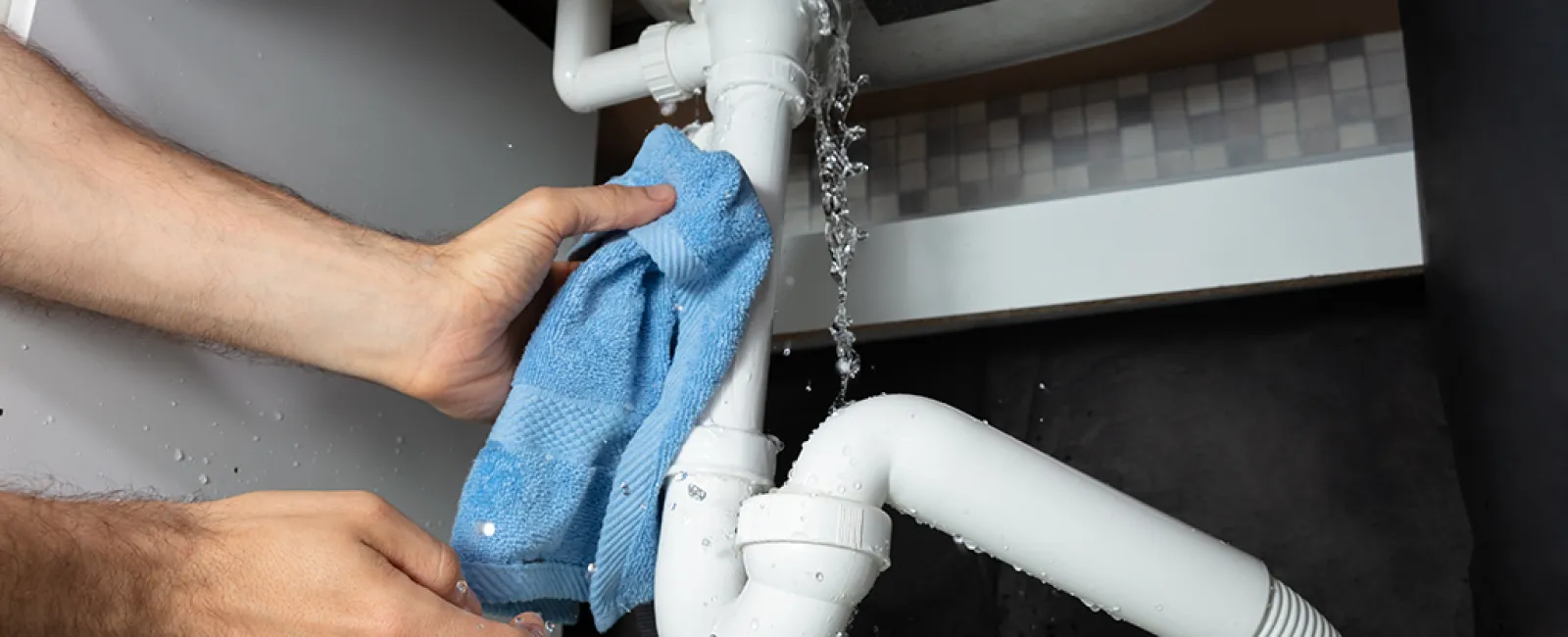
The P-trap is the curved section of pipe directly beneath the drain opening. It connects to the drain lines that run into the wall or floor. The joints where these pipes connect are sealed with slip-joint washers and held together by slip nuts. Over time, those washers compress, harden, or deteriorate, and the joint begins to weep water.
A P-trap leak almost always shows up during or immediately
after water use. You may notice dripping from the pipe connections when you run
the sink, or find water pooled under the pipes after doing dishes. If the
cabinet floor is wet but dries between uses, the P-trap connection is a likely
suspect.
Older homes in Atlanta with original plumbing sometimes have metal P-trap assemblies that have corroded at the joints, accelerating failure. Plastic assemblies are less prone to corrosion but can crack or loosen over time, particularly if the pipes were ever disturbed during work under the sink.
Drain Basket or Sink Strainer Gasket
The drain basket is the metal fitting that sits in the drain hole at the bottom of the sink bowl. It is sealed to the sink with plumber's putty or a rubber gasket underneath. When that seal deteriorates, water leaks down the outside of the drain body and drips from the bottom of the sink into the cabinet below.
This type of leak is easy to confuse with a P-trap leak because the water ends up in the same place. The difference is that a drain basket leak originates at the drain opening itself, not at a pipe joint. You may see water tracking down the outside of the drain body rather than dripping from a connection point.
Supply Lines
Two supply lines run into the underside of every kitchen faucet, one for hot water and one for cold. These lines connect to the shutoff valves on the cabinet's wall or floor. Supply lines are under constant water pressure, unlike drain components, which only carry water when the sink is in use.
A supply line leak shows up as a steady drip or wet cabinet floor, even when the sink has not been used recently. The connection points at the shutoff valve or at the faucet base are the most common failure locations. Supply lines can also develop cracks or pinhole leaks along their length, particularly in braided stainless lines that are several years old.
Because supply lines are always pressurized, even a minor failure can introduce significant water into the cabinet over time.
Faucet Base
A faucet that leaks at its base on the countertop can allow water to run down through the mounting hole and collect inside the cabinet below. This is easy to overlook because the leak origin is above the counter, not under the sink.
If water appears inside the cabinet but you cannot find a dripping pipe, run the faucet and check the countertop around the base of the faucet closely. Water pooling or running from under the faucet body is a sign that the O-rings or base seal have failed.
Garbage Disposal
If your kitchen sink has a garbage disposal, it adds several additional potential leak points. The disposal connects to the sink drain above and to the drain pipe below. It may also have a dishwasher drain hose attached. Each of those connections can develop leaks.
A disposal that leaks from its body rather than from a connection point typically indicates an internal seal has failed. Our post on garbage disposal leaking covers the specific failure points in more detail.
Dishwasher Drain Hose
Many kitchens route the dishwasher drain hose through the cabinet under the sink, either to a connection on the garbage disposal or directly to the drain line. If that hose develops a crack, works loose at a connection, or is not routed with a proper high loop, it can introduce water into the cabinet during the dishwasher drain cycle.
A dishwasher drain hose leak is one of the easier causes to identify because water appears only while the dishwasher is running or immediately after the drain cycle completes.
Quick Reference: Causes at a Glance
|
Source
of Leak |
When
It Leaks |
What
to Tell the Plumber |
|
P-trap or drain pipe joint |
During or after water use |
Water pools under sink after draining |
|
Drain basket / sink strainer gasket |
During water use |
Water drips from drain base, not pipes |
|
Supply line |
Constantly, even when not using sink |
Steady drip or wet cabinet floor at all times |
|
Faucet base |
During water use |
Water visible around base of faucet on countertop |
|
Garbage disposal |
During or after running disposal |
Leak comes from disposal unit itself |
|
Dishwasher drain hose |
During dishwasher cycle |
Leak only occurs when dishwasher runs |
Why the Location of the Water Matters
When you find water under your kitchen sink, paying attention to where it is sitting and when it appears gives a plumber useful information before they even open the cabinet.
- Water only when the sink is running: points to a drain side leak, most likely the P-trap, drain pipe joints, or drain basket gasket
- Water present even when the sink has not been used: points to a supply line or shutoff valve issue
- Water only during the dishwasher cycle: points to the dishwasher drain hose connection
- Water on the countertop around the faucet base, alongside the cabinet, points to a faucet seal failure
- Musty smell with no visible puddle: may indicate a slow leak that has been wicking into the cabinet material over time
The more detail you can provide about when and where the water appears, the faster a plumber can identify the source.
What Happens If a Kitchen Sink Leak Goes Unaddressed
A slow drip under a kitchen sink may not seem urgent, but the enclosed cabinet environment accelerates moisture damage significantly. Water that sits or repeatedly dampens the cabinet floor warps wood, compromises the structural integrity of the cabinet base, and creates the warm, dark, damp conditions that mold needs to establish itself.
In more serious cases, water that reaches the subfloor can cause damage that goes well beyond the cabinet itself. Subfloor repairs in a kitchen are a significantly larger project than addressing a leaking pipe joint early.
Supply line leaks carry additional risk because they are under constant pressure. What starts as a slow seep at a fitting can escalate into a more significant failure if the line is fatigued or the connection is already compromised.
Related Plumbing Issues
If the leak is coming from the garbage disposal, see our post on why your garbage disposal is leaking for a breakdown of specific failure points.
Slow drainage alongside the leak may indicate a blockage in the drain line. See why your kitchen sink is draining slowly for common causes.
If you notice a musty or sewage smell from under the sink, the drain may be the source. Our post on why your drain smells bad covers what causes drain odors and what they signal.
For a broader look at common household plumbing issues, see 10 most common plumbing problems homeowners in Atlanta face.
When to Call a Plumber
A leak under the kitchen sink warrants a call to a licensed plumber in any of these situations:
- You cannot identify the source of the leak
- The leak is ongoing or does not stop between sink uses
- There is visible mold or a persistent musty smell inside the cabinet
- The cabinet floor or walls show signs of water damage or warping
- The leak is coming from a supply line or shutoff valve
- You have already tried tightening connections, and the leak continues
Even minor leaks can be deceptive. A professional can identify all failure points, not just the visible ones, and address them correctly the first time.
Call Dalmatian Plumbing for Kitchen Sink Leaks
Dalmatian Plumbing serves homeowners across the Atlanta metro area with licensed, background-checked plumbers and same-day service availability. If you have found water under your kitchen sink, do not wait for the damage to spread.
Call us or contact us online to schedule a
visit. Our trucks arrive stocked with the parts needed to handle most repairs
on the spot, backed by a 100% satisfaction guarantee and over 75 years of
combined plumbing experience.