When your water heater fails, and eventually, they all do, you'll face an important decision: replace it with another traditional tank water heater, or upgrade to a tankless model? This isn't just about picking equipment. It's about choosing a system that fits your household's hot water demands, your budget, and your long-term plans.
The tankless water heater vs tank debate has intensified as more homeowners discover the benefits of on-demand water heating, but tankless isn't automatically better for everyone. Your family size, usage patterns, home infrastructure, and financial situation all play crucial roles in determining which type delivers the best value.
After installing and servicing both tank and tankless water heaters for over 15 years, we've seen which systems work best in different situations. This should help you understand both options thoroughly, then provide a practical framework for choosing the right water heater for your specific needs.
How Each Type of Water Heater Works
Understanding how tank and tankless water heaters operate is essential to making an informed choice. The operational differences directly impact energy consumption, hot water availability, space requirements, and long-term costs.
Tank Water Heaters: Storage and Standby Heating
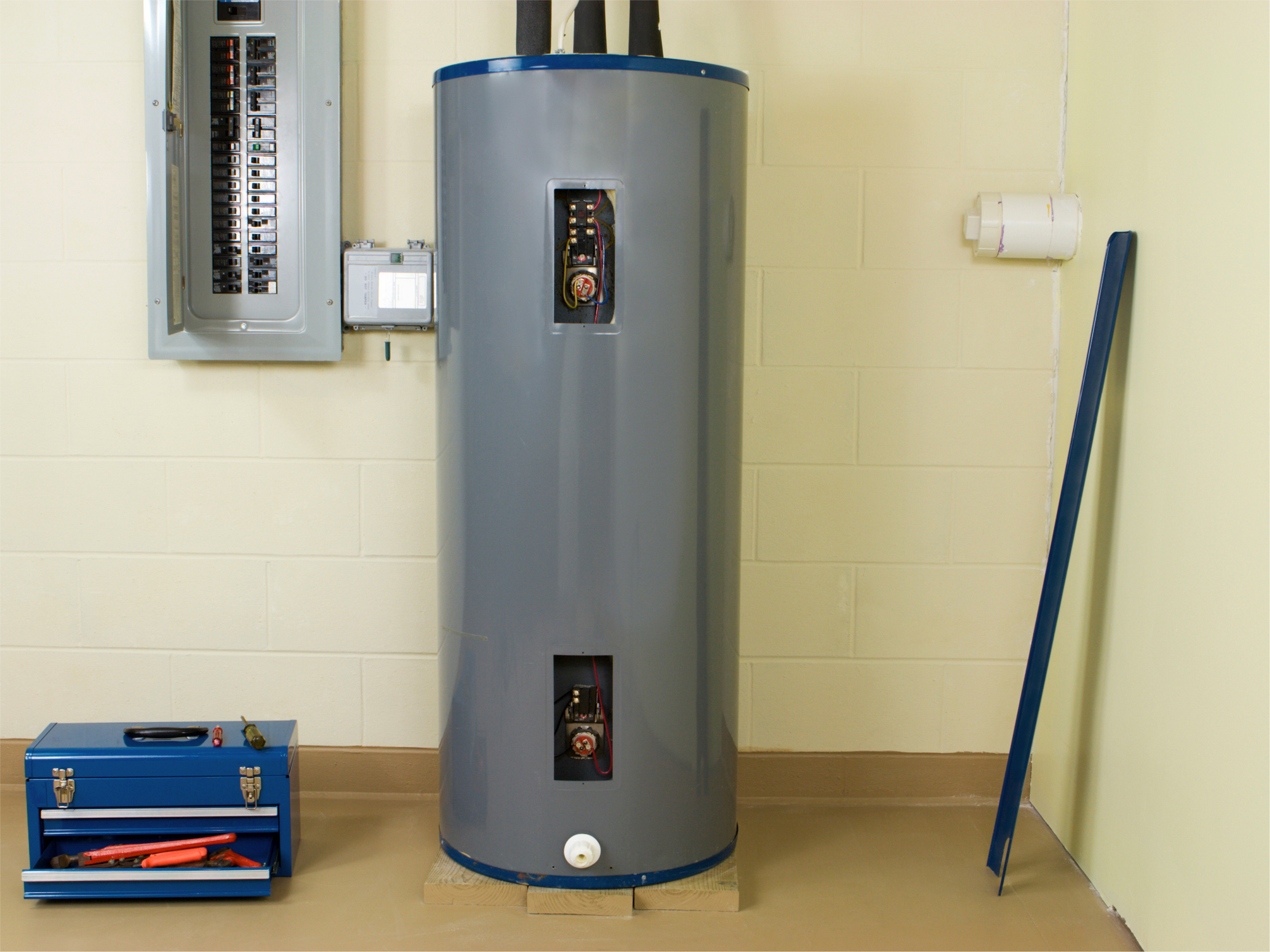
A tank water heater, also called a storage water heater or conventional water heater, stores 30 to 80 gallons of hot water in an insulated cylindrical tank. The water heater continuously maintains this stored water at your set temperature (typically 120-140°F), keeping it ready for immediate use whenever you turn on a hot tap.
Here's how the cycle works: Cold water enters the bottom of the tank through a dip tube, then a heating element (electric models) or gas burner (gas models) heats the water from below or within the tank. As water warms, it rises to the top, so when you open a hot water faucet, hot water flows out from the top of the tank, and cold water refills the bottom.
The critical issue: this process happens continuously, 24 hours a day, whether you're using hot water or not. The water heater cycles on repeatedly to maintain temperature, even when you're asleep or no one's home. This continuous heating cycle, called "standby heat loss," and is why tank water heaters consume more energy than tankless models.
Tankless Water Heaters: On-Demand Heating
A tankless water heater, also called an on-demand or instantaneous water heater, heats water only when you need it. There's no storage tank continuously maintaining hot water.
When you turn on a hot water tap, cold water flows through the tankless unit. A flow sensor detects water movement and signals the heating system to activate. When you turn off the tap, the tankless water heater shuts off completely. It sits dormant until the next hot water demand. This eliminates standby heat loss; you only consume energy when hot water is actually being used.
In gas tankless models, a burner ignites and heats water as it passes through a heat exchanger. In electric tankless models, powerful heating elements do the same job. The water exits the unit at your desired temperature and flows directly to your faucet or appliance.
The Real Cost Breakdown: Initial Price vs. Long-Term Value
Cost is usually the first question homeowners ask about tankless water heaters. The answer isn't simple, because upfront costs and long-term operating expenses tell very different stories.
Upfront Equipment and Installation Costs
Tank water heater costs: A conventional tank water heater costs $300-$2,000 for the equipment, depending on capacity, efficiency rating, and brand. A standard 40-50 gallon gas tank water heater typically runs $500-$900, while electric models cost $400-$800. Total initial investment: $1,000-$2,500.
Tankless water heater costs: The equipment alone costs $1,000-$3,000+, depending on flow rate capacity, fuel type, and efficiency features. A quality whole-house gas tankless unit typically costs $1,500-$2,500, while an electric whole-house model costs $800-$1,800.
Installation is where tankless costs really climb, especially for retrofits. If you're converting from a tank to a tankless system, expect high installation costs. Why is it so expensive? Tankless installations often require:
- Gas line upgrades (tankless units need more gas flow than tank models)
- New venting systems (different exhaust requirements than tank models)
- Electrical panel upgrades (whole-house electric tankless units draw 100-150 amps)
- Relocated piping and new mounting locations
- Water treatment systems in hard water areas
Total initial investment for tankless water heater installation costs significantly more upfront, but this is only part of the financial picture.
Monthly Operating Costs and Energy Savings
Water heaters are the third-largest energy consumer in most homes, accounting for roughly 18% of total energy use. How much you spend monthly depends on which type you install.
Tank water heaters consume energy around the clock because they continuously maintain a hot water temperature. Even with sound insulation, heat escapes through the tank walls (standby heat loss), requiring frequent reheating cycles.
Annual operating costs for tank water heaters:
- Gas tank models: $200-$350 per year
- Electric tank models: $400-$650 per year
Tankless water heaters eliminate standby heat loss. They only consume energy when heating water, making them substantially more efficient. According to the Department of Energy, homeowners save approximately $100 per year in energy costs by using a tankless water heater instead of a tank model. For households using 41 gallons or less of hot water daily, tankless water heaters are 24-34% more energy-efficient than tank models.
Annual operating costs for tankless water heaters:
- Gas tankless models: $120-$280 per year
- Electric tankless models: $300-$500 per year
The savings add up quickly. Over 10 years, a tankless water heater could save $800-$1,500 in energy costs compared to a tank model. Over 20 years, that's $1,600-$3,000 in savings, which helps offset the higher initial cost.
Lifespan and Replacement Costs
The duration of each type dramatically affects total lifetime costs.
Tank water heaters typically last 10-15 years, though this varies based on water quality, maintenance, and usage patterns. Gas models often fail sooner (8-10 years) due to corrosive combustion byproducts and sediment accumulation. The tank itself is the vulnerability; once it develops leaks or severe corrosion, the entire unit needs to be replaced.
Tankless water heaters last 20-30 years with proper maintenance. Without a large, corrosion-prone, leak-prone storage tank, tankless systems avoid the most common failure point of tank models. The heat exchanger (the core component) is highly durable, and most other parts can be replaced individually without having to replace the entire unit.
Over 20 years, you'd replace a tank water heater at least once, possibly twice, which would add to your total costs. A tankless water heater installed at the same time would likely still be running, avoiding that replacement expense entirely.
Hot Water Performance: Availability and Flow Rate
Cost matters, but so does performance. Can the water heater actually meet your household's hot water demands? Tank and tankless models perform very differently.
How Tank Water Heaters Handle Demand
A tank water heater stores a specific volume of hot water, typically 30, 40, 50, or 80 gallons. This entire reserve is available instantly when you need it. Want to fill a large bathtub? The 50 gallons in your tank are ready to go, all at once.
Are multiple hot water demands running simultaneously? No problem, as long as you don't deplete the tank. Two people can shower, you can run the dishwasher, and the washing machine can cycle all at the same time, drawing from that stored reserve.
The limitation is obvious: once the tank empties, you're out of hot water until it reheats. Recovery time for a 50-gallon tank typically runs 30-60 minutes. If you're the last person to shower in a busy household, you know this problem intimately: the dreaded cold shower.
How Tankless Water Heaters Handle Demand
A tankless water heater never runs out of hot water because it heats continuously as long as you're using it. Want an hour-long shower? A tankless water heater will keep delivering hot water continuously. Need to fill a large soaking tub? The water won't cool halfway through.
However, tankless models have a different limitation: flow rate. A tankless water heater is rated by the number of gallons per minute (GPM) it can deliver at a specific temperature rise. A typical whole-house unit provides 5-8 GPM.
Here's what that means in practice:
- One shower running: No problem (uses 2-2.5 GPM)
- Two showers running: Still fine (uses 4-5 GPM total)
- Two showers PLUS dishwasher: Might exceed capacity (6-7 GPM total), resulting in lukewarm water rather than hot
The solution: install a larger tankless unit with higher GPM capacity, or install multiple smaller units strategically placed throughout your home. Either option increases initial costs.
Maintenance Requirements and Ongoing Care
Both systems require regular maintenance to perform efficiently and reach their expected lifespans, but the maintenance requirements differ significantly between the types.
Tank Water Heater Maintenance
Tank water heaters need annual maintenance that includes:
- Flushing sediment from the tank (minerals from water settle at the bottom, reducing efficiency and causing premature failure)
- Inspecting and replacing the anode rod (sacrificial component that prevents tank corrosion)
- Testing the temperature/pressure relief valve (a safety device that prevents dangerous pressure buildup)
- Checking for leaks and corrosion (early detection prevents major damage)
Professional water heater maintenance can add 3-5 years to your tank's lifespan, making the cost easily justified. Many homeowners skip this maintenance, which is why most tank water heaters fail prematurely. According to Consumer Reports, about 90% of new water heater installations occur during emergencies, when the old unit fails catastrophically, often resulting in flooding.
Tankless Water Heater Maintenance
Tankless water heaters require annual descaling (removal of mineral deposits from the heat exchanger), especially in hard-water areas. This involves flushing the system with a mild acidic solution.
Additional maintenance includes cleaning air and water filter screens, inspecting burner assembly or heating elements, and checking venting systems to ensure they're clear and properly sealed. Some homeowners learn to perform descaling themselves using a circulation pump and descaling solution, though professional service every 2-3 years is recommended.
Neglecting tankless maintenance, especially in hard water areas, significantly shortens equipment life and reduces efficiency. The heat exchanger can become so scaled that the unit fails.
Decision Framework: Which Type Is Right for Your Situation?
There's no universal "best" water heater. The right choice depends on your specific circumstances. Use this framework to determine which type fits your needs.
Choose a Tank Water Heater If...
1. You need to minimize upfront costs
If the budget is tight and you need a working water heater immediately, a tank model costs $1,500-$2,000 less initially. This matters if you're facing an emergency replacement and can't afford the higher investment.
2. Your household has a high simultaneous hot water demand
If multiple people frequently shower at the same time while the dishwasher and washing machine run, a properly sized tank water heater handles this better than most tankless units.
3. You're replacing an existing tank in the exact location
Tank-to-tank replacement is straightforward and affordable. Converting to tankless requires expensive infrastructure upgrades that might not make financial sense, especially if you're planning to sell soon.
4. You won't benefit from long-term savings
If you're selling your home within 3-5 years, you won't recoup the higher cost of a tankless system.
Choose a Tankless Water Heater If...
1. You're planning to stay in your home 10+ years
The energy savings and longer lifespan mean tankless water heaters pay for themselves over time. If you're staying put long-term, the math works in your favor.
2. You're doing a major renovation or building new
When you're already doing construction work, installing a tankless water heater is easier and cheaper. You can design infrastructure properly from the start and avoid high retrofit costs.
3. Space is at a premium
In small homes or apartments, tankless water heaters free up valuable square footage. These compact units mount to walls rather than taking up floor space.
4. You have unpredictable hot water usage
If you have teenagers taking long showers, frequently fill large bathtubs, or have variable household sizes, never running out of hot water is worth the investment.
5. Energy efficiency is a priority
If reducing your carbon footprint matters to you, or if energy costs are high in your area, the 24-34% efficiency improvement of tankless adds up quickly.
6. You want tax credits and rebates
High-efficiency tankless water heaters often qualify for federal tax credits and local utility rebates that can offset $300-1,000 of the upfront cost.
Gas vs. Electric: A Secondary Decision
Once you've chosen tank or tankless, you'll need to select a fuel type. This significantly impacts both installation costs and operating expenses.
Natural gas water heaters (both tank and tankless) typically cost less to operate since natural gas is cheaper per BTU than electricity in most regions. They heat water faster and provide higher flow rates. However, gas models require access to natural gas or propane lines, proper venting to exhaust combustion gases, and annual combustion safety inspections.
Electric water heaters are more straightforward to install (no venting, no gas lines, no combustion concerns) and slightly more efficient at converting energy to heat. However, electricity costs more per BTU than gas in most areas, resulting in higher monthly operating costs. Electric tankless units also require substantial electrical capacity, often 100-150 amps, necessitating panel upgrades in many homes ($1,000-$2,500).
For most homeowners with natural gas access, gas models offer better long-term economics. If you don't have gas and adding it isn't practical, electric is your option, expect higher operating costs.
Making Your Final Decision
Choosing between a tankless water heater and a tank model requires balancing multiple factors: upfront cost, long-term savings, hot water performance, space availability, and your plans.
Here's a simple decision tree to guide you:
Start here: How long will you live in this home?
- Less than 5 years: Tank water heater (you won't recoup tankless investment)
- 5-10 years: Consider both; calculate break-even based on energy costs in your area
- 10+ years: Tankless makes financial sense if the budget allows
Professional Water Heater Services
Whether you choose a traditional tank water heater or upgrade to a tankless model, professional installation and ongoing maintenance are essential for safe, efficient, reliable performance.
Our experienced plumbing team has installed and serviced hundreds of both tank water heaters and tankless water heaters. We provide honest assessments based on your specific situation, not sales pressure. We'll evaluate your home's infrastructure, your household's hot water demands, and your budget to recommend the option that makes the most sense for you.
From emergency replacements to planned upgrades, from initial installation to annual maintenance that extends equipment life, we deliver comprehensive water heater services you can trust. Contact us today for a free consultation and accurate quote.