You flush the toilet and walk away, only to return minutes later and find the tank is still empty or barely filled. The water level is way too low, and you can already tell the next flush won't work properly. A toilet that won't fill with water is one of the most frustrating bathroom problems because it renders your toilet essentially useless until it's fixed.
The good news? Most causes of a toilet tank not filling up are straightforward to diagnose and often simple to fix yourself. This guide walks through the seven most common reasons your toilet isn't filling with water, how to identify which issue you're dealing with, and what you can do to restore normal function. If the problem proves more complex, we'll also help you recognize when it's time to call a professional toilet repair service.
1. The Water Supply Valve Is Closed or Partially Closed
Before checking inside the toilet tank, check the water supply valve. This valve controls water flow into the tank and is located on the wall or floor behind the toilet, usually on the left side, with a small handle or knob. The valve can be turned off accidentally during cleaning, by pets, or after repairs. Even being partially closed can slow filling or prevent the tank from reaching the correct level.
How to check: Turn the valve counterclockwise until it stops. You should feel resistance when it's fully open. If it were closed or partially closed, water should begin flowing, and the tank should start filling within a few minutes.
If the valve is already fully open and the tank still doesn't fill, move on to the next cause.
2. The Fill Valve Is Malfunctioning
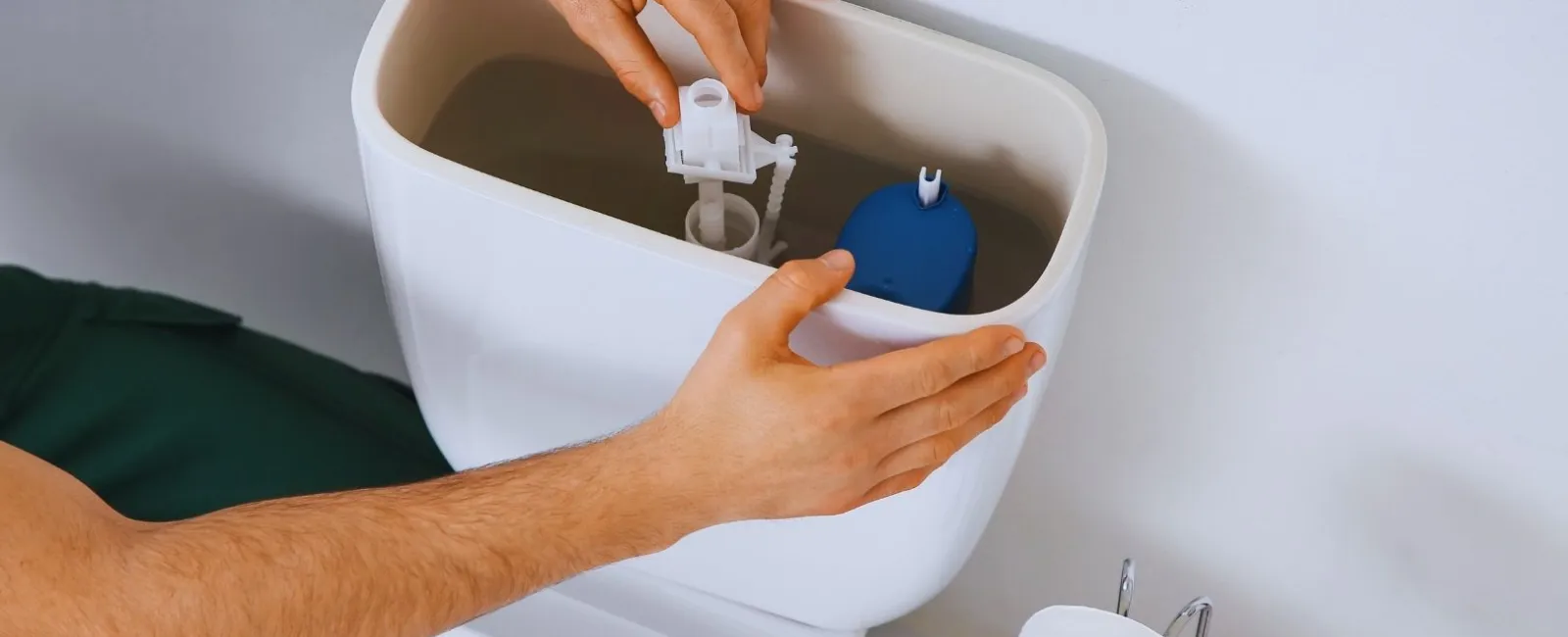
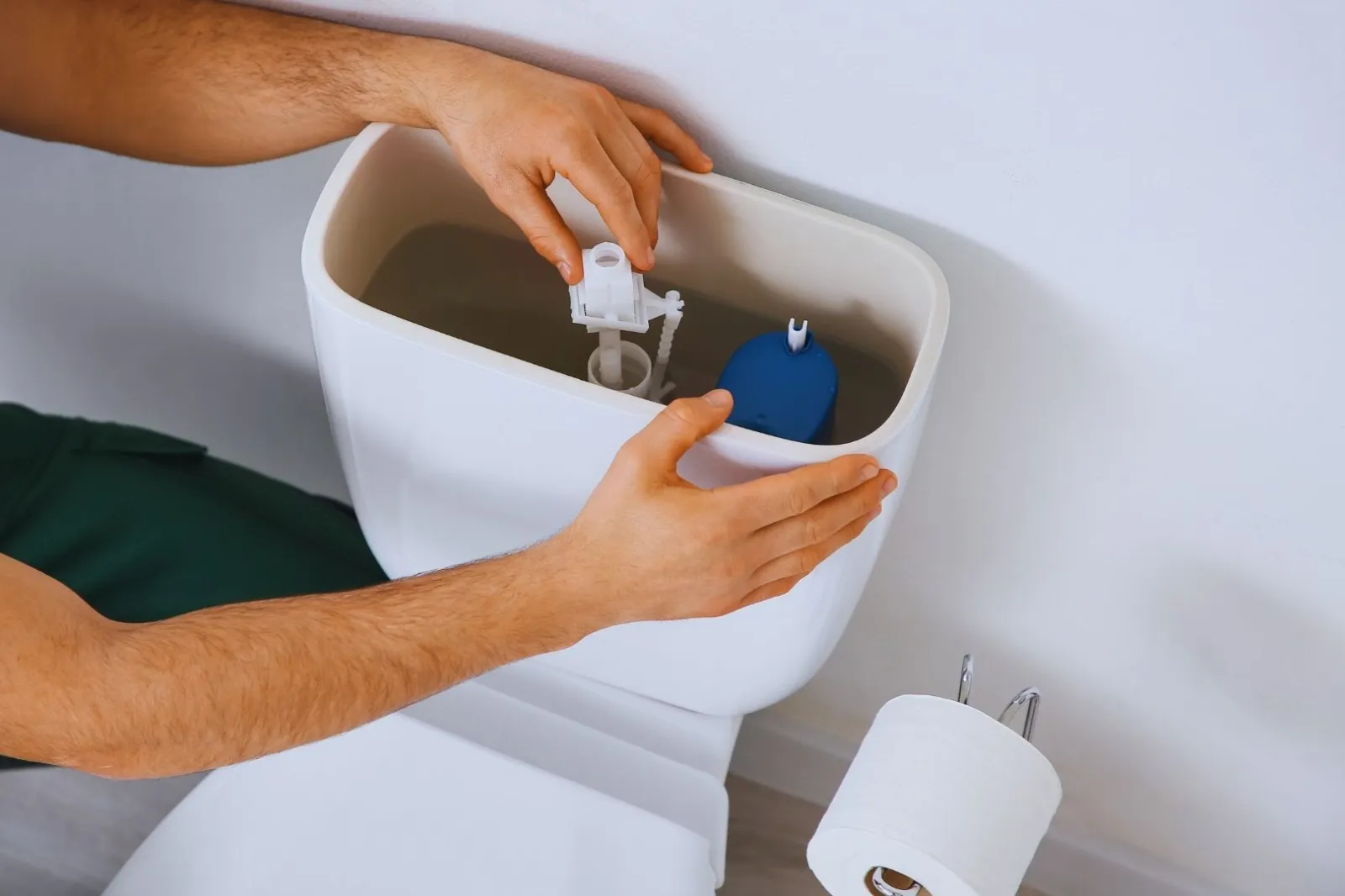
The fill valve is the tall mechanism inside the toilet tank, usually on the left side, that controls water flow after each flush. It's the most common reason a toilet tank won't fill. Fill valves fail due to mineral buildup, worn parts, or age, and typically last 5-7 years.
Signs the fill valve is the problem:
-
Tank fills very slowly (10+ minutes)
-
Water stops before reaching the fill line
-
Hissing or whistling from the valve
-
No water enters the tank despite the supply valve being open
Quick test: Remove the tank lid and flush. Watch the fill valve as the tank refills. Weak, inconsistent, or no water flow indicates a faulty fill valve.
Fix: Start by cleaning it. Shut off the water supply, flush to empty the tank, and remove the top of the fill valve (usually a quarter turn and lift). Rinse all parts to clear mineral deposits, reassemble, turn the water back on, and test.
If cleaning doesn't work, replace the fill valve. Replacements cost $10-25 and are DIY-friendly. If you're not comfortable working inside the tank, a plumber can complete the repair quickly.
3. The Float Is Set Too Low or Stuck
The float tells the fill valve when to stop adding water. Older toilets use a ball float on a metal arm; newer toilets use a cup-style float that slides on the fill valve. If the float is set too low or stuck, it shuts off the water early, leaving the tank underfilled.
How to identify a float problem: Remove the tank lid and check the water level. If it's well below the overflow tube, the float likely needs adjustment. While the tank is filling, gently lift the float. If the water shuts off, the float works, but it is set too low.
Ball float: Adjust the screw where the arm meets the fill valve, or carefully bend the metal arm upward slightly. Make small adjustments and test after each change.
Cup-style float: Use the clip or adjustment mechanism on the fill valve to raise the float. Move it up one notch at a time and test until the water stops about one inch below the top of the overflow tube.
If the float is cracked, damaged, or won't stay in position, replace it. Since floats and fill valves tend to fail around the same time, replacing the entire fill valve is usually the better long-term fix.
4. Low Water Pressure in Your Home
Sometimes the issue isn't the toilet but low water pressure in the home. Low pressure can cause the tank to fill very slowly or stop before reaching the proper level.
How to test: Run other faucets in the house. If the flow is weak everywhere, the problem is home-wide. Check whether neighbors have the same issue, which can point to a municipal supply problem.
For well systems, check the pressure tank gauge. Low pressure may indicate a failing pressure switch, a waterlogged tank, or pump issues.
Common causes of low water pressure:
-
The main water shut-off valve is not fully open
-
Failed pressure regulator (professional repair required)
-
Corroded or blocked pipes
-
Municipal water main breaks or maintenance
If multiple fixtures are affected, the issue usually requires a professional plumbing diagnosis to identify and fix the cause
5. The Refill Tube Is Disconnected or Clogged
The refill tube is a small, flexible tube that runs from the fill valve into the overflow tube. Its job is to refill the toilet bowl after each flush. If it's disconnected or clogged, the tank may fill normally, but the bowl stays empty, making it seem like the toilet isn't filling properly.
How to spot the issue: Remove the tank lid and find the small tube connected to the fill valve. It should be clipped to the top of the overflow tube. If it's loose, detached, kinked, or hanging down, that's the problem.
Fix: Reattach the tube to the overflow tube using the clip or holder. Make sure it isn't kinked and that about one inch of the tube extends into the top of the overflow pipe so water can flow into the bowl during refilling.
If the tube is brittle, cracked, or damaged, replace it. Refill tubes cost under a dollar at most hardware stores.
6. Blocked or Clogged Fill Valve Inlet
The fill valve pulls water through a small inlet at its base, where the supply line connects. Sediment, mineral buildup, or debris from old pipes can clog this opening, restricting flow and causing very slow filling or no fill at all.
How to identify a blockage: If the supply valve is fully open and water only trickles into the tank, or cleaning the fill valve didn't help, the inlet is likely clogged.
Fix: Shut off the water supply valve and flush the tank to empty it. Disconnect the water supply line from the bottom of the fill valve (have a towel ready). Inspect the inlet for debris or mineral buildup. Clear it carefully with a small brush, wire, or pick. Reconnect the line, turn the water back on slowly, check for leaks, and test the fill.
If you're uncomfortable disconnecting water lines or notice corroded fittings, call a professional for toilet service.
7. The Flapper Valve Isn't Sealing Properly
A bad flapper won't stop the tank from filling, but it can prevent it from holding water. If the flapper, the rubber seal at the bottom of the tank, doesn't seal properly, water leaks into the bowl continuously. The fill valve keeps adding water but can't keep up, so the tank never reaches or maintains the correct level.
How to identify a flapper problem:
Remove the tank lid and add a few drops of food coloring to the tank. Wait 15-20 minutes without flushing. If colored water appears in the bowl, the flapper is leaking.
Another sign is "phantom flushing," in which the fill valve turns on periodically to replace water that's leaking.
Fix: Shut off the water supply and flush the tank to empty it. Remove the old flapper (it usually unhooks from the flush valve or overflow tube) and install a new one. Flappers cost $5-10 and are typically universal, but match them to your flush valve design for a proper seal.
How to Restore Your Toilet When the Tank Still Won't Fill
If you've checked all seven causes above and your toilet tank still isn't filling with water properly, the issue may be more complex:
Corroded or damaged internal components: Very old toilets (20+ years) may have corrosion, cracks, or worn parts that aren't obvious during visual inspection. Sometimes it's more cost-effective to replace the entire toilet than to continue repairing aging components.
Problems with your home's main water line: If multiple toilets in your home won't fill properly, or if you're experiencing water pressure issues throughout the house, the problem extends beyond a single fixture and requires investigation of your home's plumbing system.
Incorrectly installed or mismatched replacement parts: If someone recently attempted DIY repairs, incompatible or incorrectly installed components could be preventing proper function. Professional plumbers can quickly identify installation errors.
Expert Toilet Repair in Metro Atlanta
At Dalmatian Plumbing, we understand that toilet problems can't wait. That's why we offer same-day toilet repair appointments throughout Atlanta, Marietta, Roswell, and surrounding communities. Our trucks carry common toilet parts like fill valves, flappers, and flush valves, allowing us to complete most repairs in a single visit without the need for return trips.
We also handle complete toilet replacement when that's the better solution. If your toilet is old, inefficient, or has developed multiple problems, we can help you select a modern, water-efficient model that will serve you reliably for years to come. We'll handle removing your old toilet, installing the new one, and disposing of the old unit, making the process hassle-free.
Tired of dealing with a toilet that won't fill properly? Don't let it disrupt your daily routine any longer. Call Dalmatian Plumbing or schedule toilet repair service online. We'll get your toilet filling and flushing normally again.