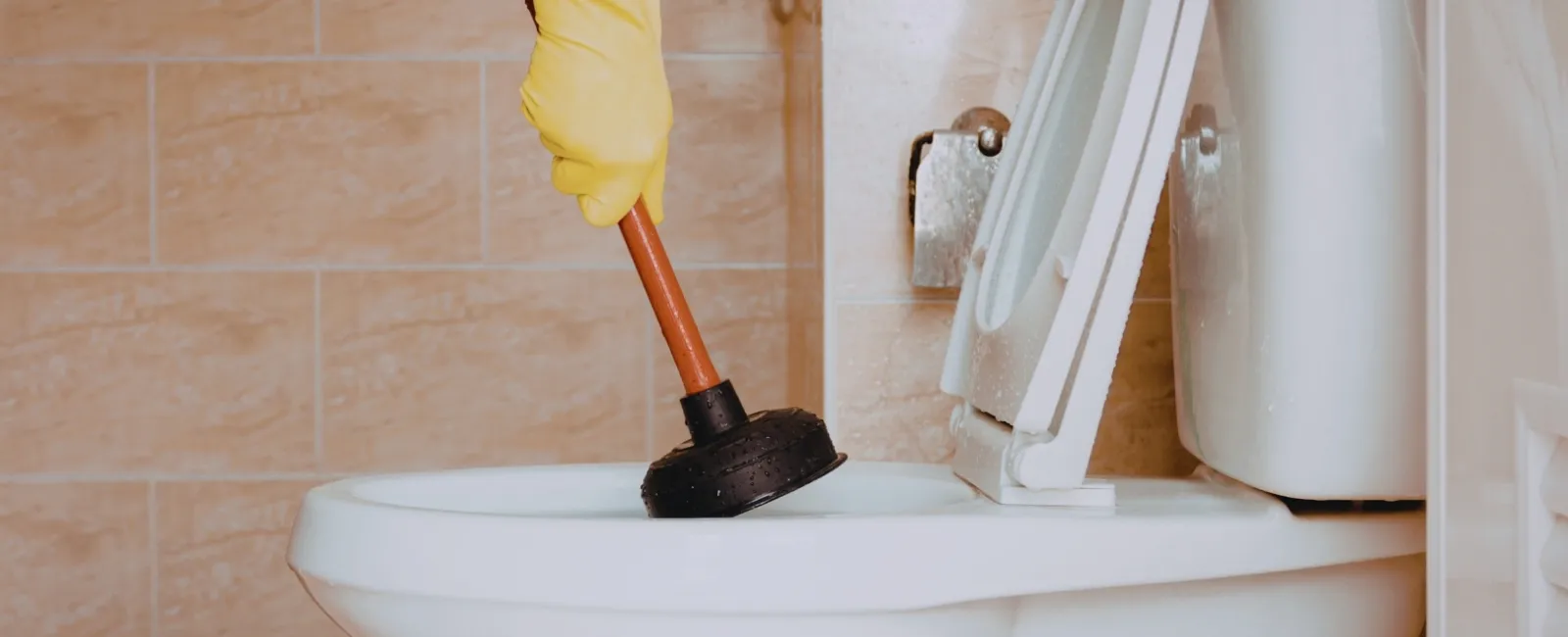
You've been plunging for 15 minutes straight. Your arms are tired, the toilet is still completely clogged, and the water level hasn't budged an inch. When a plunger doesn't unclog your toilet, it's one of the most frustrating household problems you can face. You know how to plunge, and you've done it dozens of times before, so why isn't it working now?
The answer usually comes down to one of six common issues, and understanding which one you're dealing with makes all the difference between solving the problem yourself and needing professional help. Here is exactly why your plunger isn't working, some alternative solutions to try, and signs that the clog is beyond DIY methods and requires professional intervention.
The 6 Reasons Your Plunger Isn't Working
Before you give up and call a plumber, understanding why your plunger is failing helps you determine your next steps. Here are the six most common reasons plungers don't work on toilet clogs:
1. You're Using the Wrong Type of Plunger
This is the most common mistake homeowners make, and it's an easy fix. There are two types of plungers, and most people use the wrong one for toilets:
Cup plunger (sink plunger): This is the flat, cup-shaped plunger you see in cartoons. It has a simple rubber cup with no flange or extension. Cup plungers work well on flat surfaces like sink drains and tub drains, but they're nearly useless on toilets because they can't create a proper seal in the curved toilet drain.
Flange plunger (toilet plunger): This plunger has an extended rubber flap (the flange) that protrudes from the bottom of the cup. This flange fits into the toilet drain opening and creates the airtight seal necessary to generate the suction and pressure needed to break up clogs.
If you're using a cup plunger on your toilet, that's why it's not working. Switch to a flange plunger immediately.
2. You Don't Have Enough Water in the Bowl
For a plunger to work, the rubber cup must be completely submerged in water. The plunger doesn't actually push the clog through; it uses water as the force mechanism. When you plunge, you're creating pressure waves in the water column that travel down the drain and break up the clog.
If your toilet bowl has drained and there's not enough water to cover the plunger cup, you're just pushing air, which does nothing to clear the blockage. Here's what to do:
- Add water to the toilet bowl until it covers the plunger cup by at least an inch or two
- Pour water from a bucket or pitcher; don't flush the toilet to add water, as this might cause an overflow
- If the bowl is too full and threatening to overflow, remove some water with a disposable cup before plunging
The ideal water level is about halfway up the bowl. This gives you enough water to create pressure without risking overflow when you plunge.
3. Your Plunging Technique Is Wrong
Even with the right plunger and proper water level, poor technique renders your efforts useless. Many people plunge too gently, repeatedly break the seal, or give up too quickly. Here's the correct way to plunge a toilet:
Step 1: Position the plunger - Insert the flange into the drain opening and press down gently to create an initial seal. The entire rubber cup should be underwater.
Step 2: Create the seal - Push down slowly at first to expel air from under the cup and establish an airtight seal. You should feel resistance as the seal forms.
Step 3: Plunge with force - Once sealed, plunge vigorously up and down for 15-20 repetitions without breaking the seal. Use forceful, rapid movements. The push motion matters most; it creates pressure that forces water down to break up the clog.
Step 4: Break the seal suddenly - After 15-20 plunges, pull the plunger up sharply to break the seal. This sudden suction can sometimes dislodge clogs that pressure alone won't move.
Give yourself at least 3-4 complete plunging cycles before concluding the plunger won't work. Many clogs break up gradually rather than clearing all at once.
4. The Clog Is Too Deep in the Drain Line
Plungers work well on clogs located in the toilet trap (the curved section of the toilet you can't see) or just beyond it. However, clogs that have traveled farther down the drain line, into the branch line connecting your toilet to the main sewer line, are beyond a plunger's effective range. Signs your clog might be deep in the drain line include:
- Multiple toilets in your home are draining slowly or backing up simultaneously
- Gurgling sounds coming from other drains when you flush
- Water backing up into your shower or tub when you flush the toilet
- The clog happened suddenly without an obvious cause (no excessive toilet paper, no foreign objects)
Deep clogs require different tools, specifically a toilet auger (closet auger) or professional drain snake. If you suspect a deep clog, your best option is to try alternative methods or call for emergency plumbing service.
5. The Blockage Isn't Toilet Paper
Plungers work by creating pressure that breaks apart soft, pliable materials, such as toilet paper and waste. They're far less effective against hard or non-dissolvable objects that cause the clog.
Common non-plungeable clogs include:
Wipes (even "flushable" ones): Despite marketing claims, wet wipes don't break apart like toilet paper. They're designed to stay intact when wet, which makes them terrible for plumbing. A wad of wet wipes will laugh at your plunger.
Feminine hygiene products: Tampons and pads are designed to absorb and expand when wet. They create dense, fibrous clogs that plungers can't break up. These almost always require mechanical removal with an auger.
Paper towels: Much stronger and more absorbent than toilet paper, they don't break down in water and can create tough clogs.
Cotton swabs, dental floss, hair: These materials tangle and compact rather than breaking apart, creating clogs that resist plunger pressure.
Toys and hard objects: If your toddler flushed a toy car, a plunger won't help. Small toys, phone cases, and other solid objects require physical removal with an auger or may even necessitate toilet removal.
If you know (or suspect) that something other than toilet paper caused the clog, skip the plunger and move directly to alternative methods or professional help. Continuing to plunge can actually push these objects deeper into your plumbing system.
6. You Have a Venting Problem
This is the least obvious reason a plunger might not work, but it's more common than most homeowners realize. Every drain in your home needs proper venting to function correctly. Vent pipes allow air into the drain system, which enables water and waste to flow smoothly by preventing vacuum formation.
Signs of a venting problem include:
- Slow drains throughout your home, not just the toilet
- Gurgling sounds from drains after flushing or running water
- Sewer odors inside your home
- The toilet seems to flush weakly or incompletely, even when not clogged
Venting problems require professional diagnosis and repair. These aren't DIY fixes, as they typically involve accessing roof vents or modifying plumbing systems to add proper venting where it's missing.
What NOT to Do When Your Plunger Fails
In desperation, homeowners often turn to methods that create bigger problems than the original clog. Avoid these common mistakes:
Don't Use Chemical Drain Cleaners
Chemical drain cleaners containing lye, sulfuric acid, or other caustic chemicals are terrible for toilet clogs. Here's why:
- They're dangerous: If the clog doesn't clear, you now have a toilet bowl full of caustic chemicals that can splash, creating burn risks
- They damage plumbing: Repeated use of chemical drain cleaners corrodes pipes, especially older metal pipes, and the rubber seals in toilets
- They rarely work on toilets: These products are designed for slow-draining sinks, not complete toilet blockages
- They complicate professional repairs: If you need to call a plumber, the presence of chemical drain cleaners creates safety issues and may prevent certain repair methods
Don't Keep Flushing
When a toilet is clogged, continuing to flush it only adds more water to an already full bowl, creating overflow and water damage to your bathroom floor. Resist the temptation to flush "one more time" to see if it will miraculously clear. It won't, and you'll be mopping up toilet water.
Don't Plunge Too Aggressively
While vigorous plunging is necessary, violent plunging that rocks the toilet or lifts it off the floor can break the wax ring seal between the toilet and the drain flange. This seal prevents water from leaking around the base of your toilet. Breaking it creates a leak that requires removing and resetting the entire toilet.
When to Call a Professional Plumber
Some clogs are beyond DIY methods and require professional intervention. Recognizing when you've reached this point saves you time, frustration, and potential damage from continued attempts. Call for emergency plumbing services when you encounter these situations:
Multiple Drains Are Affected
If your toilet is clogged and you also notice slow drains in your shower, sinks, or other toilets, the problem isn't isolated to one toilet. This indicates a main line clog, a blockage in the primary sewer line that serves multiple fixtures. Main line clogs require professional equipment, such as motorized drain snakes or hydro jetting, to clear.
Sewage Is Backing Up
If you flush the toilet and sewage backs up into your shower, bathtub, or floor drains, you have a serious main line blockage that requires immediate professional attention. This is a true plumbing emergency. Stop using all water in your home and call for emergency service immediately to prevent sewage damage.
You've Tried Everything and It's Still Clogged
If you've used the correct plunger with proper technique, tried a toilet auger, and attempted the hot water method without success, the clog is stubborn enough to warrant professional help. Continuing to try DIY methods at this point is unlikely to succeed and may risk damage to your plumbing system.
Professional plumbers have specialized equipment, including:
- Industrial-grade drain snakes that can reach deep clogs
- Video camera inspection equipment to visually locate and identify blockages
- Hydro jetting equipment that uses high-pressure water to blast through tough clogs
- Tools and expertise to remove toilets when objects are lodged in the trap
When Simple Plunging Isn't Enough: Dalmatian Plumbing Is Ready to Help
At Dalmatian Plumbing, we handle stubborn toilet clogs throughout metro Atlanta every single day. We know that by the time you call us, you're frustrated and need your toilet working again as soon as possible. That's why we provide same-day service for clogged toilets and 24/7 emergency response when you can't wait.
We also provide honest assessments. If your toilet is clogging repeatedly, we'll identify why and recommend permanent solutions rather than temporary fixes. Sometimes that means hydro jetting your sewer line to remove years of buildup. Sometimes it means replacing an aging toilet with a modern model that has better flushing power. And sometimes it means identifying venting problems or pipe issues that require correction. Whatever the case, we explain your options clearly and help you make informed decisions.
The toilet is still clogged, and your plunger gave up hours ago. Don't spend your entire evening fighting a losing battle. Call Dalmatian Plumbing or schedule emergency service online. We'll get your toilet flowing again.