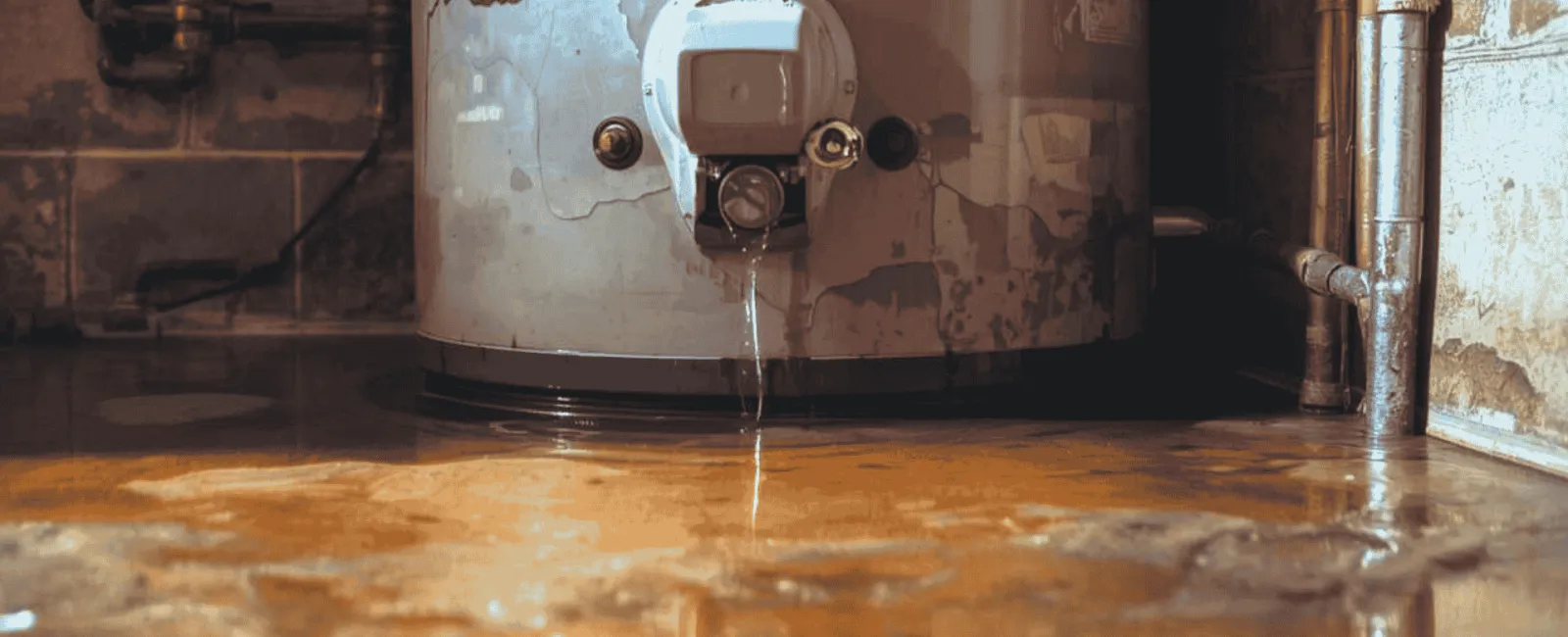
Water is pooling under your water heater, a slow drip is coming from the pressure relief valve, and moisture is streaking down the side of the tank. These aren't minor inconveniences you can address later; they're warning signs of problems that range from manageable repairs to catastrophic tank failures that flood your home with 40-50 gallons of hot water in minutes.
After responding to hundreds of water heater emergencies, from minor valve leaks to catastrophic tank ruptures that caused tens of thousands in water damage, we've learned that the homeowners who act quickly prevent the worst outcomes. We will explain the seven most common causes of water heater leaks, which pose an immediate danger, and when you absolutely must call a professional water heater repair service before a manageable problem becomes a disaster.
Why a Leaking Water Heater Is More Dangerous Than You Think
Most homeowners underestimate the risk of water heater leaks because leaks often start small. A few drops per hour from the bottom of the tank. Occasional dripping from the pressure relief valve. Water stains on the floor that dry between drips. These seem manageable, especially if the water heater is in a basement with a floor drain.
But small leaks indicate internal problems that worsen rapidly:
- Water damage accelerates: Even slow leaks saturate flooring, baseboards, and drywall, causing mold growth, structural damage, and expensive repairs that far exceed water heater replacement costs
- Corrosion spreads: Once internal tank corrosion creates a leak, the corrosion process accelerates, what starts as a pinhole today becomes a major rupture within weeks
- Electrical hazards develop: Water leaking onto electric water heater components creates shock and fire risks
- Pressure builds unsafely: If the leak source is a malfunctioning pressure relief valve, the tank may be operating at dangerously high pressures
7 Dangerous Causes of Water Heater Leaks
Understanding where your water heater is leaking from determines the urgency level. Some leaks require immediate professional intervention; others allow time for scheduled repair.
1. Pressure Relief Valve Leaking (HIGHEST DANGER)
What it is: The temperature and pressure (T&P) relief valve is a safety device located on the top or side of your water heater with a discharge pipe running down the side of the tank. It's designed to release water if internal pressure exceeds 150 PSI or the temperature surpasses 210°F, conditions that could cause the tank to rupture.
Why it's dangerous: A T&P valve that continuously drips or actively discharges water indicates your water heater is operating at unsafe temperatures or pressures. While the valve is doing its job by releasing excess pressure, the underlying cause, a failed thermostat, too-high water pressure, or thermal expansion issues, creates a risk of catastrophic tank failure.
What to do IMMEDIATELY:
- Turn off power to the water heater (circuit breaker for electric, gas valve for gas)
- Turn off the water supply to the tank
- Call for emergency water heater service immediately
Don't wait for T&P valve leaks. While water heater explosions are rare, they occur most commonly when pressure relief systems malfunction. This is the one leak type that absolutely demands same-day professional assessment.
2. Leaking from the Top (Inlet/Outlet Connections)
What it is: Water dripping from where the cold water inlet or hot water outlet pipes connect to the top of the tank. These threaded connections can develop leaks from loose fittings, corroded threads, or failed gaskets.
Danger level: Moderate. While not immediately catastrophic, water leaking from top connections can damage the water heater's control systems (thermostat, wiring) and accelerate corrosion at the connection points.
Can it be fixed? Yes, often by tightening connections or replacing gaskets and fittings. However, if corrosion is extensive at the threads, the tank itself may be compromised and require replacement.
3. Drain Valve Leaking from the Bottom
What it is: The drain valve is located near the bottom of the tank and is used to drain sediment during maintenance or to empty the tank for replacement. Leaks occur when the valve fails to close completely, its gasket deteriorates, or sediment prevents proper sealing.
Danger level: Low to moderate. Drain valve leaks rarely indicate tank failure, but they waste water, can cause significant floor damage if ignored, and indicate the tank needs maintenance.
Can it be fixed? Sometimes. Tightening the valve or replacing it can solve the problem. However, if sediment buildup prevents the valve from sealing, the tank may need professional flushing or, if sediment damage is severe, replacement.
4. Tank Bottom Leaking (URGENT TANK FAILURE)
What it is: Water leaking directly from the bottom of the tank itself, not from valves or connections, but from the tank shell. This occurs when internal corrosion eats through the tank's steel, creating holes in the bottom where sediment and corrosion are worst.
Why it's dangerous: Bottom-tank leaks indicate the tank is structurally failing. The protective glass lining inside the tank has broken down, allowing water to corrode the steel shell. Once this starts, it cannot be repaired; only replacement prevents catastrophic failure.
What to do: Turn off power and water to the tank immediately. Schedule emergency water heater replacement within 24-48 hours. A tank leaking from the bottom can rupture completely at any time, releasing 40-50 gallons of hot water instantly.
5. Leaking from Tank Side or Seams
What it is: Moisture or active leaking from the side of the tank or from the seam where the top of the tank joins the body. This indicates internal corrosion has penetrated the tank wall.
Danger level: High. Like bottom leaks, side leaks mean the tank is failing and cannot be repaired. The difference is that side leaks sometimes occur higher on the tank where corrosion has compromised the welds or seams.
What to do: Immediate replacement. There's no repair for a corroded tank shell; the only solution is to install a new water heater before the leak worsens.
6. Water Inside the Burner Chamber (Gas Heaters)
What it is: On gas water heaters, water leaks into the combustion chamber where the burner is located. You'll see water around the burner assembly or notice the pilot light won't stay lit due to moisture.
Why it's dangerous: Water in the burner chamber usually indicates a tank leak directly above the burner, a sign of severe internal corrosion. Additionally, water that interferes with gas components increases the risk of carbon monoxide and potential gas leaks.
What to do: Shut off the gas supply immediately, turn off the water supply, and call for emergency services. Never operate a gas water heater with water in the burner chamber.
7. Condensation vs. Actual Leaks
What it is: Sometimes what appears to be a leak is actually condensation forming on the outside of the tank or cold water pipes. This happens when humid air comes into contact with cold surfaces, particularly in summer months or in humid basements.
How to tell the difference: Actual leaks produce constant moisture at the exact location, with water running down the tank or pooling beneath it. Condensation appears as beads of water across large areas of the tank or pipes and often dissipates when the humidity drops.
Danger level: None, if it's truly just condensation. However, persistent condensation can promote rust and corrosion over time. If you're unsure, have a professional inspect to confirm it's not an actual leak.
Emergency Steps When You Discover a Water Heater Leak
Finding water around your water heater is alarming, but taking correct immediate action prevents minor leaks from becoming major disasters.
Step 1: Turn Off the Power
- Electric water heaters: Switch off the circuit breaker dedicated to the water heater (usually labeled in your electrical panel)
- Gas water heaters: Turn the gas control valve to "OFF" or "PILOT" position
Never work around a leaking electric water heater while power is on; water and electricity create an electrocution risk.
Step 2: Turn Off the Water Supply
Locate the cold-water shut-off valve on the pipe entering the top of the water heater, and turn it clockwise to close. If you can't access this valve or it won't close, shut off your home's main water supply.
Stopping water flow prevents additional water from leaking and reduces pressure inside the tank.
Step 3: Protect Your Property
- Place towels or a bucket under active drips
- Move valuables away from the water heater area
- Take photos for insurance documentation if significant water damage has occurred
Step 4: Call for Professional Service
While you've stopped the immediate water flow, the underlying problem remains. Professional water heater diagnostics determine whether repair or replacement is necessary.
Preventing Water Heater Leaks: Can It Be Done?
While some leaks result from unavoidable tank aging, many are preventable with proper maintenance:
Annual Maintenance Prevents Most Leaks
- Flush the tank annually: Draining sediment prevents corrosion at the tank bottom
- Test the T&P valve yearly: Ensures it operates correctly and won't fail when needed
- Replace anode rod every 3-5 years: The anode rod sacrifices itself to prevent tank corrosion, replacing it extends tank life dramatically
- Check connections: Inspecting inlet, outlet, and drain connections catches small leaks before they become big problems
Install Thermal Expansion Tank
Closed plumbing systems (homes with backflow preventers or pressure regulators) need expansion tanks to accommodate thermal expansion of heated water. Without one, excessive pressure stresses the tank and forces water out through the T&P valve.
Reduce Water Temperature
Water heaters set above 120°F heat water unnecessarily hot, accelerate corrosion, and create excess pressure. Keeping the temperature at 120°F extends tank life and reduces leak risk.
The Cost of Ignoring a Water Heater Leak
Homeowners often delay water heater leak repairs, thinking they're saving money. The reality is far different:
- Water damage: Even slow leaks cause $3,000-$10,000+ in floor, wall, and structural repairs
- Mold remediation: Moisture creates mold growth that costs $2,000-$6,000 to remediate professionally
- Tank replacement PLUS damage repair: A $1,200 water heater replacement becomes a $5,000-$15,000 disaster when you also pay for flood damage
- Insurance complications: Many policies don't cover water damage from "long-term leaks," only sudden catastrophic failures
The $300-$600 repair you delay today can become a $10,000 disaster tomorrow. This is why we emphasize addressing leaks immediately; the cost of action is always less than the cost of inaction.
Don't Wait for Disaster: Get Your Water Heater Inspected Today
At Dalmatian Plumbing, we've responded to hundreds of water heater emergencies across Atlanta, from homeowners who caught leaks early and prevented disasters to those who waited too long and suffered catastrophic failures that destroyed property. The difference isn't luck, it's how quickly you act when you spot that first drop of water.
We provide honest assessments that tell you exactly what's failing, whether repair or replacement makes sense, and what timeline you're working with. Our experienced technicians have diagnosed everything from simple drain valve failures to dangerous T&P valve malfunctions, and we'll explain your options clearly so you can make informed decisions about your water heater.
Found water around your water heater? Don't wait for it to become an emergency. Call Dalmatian Plumbing or schedule an inspection online. We'll assess your water heater, identify the leak source, and provide honest guidance on repair vs. replacement, before a small leak becomes a major disaster.