Brown water flowing from your faucet, mysterious wet spots appearing on walls, and water pressure drops week by week. These aren't random plumbing problems; they're warning signs that corrosion is eating away at your pipes from the inside out.
Pipe corrosion is an invisible threat that develops gradually over decades. Metal pipes deteriorate as water, oxygen, and minerals interact with the pipe material, forming rust and scale that narrow the pipe diameter, weaken the metal, and eventually cause leaks or catastrophic failures. The challenge? By the time you notice obvious symptoms, significant damage has already occurred.
After diagnosing thousands of corroded pipe situations across Atlanta homes, we've learned to recognize the early warning signs that most homeowners miss, and more importantly, which signs indicate minor issues versus those demanding immediate action. This guide explains how to identify corroded pipes in your home, what causes corrosion, and when professional intervention is essential.
8 Warning Signs Your Pipes Are Corroded
Recognizing corrosion early prevents costly water damage and extensive pipe replacement. Watch for these telltale indicators:
1. Discolored Water (Brown, Red, or Blue-Green)
Water taking on unusual colors is the most obvious sign of pipe corrosion. The color tells you which metal is deteriorating:
- Brown or reddish water: Iron or steel pipes are rusting internally
- Blue-green water: Copper pipes are corroding (copper oxide)
- Black or dark gray water: Severe corrosion with accumulated sediment
If discoloration appears only when running hot water, your water heater may be the source rather than the pipes. If both hot and cold water are discolored, pipe corrosion is the likely culprit. Don't ignore this, corroded pipes that discolor water are releasing metal particles you're consuming.
2. Metallic Taste or Odor in Water
Water from corroded pipes often has a distinct metallic taste, particularly noticeable in drinking water or when making coffee and tea. The taste comes from dissolved metal particles, such as iron, copper, or lead, leaching into your water supply.
If water also smells metallic or musty, corrosion is releasing particles that shouldn't be in your drinking water. While small amounts of iron and copper aren't immediately dangerous, lead from old pipes poses serious health risks, especially for children.
3. Frequent Leaks in Multiple Locations
A single leak might be coincidental, but multiple leaks developing in different areas over a short period indicate systemic corrosion throughout your plumbing system. Corrosion weakens pipe walls until they develop pinhole leaks or crack completely.
If you've repaired two or more leaks in the past year, professional leak detection can assess whether widespread corrosion is causing the problem. Addressing individual leaks without evaluating overall pipe condition leads to an endless cycle of repairs as more corroded sections fail.
4. Steadily Declining Water Pressure
Gradual pressure loss over months or years indicates corrosion and mineral deposits narrowing your pipes from the inside. As rust and scale accumulate, the effective pipe diameter shrinks, restricting water flow.
If low pressure affects all fixtures throughout your home, the main supply lines are likely corroded. If pressure is low only in specific areas, corrosion may be localized to certain pipe sections. Either way, declining pressure that doesn't improve with faucet aerator cleaning suggests internal pipe deterioration.
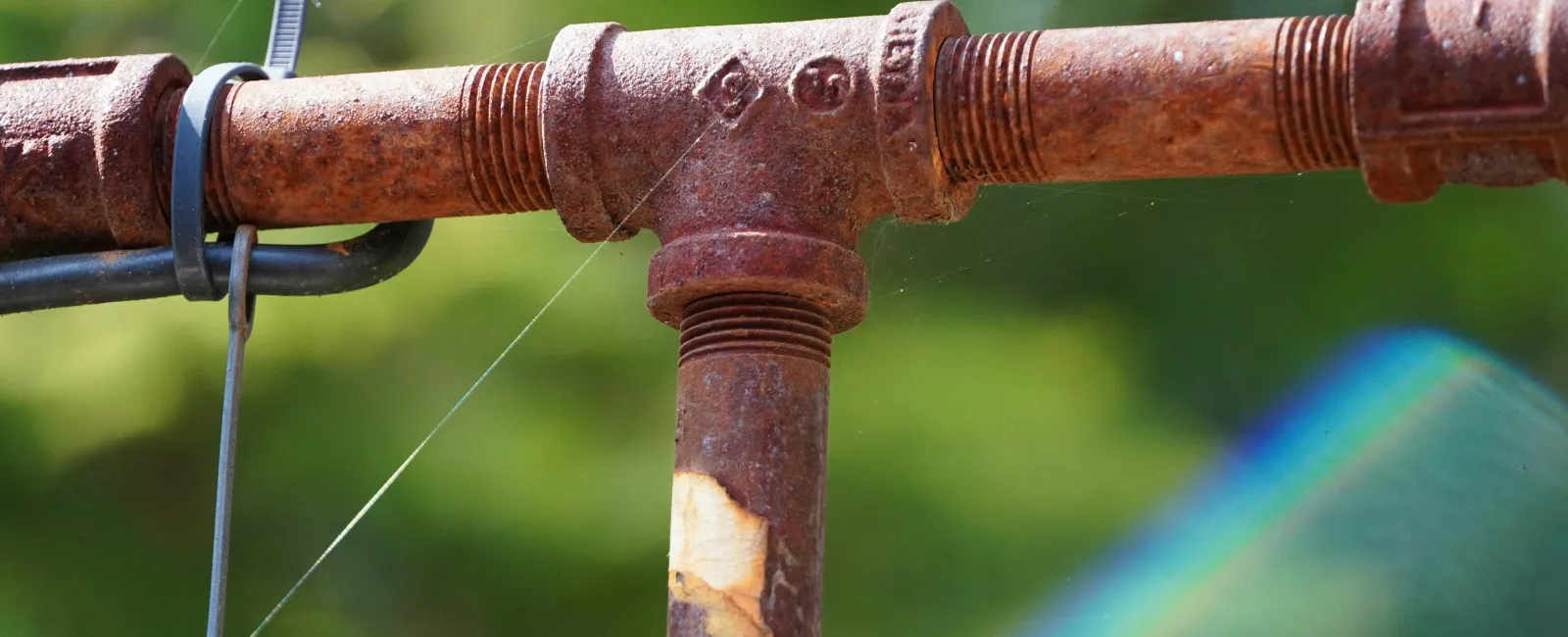
5. Visible Corrosion on Exposed Pipes
Check exposed pipes in basements, crawl spaces, and under sinks for visible signs of external corrosion. Look for:
- Reddish-brown flaking or staining: Iron/steel pipe rust
- Blue-green powdery coating: Copper pipe corrosion (copper oxide)
- White chalky buildup: Mineral deposits from hard water
- Warping or dimpling: Advanced corrosion weakens pipe walls
If pipes corrode externally, assume internal corrosion is worse; you can't see inside, but the constant flow of water through the pipes accelerates internal deterioration. External corrosion, you can see, is just the beginning.
6. Water Stains on Walls, Ceilings, or Floors
Unexplained water stains indicate hidden leaks from corroded pipes inside walls, above ceilings, or under floors. These leaks start small, just a few drops, but expand as corrosion worsens.
Stains might appear as:
- Yellowish or brown discoloration on drywall
- Peeling or bubbling paint
- Warped baseboards or flooring
- Musty odors indicate moisture
Don't wait for stains to grow; small leaks can quickly turn into major water damage. Professional plumbing leak detection services locate the source without destructive exploratory work, determining if corrosion or other issues are causing the leak.
7. Frequent Clogs Despite Regular Cleaning
Corroded pipes develop rough, uneven interior surfaces where rust and scale project into the water flow. These irregular surfaces catch debris, hair, soap scum, and food particles that would normally flow through smooth pipes.
If drains clog frequently despite regular cleaning and proper use, internal corrosion may be creating "catch points" inside pipes. This is especially common in older cast-iron drain lines, where rust buildup can significantly narrow the pipe diameter.
8. Fluctuating Water Temperature
If water temperature varies unexpectedly during showers or while running faucets, going from warm to cold to warm again, corrosion may be affecting valves, mixing mechanisms, or temperature regulators in your plumbing system.
Hot water accelerates corrosion in steel and iron pipes more rapidly than cold water. Corroded components in your water heating system struggle to maintain a consistent temperature, leading to the fluctuations you experience.
Which Pipe Materials Corrode and How Fast?
Understanding which pipes corrode helps you assess your home's risk level:
Galvanized Steel Pipes (Most Problematic)
Lifespan: 20-50 years
Corrosion rate: Moderate to severe
Galvanized steel pipes (standard in homes built before 1960) are the most corrosion-prone plumbing material still in use. The zinc coating that once protected the steel wears away over time, exposing the steel underneath to direct water contact. Once the protective layer fails, rust accelerates rapidly.
Homes with galvanized pipes older than 40 years face a high corrosion risk and should consider proactive replacement before catastrophic failures occur.
Cast Iron Pipes (Slow But Inevitable)
Lifespan: 50-100 years
Corrosion rate: Slow but progressive
Cast iron drain and sewer lines corrode from the inside out as wastewater acids and chemicals attack the metal. The corrosion process is slow, but after 60-70 years, these pipes develop rough, heavily corroded interiors that catch debris and eventually crack or collapse.
Copper Pipes (Generally Durable)
Lifespan: 50-70 years
Corrosion rate: Low to moderate, depending on water chemistry
Copper resists corrosion better than steel or iron, but acidic or highly oxygenated water can cause "pitting corrosion"—small holes that develop in pipe walls. Blue-green water stains around fixtures indicate copper corrosion. Well-maintained copper pipes in homes with neutral pH water can last 70+ years.
PEX and PVC Pipes (Corrosion-Resistant)
Lifespan: 50-100+ years
Corrosion rate: None (plastic doesn't corrode)
Modern plastic pipes (PEX, PVC, CPVC) don't corrode because they're not metal. They can deteriorate from UV exposure or chemical damage, but they're immune to the electrochemical corrosion that affects metal pipes.
What Causes Pipe Corrosion?
Multiple factors accelerate corrosion. Understanding the causes helps you take preventive action:
Water Chemistry
- Low pH (acidic water): Dissolves protective oxide layers on metal pipes
- High oxygen content: Accelerates oxidation (rust formation)
- High mineral content (hard water): Creates scale deposits that trap corrosive elements
- Chlorine and chloramines: Municipal water treatment chemicals can accelerate copper corrosion
Age and Wear
All metal pipes corrode eventually. The constant flow of water, temperature changes, and chemical exposure gradually break down protective coatings and the metal itself. Pipes approaching the end of their expected lifespan require inspection to assess remaining integrity.
Pipe Material and Quality
Lower-quality pipes and improper installation accelerate corrosion. Mixing dissimilar metals (copper and galvanized steel) without proper dielectric unions can cause galvanic corrosion, an electrochemical reaction that rapidly deteriorates both metals at the connection point.
External Factors
- Soil conditions: Acidic or moisture-rich soil corrodes underground pipes
- Electrical grounding: Improper electrical grounding through pipes accelerates electrolytic corrosion
- High water velocity: Rapid water flow erodes protective interior coatings
How to Prevent Pipe Corrosion
While you can't stop corrosion entirely, you can slow it significantly:
Water Treatment
- pH adjustment: Install neutralizing filters if your water is acidic (pH below 7)
- Water softeners: Reduce mineral buildup in hard water areas
- Corrosion inhibitors: Professional treatment systems add protective chemicals
Plumbing Maintenance
- Annual inspections: Professional evaluation of exposed pipes
- Prompt leak repair: Small leaks indicate developing corrosion
- Proper electrical grounding: Ensure electrical systems don't use pipes as ground paths
- Temperature regulation: Lower water heater temperature reduces corrosion acceleration
Proactive Replacement
For homes with galvanized steel pipes over 40 years old or cast iron over 60 years old, proactive replacement prevents emergencies. Replacing pipes during planned renovations costs less than emergency replacement after catastrophic failures cause water damage.
When to Call a Professional
Certain corrosion symptoms demand immediate professional assessment:
Emergency Situations
- Burst or severely leaking pipes: Immediate repair prevents flooding
- No water pressure: Complete blockage from corrosion requires urgent attention
- Sewage backup: Corroded drain lines need immediate clearing or replacement
Non-Emergency Professional Assessment Needed
- Persistent discolored water: Indicates widespread internal corrosion
- Multiple recent leaks: Suggests systemic pipe deterioration
- Steadily declining pressure: Internal buildup restricting flow
- Visible external corrosion: Means the internal condition is worse
- Home over 40 years old with original pipes: Inspection determines remaining lifespan
Professional leak detection and pipe inspection uses camera technology to assess internal pipe condition without destructive investigation. This identifies problem areas, determines whether repair or replacement is necessary, and prevents surprises during renovation projects.
Don't Wait for Catastrophic Failure
Corroded pipes don't heal themselves; they only get worse. What starts as slightly discolored water or minor pressure loss progresses to major leaks, water damage, and emergency replacements at the worst possible times.
If you're experiencing any of the warning signs described in this guide, a professional assessment now can prevent costly emergencies later. Advanced detection technology accurately evaluates pipe condition, identifying problems before they become disasters.
Dalmatian Plumbing: Atlanta's Experts in Pipe Corrosion Assessment
At Dalmatian Plumbing, we've diagnosed and resolved pipe corrosion issues in hundreds of Atlanta-area homes, from century-old properties with original cast iron to mid-century homes with failing galvanized steel. We know that corroded pipes rarely give prominent warnings until serious damage occurs, which is why we use state-of-the-art camera inspection technology to assess internal pipe condition without guesswork.
Our experienced team handles everything from emergency leak repairs to complete repiping projects, and we're committed to protecting your home from the water damage that corroded pipes inevitably cause. Don't wait for a catastrophic failure to address pipe corrosion. Contact Dalmatian Plumbing today for a comprehensive plumbing inspection. We'll assess your pipes, identify potential problems, and help you create a plan that protects your home and your budget, whether that's preventive maintenance, targeted repairs, or proactive replacement.
Spotted warning signs of corroded pipes? Call Dalmatian Plumbing or schedule your inspection online. We're here to help Atlanta homeowners protect their properties from the hidden threat of pipe corrosion.