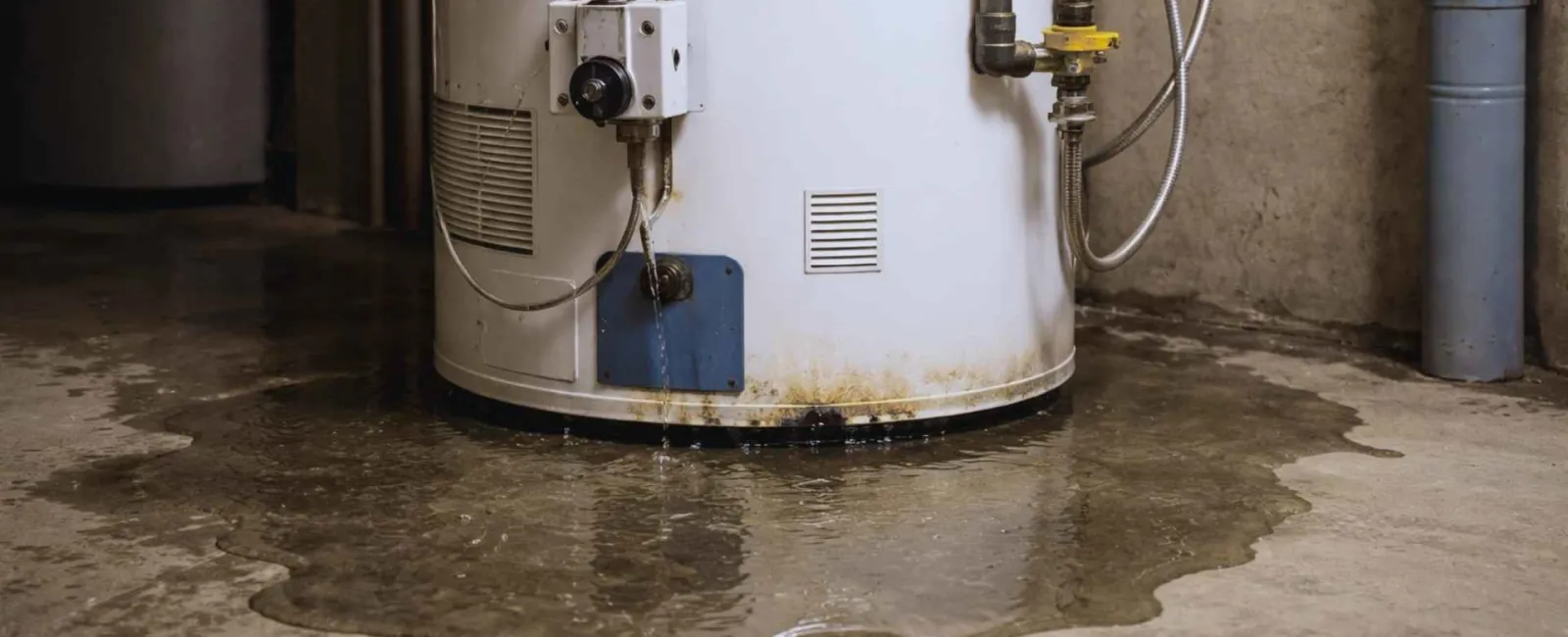
Walking into your garage or
utility closet to find a puddle spreading beneath your water heater is never a
welcoming sight. A water heater leaking from the bottom can mean anything from a
simple valve issue to complete tank failure, and knowing the difference matters
for both your wallet and your home's safety.
After more than 25 years
of service, our technicians have diagnosed thousands of
water heater leaks. The good news? Not every leak means you need a new unit.
The not-so-good news? Some leaks signal that replacement is your only option.
Here's what's actually
happening when you find water pooling at the base of your tank, what you
should do about it, and when to involve one of our professionals.
What to Do Right Now If Your Water Heater Is Leaking
Whether you've identified the source or not, take these immediate steps to prevent water damage:
- Turn off the power source. For electric water heaters, flip the dedicated breaker in your electrical panel. For gas units, turn the gas control valve to the "off" position. This prevents potential hazards while you address the leak.
- Shut off the cold water supply. Locate the cold-water inlet valve at the top of your water heater (the pipe that feeds into the tank). Turn the handle clockwise until it stops. This prevents more water from entering the tank and feeding the leak.
- Contain the water. Use towels, buckets, or a wet vacuum to prevent water from spreading to finished flooring, drywall, or stored items. Water damage compounds quickly, especially on the hardwood floors common in older homes.
- Document the leak. Take photos of the source of the water. This helps our plumber diagnose the issue and may be useful for insurance purposes if significant damage has occurred.
First Things First: Is the Leak Actually Coming From the Bottom?
Before assuming the worst, grab
a flashlight and some paper towels. Water follows gravity, which means a leak
originating near the top of your tank can easily travel down the housing and
collect at the bottom, making it look like a bottom leak when it's actually
something much more fixable.
Start by drying off the entire
exterior of your water heater. Then check these components from top to bottom:
Cold-water inlet and hot-water outlet connections. These fittings at the top of your tank experience
constant pressure and temperature fluctuations. Over time, connections can
loosen or develop small leaks. A slow drip here can be almost invisible as it
runs down the side of the tank, only to pool at the bottom. Feel around these
connections carefully; if they're wet, you've likely found your culprit.
Temperature and pressure
(T&P) relief valve. This critical safety component is mounted on the
side or top of your tank, with a discharge pipe running down toward the floor.
When tank pressure or temperature gets too high, the T&P valve releases
water to prevent dangerous buildup. If this valve is faulty or partially stuck
open, water will drip from the discharge pipe. Check the end of that pipe; if
it's wet, the T&P valve likely needs attention from a licensed plumber who
specializes in water
heater repair.
Condensation. In
a humid climate, especially during muggy summers, condensation can
form on the outside of water heater tanks. This is more common with gas water
heaters installed in unconditioned spaces, such as garages. If the "leak"
is minor, intermittent, and the tank exterior feels cold, condensation might be
your issue rather than an actual leak.
When It's Actually Leaking From the Bottom
If you've ruled out the
components above and confirmed water is genuinely coming from the base of your
water heater, you're dealing with one of two scenarios: a drain valve problem
or internal tank failure.
Drain Valve Leaks
The drain valve is at the very bottom of your tank and is used to flush sediment during maintenance. These valves, especially the plastic ones common on builder-grade water heaters, can crack, corrode, or develop worn seals over time. Look closely at the drain valve spigot. Is water seeping from around the handle? Dripping from where the valve threads into the tank? These are signs that the valve itself is the problem.
A leaking drain valve is often
repairable. The valve can be replaced without replacing the entire water
heater, though this requires draining the tank and proper installation to avoid
creating a bigger problem. If your unit is otherwise in good condition, a professional
water heater service can typically handle this repair.
Internal Tank Failure
This is the scenario homeowners dread, and unfortunately, it's common. If you see water seeping from
the seams of the tank jacket itself, or pooling beneath the unit with no
obvious valve or connection source, you're looking at internal corrosion.
Here's what happens inside your
tank over years of use: Sediment from the water supply (which contains
dissolved minerals) settles at the bottom of the tank. This sediment layer
insulates the tank floor from the burner or heating element, creating hot spots
that accelerate corrosion. Meanwhile, the anode rod, a sacrificial component that attracts corrosive elements, eventually depletes. Once it's gone,
those corrosive minerals attack the steel tank itself.
The result? The tank rusts from
the inside out until water finds its way through. By the time you see water
leaking from the bottom of the tank housing, the internal damage is already
extensive.
There's no repair for a corroded tank. When an internal tank fails, water heater replacement is your only option.
Signs Your Water Heater Is About to Fail
A leak from the bottom isn't
always sudden. Many homeowners we work with mention warning signs they
noticed in hindsight. Watch for these red flags:
- Rusty or discolored hot water. Brown or rust-colored water from hot taps often indicates internal tank corrosion. If only your hot water is discolored (not cold), the tank is likely rusting from the inside.
- Rumbling or popping sounds. As sediment builds up at the bottom of your tank, it hardens and creates a layer between the heating element and the water. The sounds you hear are steam bubbles pushing through that sediment, a sign the tank is working harder than it should.
- Age. Most tank water heaters last 8-12 years. If yours is approaching or past that range, leaks become increasingly likely. Check the serial number on your unit's data plate; the first four digits often indicate the manufacture date (month and year).
- Moisture or corrosion around the base. Even small amounts of moisture or visible rust on the tank exterior suggest problems developing. Don't wait for a full leak to investigate.
If you're noticing any of these
signs, having a professional
water heater inspection now can help you plan ahead rather than dealing
with an emergency failure.
Repair or Replace? Making the Right Call
When a water heater starts
leaking from the bottom, the repair-versus-replace decision depends on several
factors:
- Location of the leak. Drain valve and fitting leaks are usually repairable. Tank corrosion leaks are not.
- Age of the unit. For water heaters over 10 years old, even a repairable leak may signal that replacement makes more financial sense than continued repairs.
- Warranty status. Many water heaters come with 6-year or 12-year tank warranties. If internal failure occurs during the warranty period, you may have options.
- Overall condition. Has the unit been properly maintained? Are other components showing wear? A water heater with multiple developing issues may not be worth repairing.
Our technicians evaluate all of
these factors when we arrive at your home. We'll tell you honestly whether
repair is viable or whether installing
a new water heater is the smarter long-term investment.
How Atlanta Homeowners Can Prevent Tank Leaks
While no water heater lasts
forever, proper maintenance can significantly extend its lifespan and reduce
the likelihood of unexpected leaks:
- Annual flushing. Draining a few gallons from your tank each year removes sediment before it can build up and accelerate corrosion. This is especially important in areas with harder water.
- Anode rod replacement. The anode rod protects your tank from corrosion, but it has a limited lifespan. Checking and replacing this rod every 3-5 years can extend your water heater's life.
- T&P valve testing. Lifting the lever on your T&P valve once a year ensures it's functioning properly. If it doesn't release water when lifted (or won't stop afterward), it needs to be replaced.
- Professional inspections. Having a plumber inspect your water heater periodically catches developing problems before they become leaks.
When to Call a Plumber
A hot water heater leaking from
the bottom isn't a wait-and-see situation. Even a small leak can escalate
quickly, and the longer water sits, the greater the potential for damage to
your floors, walls, and personal belongings.
If you've followed the
immediate steps above and aren't certain of the leak's source, or if you've
confirmed tank failure, it's time to call in professional help. Our water
heater specialists can diagnose the problem, explain your options, and get
your hot water restored as quickly as possible.
Dalmatian Plumbing has been
helping Atlanta-area homeowners with water heater issues for over 25 years.
With more than 75 years of combined technician experience, we've seen every
type of leak, failure, and problem these units can develop. Whether you need a
straightforward repair or a complete replacement, we'll help you make the right
decision for your home and budget.