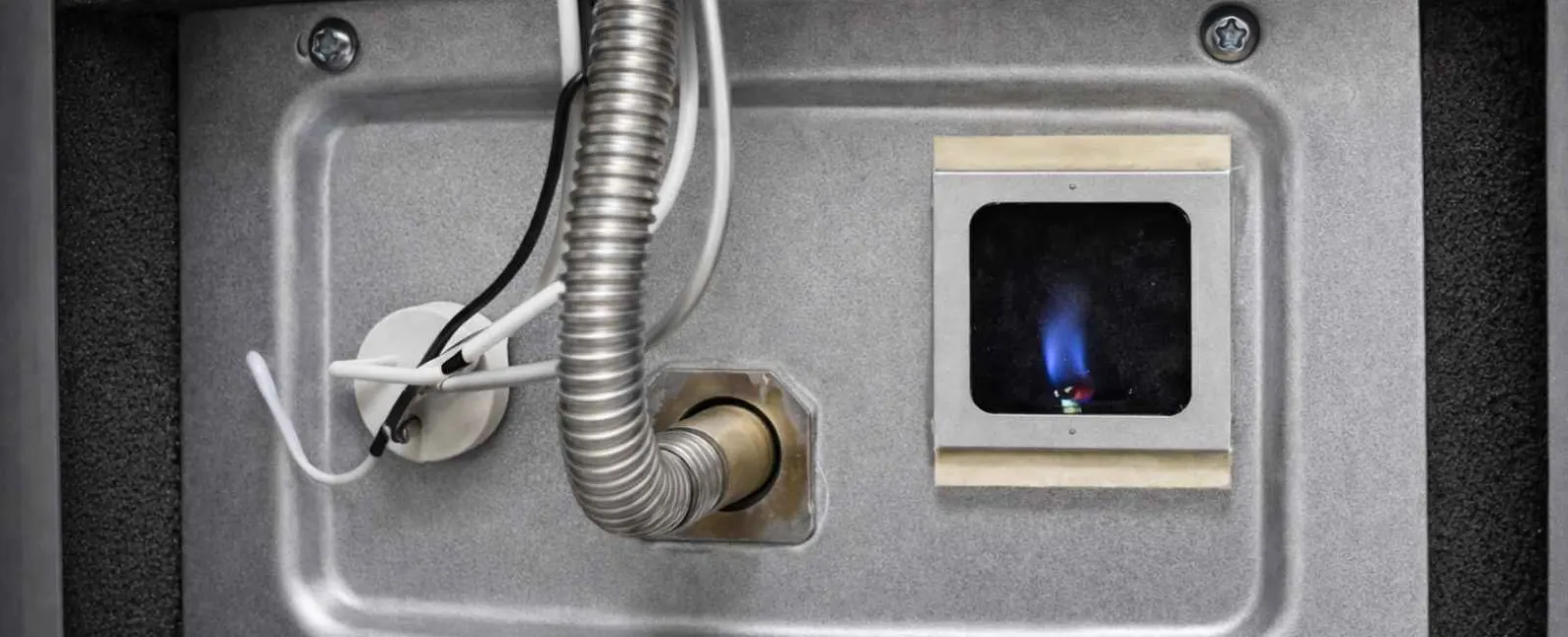
You've relit your water heater's pilot light multiple times this week. You follow the steps, set the dial to Pilot, hold the button, light the flame, wait, release, and it ignites. But a few hours later, you're back to cold water. The pilot has gone out again. At this point, you're tired of being the designated relighter.
A pilot light that won't stay lit is one of the most common water-heater issues Atlanta homeowners run into, and it's frustrating because it's unpredictable. Sometimes it holds for days, sometimes only hours, and you never know when you'll have hot water. You're also wasting time and gas every time you relight it.
The good news: after decades of service calls, we can tell you that recurring pilot-light failures usually trace back to seven core causes, and most are straightforward to diagnose and fix.
What Does a Pilot Light Do? (Understanding the System)
How a pilot light works: The pilot is a small, always-on flame that ignites the water heater's main burner. When the tank cools below the thermostat setting, the gas control valve opens, the main burner receives gas, and the pilot flame lights it. Once the tank reaches temperature, the burner shuts off, but the pilot stays lit for the next cycle.
The thermocouple (or flame sensor): Right beside the pilot is a metal probe. When heated by the pilot flame, it generates a tiny electrical current (about 25-30 millivolts). This current tells the gas control valve that the flame is present and it's safe to keep supplying gas. If the pilot goes out, the probe cools, the electrical signal stops, and the valve automatically shuts off gas flow to prevent a gas leak.
Why this matters: A pilot light that won't stay lit means one of two things:
The flame is getting extinguished by an outside factor, or
The safety system thinks the flame is out even when it's burning, usually a sensor or gas valve issue.
This distinction is what helps narrow down the real cause.
The 7 Causes of Pilot Light Failure (Ranked by Frequency)
Based on three decades of repairing water heaters, here are the seven causes ranked from most to least common.
Cause #1: Failed or Failing Thermocouple - 70% of Cases
The thermocouple is the safety device that keeps the gas flowing to the pilot. When the pilot flame heats it, the thermocouple generates a small electrical current that tells the gas valve, "the flame is on, keep supplying gas." When it fails, it no longer produces enough voltage, and the gas valve shuts off, killing the pilot.
Why thermocouples fail: They typically last 5-10 years. Heat cycles oxidize the tip, connections corrode, and the internal wiring breaks down. Once it drops below 10-12 millivolts, the gas valve won't stay open.
How to diagnose a bad thermocouple:
1. The 60-second test: Light the pilot and hold the gas control knob for a full 60 seconds. Release it.
Pilot stays lit briefly (1-2 minutes) then dies → weak thermocouple
Pilot dies the moment you release → completely failed thermocouple
2. Voltage test (definitive): Requires a multimeter.
With the pilot lit, disconnect the thermocouple from the gas valve
Set the meter to DC millivolts
Red probe on the threaded outer connector, black probe on the center lead
25-30 mV: Good
<10 mV: Bad
3. Visual check: The tip should be clean and metallic. Heavy soot, white crust, or corrosion = degraded.
Cause #2: Dirty Pilot Assembly or Thermocouple - 15% of Cases
Even if the thermocouple itself is fine, buildup on the thermocouple tip or inside the pilot orifice can prevent the flame from properly heating the sensor. A weak or obstructed pilot flame will shut off, making it appear the thermocouple has failed.
Why this is common: Basement and garage water heaters sit in humid, dusty environments. Spiders are attracted to the faint gas smell and regularly build webs that block the pilot flame or orifice. Dust, carbon, and debris accumulate on the thermocouple tip, weakening the flame.
How to diagnose a dirty pilot assembly:
Visible spider webs around the pilot or thermocouple
Black soot or white crust on the thermocouple tip
Dust or debris around the burner area
Weak, lazy, or yellow pilot flame (a healthy flame is sharp and blue)
Flame that flickers or won't stay stable
A yellow/orange flame almost always indicates incomplete combustion due to a clogged orifice or restricted gas flow.
Cause #3: Draft or Air Flow Problems - 5% of Cases
A pilot flame can't survive steady air movement. Water heaters in garages, basements near exterior walls, or attics are especially prone to drafts. When cold and warm air move through gaps or vents, the small pilot flame gets blown out.
Why this is common: Seasonal temperature swings (warm days, cool nights) create strong air currents in unconditioned spaces. Garages, attics, and unfinished utility rooms often develop enough moving air to disrupt the pilot flame.
How to diagnose a draft issue:
The pilot goes out during certain weather: windy days, big temperature drops, nighttime
You feel noticeable air movement with your hand near the heater
Gaps around garage doors, utility room doors, windows, or flue penetrations
When lit, the pilot flame wavers, leans, or "dances" instead of burning steadily and blue
If the flame won't stay still, you're dealing with drafts.
Solutions:
Seal gaps around nearby doors or windows with weatherstripping
Use a small windscreen around the heater base without blocking combustion air
Inspect the flue pipe, make sure it's sealed properly and not causing backdraft
For attic installations: insulate the attic floor and seal penetrations to reduce air movement
These steps stabilize the environment so the pilot flame no longer gets blown out.
Cause #4: Faulty Gas Control Valve - 4% of Cases
The gas control valve regulates gas flow to both the pilot and the main burner. When its internal components wear out, the valve can't deliver steady gas pressure to the pilot—even if the thermocouple and pilot assembly are perfectly fine. An inconsistent gas supply makes the pilot go out randomly.
How to diagnose a bad gas control valve:
You've already replaced the thermocouple, but the pilot still won't stay lit
The pilot flame fluctuates, strong one moment, weak the next
You hear clicking or buzzing coming from the gas control valve
You detect a faint gas smell when the pilot is lit (a sign the valve isn't sealing correctly)
These symptoms point to a failing valve rather than to a dirty pilot or sensor.
Professional repair: Replacing a gas control valve is not a DIY project. It requires shutting off and disconnecting the gas line, draining part of the tank, swapping the valve, and leak-testing everything.
Important age note: If your water heater is 8+ years old, spending $400-$600 on a new valve is about half the cost of a new water heater ($900-$2,000). At that point, replacement may make more long-term sense.
Because this repair involves gas-line work and leak prevention, it should be handled by a licensed pro.
Cause #5: Bent or Mispositioned Thermocouple - 3% of Cases
The thermocouple can be perfectly functional but still fail if its tip isn't sitting correctly in the pilot flame. If the flame doesn't fully heat the tip, the thermocouple won't generate enough voltage to keep the gas valve open, and the pilot will go out.
How to diagnose misalignment:
The thermocouple tip sits above, beside, or barely touches the flame instead of being fully engulfed
The pilot worked fine until someone bumped the assembly or did maintenance nearby
You recently replaced the thermocouple, and now the pilot won't stay lit
Cause #6: Pilot Flame Set Too Low - 2% of Cases
Some gas control valves include a pilot-flame adjustment screw. If it's set too low, the pilot flame won't heat the thermocouple enough to keep the gas valve open. The pilot lights, but the flame is too weak to sustain itself.
How to diagnose a weak pilot flame:
The pilot flame is tiny, weak, or barely visible
The flame is yellow/orange instead of strong and blue
The thermocouple tip only warms slightly; it should glow cherry red when heated properly
These symptoms mean the pilot isn't producing enough heat, not that the thermocouple is dead.
Look for a small screw labeled "Pilot Adjust" or similar on the gas valve.
Use a flat-head screwdriver and turn the screw slightly counterclockwise (1/8 turn at a time) to increase pilot flow.
Relight the pilot and check the flame:
Should be strong
Blue
About 1-2 inches tall
Important: Not every gas control valve has a pilot adjustment screw. If yours isn't clearly labeled, don't experiment; turning the wrong screw can damage the valve or create a safety issue. When in doubt, call a pro.
Cause #7: Blocked or Damaged Flue Pipe - 1% of Cases
The flue pipe vents combustion gases from your water heater to the outdoors. If it becomes blocked by debris, bird nests, collapsed sections, or physical damage, it can create backdraft, pushing exhaust downward. That backdraft can blow out the pilot or starve it of oxygen.
How to diagnose a flue issue:
The pilot goes out only or mostly when the main burner runs
Soot marks around the flue connection
Flue pipe feels warm/hot when the burner isn't firing (a sign of backdraft)
You smell exhaust or a "burned" odor near the heater
Pilot flame wavers or shifts direction during burner operation
If you're seeing these, stop relighting the pilot; this isn't just a nuisance issue.
Critical safety note: Flue problems pose carbon monoxide hazards. If the flue is blocked, damaged, or backdrafting, gases can enter your home. Don't relight the pilot or keep troubleshooting; this requires immediate professional attention.
A licensed tech must inspect, clean, repair, or replace the flue before the heater is used again.
Critical Safety Warnings When Working with Gas Water Heaters
1. If you smell gas strongly:
Stop everything.
Don't relight the pilot
Don't flip switches or create sparks
Leave the area immediately
Don't use your phone until you're outside
Call your gas utility or 911 from a safe distance
A strong rotten-egg/sulfur smell means a real leak; evacuate first, troubleshoot later.
2. Always wait 5 minutes before relighting the pilot:
If the pilot has gone out or you've turned the valve to Off, give the gas in the chamber time to dissipate. Relighting too soon can ignite residual gas and cause a flash fire.
3. Make sure the heater has enough combustion air:
Water heaters need fresh air to burn gas safely. Don't seal the utility room, block vents, or pile storage around the heater. If you feel dizzy, nauseous, or get headaches near the unit, shut it down; those are carbon-monoxide warning signs.
4. Call a Pro Immediately if:
You're uncomfortable working around gas
The pilot still won't stay lit
You smell gas
You suspect flue or backdraft issues
Anything feels even slightly unsafe
The cost of a service call is nothing compared to the risk of a gas explosion or CO poisoning.
Expert Water Heater Repair Throughout Metro Atlanta
At Dalmatian Plumbing, we troubleshoot water-heater pilot issues every day across Atlanta, Marietta, Roswell, Alpharetta, Sandy Springs, and nearby areas. With 30+ years of experience, we can usually determine whether the problem is a thermocouple, gas control valve, dirty pilot assembly, or a larger system issue within minutes of arriving. We know inconsistent hot water is disruptive, and no one has time to keep relighting a pilot. That's why we offer same-day service for water-heater failures. Our trucks carry the most common thermocouples, pilot assemblies, and gas control valves for major brands (Rheem, AO Smith, Bradford White, State), so most repairs are completed on the first visit.
If your pilot keeps going out, stop wasting time and gas relighting it. Call Dalmatian Plumbing or schedule service online. We'll pinpoint the cause, give you clear repair options with upfront pricing, and restore reliable hot water.