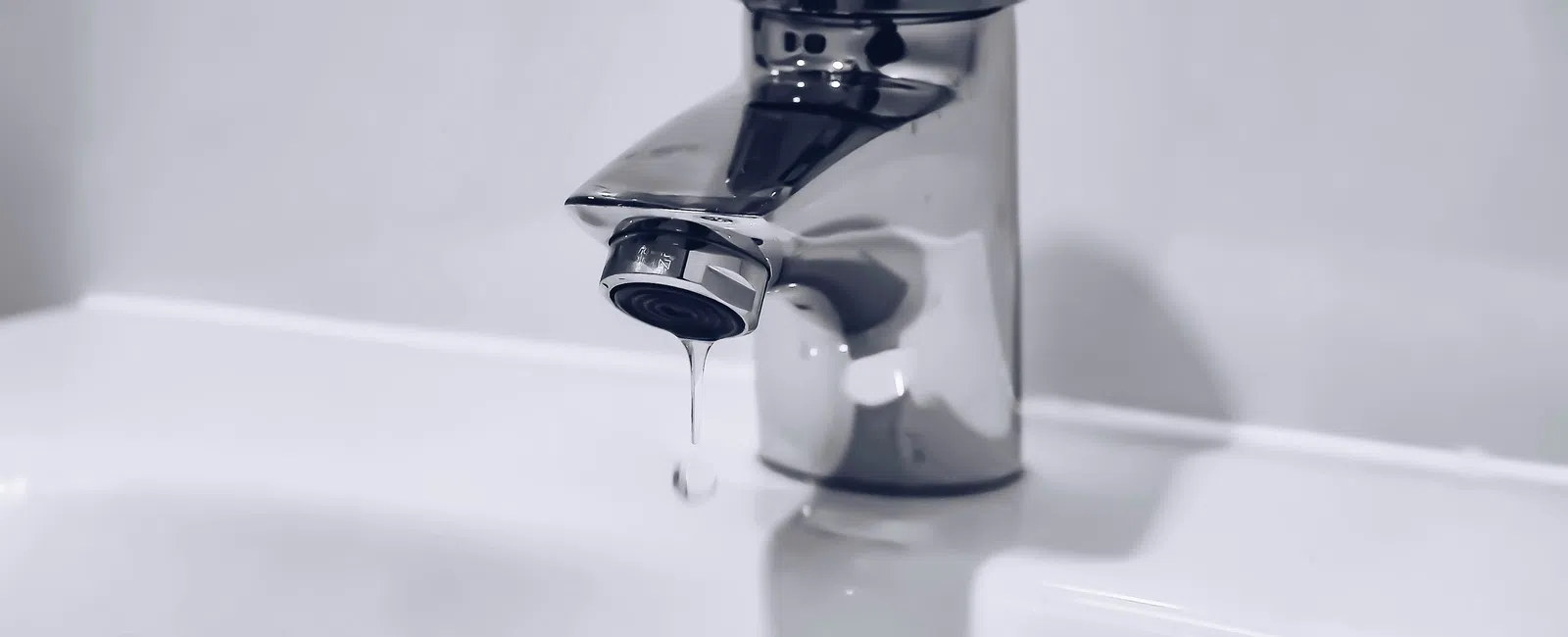
A
faucet that whistles, knocks, or screeches every time you turn it on is trying
to tell you something. Each sound points to a particular problem somewhere
between your water meter and the spout, and most of those problems get worse
the longer they go unchecked.
Here is
what the common sounds mean in Atlanta area homes.
Faucet Noise Is a
Symptom, Not the Problem
Your
faucet is the last stop on a long system: the street main, your service line,
the pressure regulator, the supply piping, the shutoff valve, and the cartridge
or valve stem inside the fixture. Noise happens when something in that chain is
restricted, worn, loose, or carrying more pressure than it was built for. That
is why replacing the faucet often does not stop the sound.
Whistling or a
High-Pitched Squeal
A
whistle means water is being forced through an opening smaller than it should
be. The usual causes are a supply stop valve that is only partly open, an
aerator clogged with mineral scale, a worn washer or cartridge inside the
handle, or household water pressure that is too high for the fixture.
Hard
water plays a role here, too. Metro Atlanta water carries enough dissolved
mineral to build scale inside aerators and valve seats over a few years, and a
narrowed opening is what creates the whistle.
One
thing to check: if the whistling happens at more than one fixture, or you also
have a whistling toilet, the faucet is not the cause. That points to system
pressure or a failing pressure regulator, which is a whole house issue worth
fixing before it damages appliances.
Knocking or Banging
When Water Starts or Stops
A sharp
knock, thump, or bang when a faucet opens or closes is usually water hammer.
Fast-moving water gets stopped abruptly, and that energy travels back through
the piping as a shockwave. You hear it as a bang in the wall, often repeating
as the wave bounces.
It is
easy to ignore because nothing is leaking yet. However, repeated hammering
works joints loose and fatigues fittings inside walls, and you will not see the
result until there is a stain on a ceiling.
Screeching or
Chattering From the Handle
If the
pitch changes as you move the handle, the noise is coming from inside the
faucet. A hardened rubber washer, a worn valve stem, or a cartridge that no
longer seats correctly will vibrate as water passes it, and that vibration is
the screech or rapid chatter you hear. If the fixture also drips after you shut
it off, the internal parts have reached the end of their service life.
Rattling or Vibrating
Under the Sink
Rattling
you can feel in the cabinet or countertop is usually a support problem, not a
fixture problem. Flexible supply lines vibrate against cabinet walls, and pipe
straps in a wall cavity or crawlspace work loose over time, especially in homes
that have been remodeled or partially repiped. A rattle that comes with a
pulsing feel in the water stream is different, and it usually traces back to a
regulator that is no longer holding steady pressure.
Humming or Buzzing
While Water Runs
A hum
while water is running usually means flow is being squeezed somewhere, often at
a partially closed valve or a restricted supply line. A hum that continues
after every faucet is off is a bigger concern. Either water is still moving
through a valve that is not fully seating, or system pressure is sitting above
what residential piping is built to carry.
Why Faucet Noise Is
Common in Atlanta Homes
Three
local factors add up.
Mineral
content. Hard water leaves scale inside aerators, cartridges, and
valve seats, which creates the restrictions behind whistles and squeals.
Housing
age. Plenty of homes across Marietta, Smyrna, Kennesaw,
Lawrenceville, and the older intown neighborhoods still have original supply
piping, aging shutoff valves, and strapping that has not been touched in
decades.
Pressure
variation. Elevation differences across the metro mean some
neighborhoods get incoming pressure well above the comfortable range. A home
with no regulator, or one that failed years ago, sends that pressure straight
to the fixtures.
Put
those together and a noisy Atlanta faucet is often a pressure or mineral
problem showing up at the fixture.
When a Noisy Faucet
Needs a Licensed Plumber
Call
for a professional diagnosis if any of these apply:
- More than one fixture in the house is
making noise
- You hear banging or hammering when water
shuts off
- The noise came with a change in water
pressure or flow
- The humming or buzzing continues after
every tap is closed
- The noise started after work was done on
the water main or water heater
- You see staining, dampness, or warping
near the fixture or on a nearby wall or ceiling
Frequently Asked
Questions
Is a noisy faucet
dangerous?
The
sound itself is harmless, but the conditions behind it are not. Excess pressure
and repeated water hammer stress joints, fittings, and appliance connections,
and those failures show up as leaks rather than as noise.
Why does only one
faucet in my house make noise?
A
single noisy fixture usually points to something local: a worn cartridge or
washer, a scaled aerator, or a supply valve that is not fully open. Noise at
several fixtures points to pressure or supply piping instead.
Will replacing the
faucet stop the noise?
Only if
the failing part is actually inside the fixture. If the real cause is high
pressure, water hammer, or an unsupported pipe, a new faucet will make the same
sound within days.
Why is my faucet
whistling when the water is off?
That
usually means water is still passing somewhere it should not, most often
through a valve that is no longer sealing. Have it checked promptly.
Get the Noise Diagnosed
by Atlanta Plumbers Who Know These Homes
Dalmatian
Plumbing has served Atlanta area homeowners for more than 25 years, backed by
75 plus years of combined technician experience. Our technicians are licensed
and background checked, every truck is stocked with parts, and same day service
is available. All of it is covered by our 100 percent satisfaction guarantee.
Call 404-314-3993 or
schedule your faucet and fixture repair online today.