If your shower glass is covered in cloudy hard water stains or your water pressure feels weaker, it may be hard water, and it might be negatively affecting your pipes and appliances. A majority of homes in the United States have hard water, and metro Atlanta is no exception.
What Is Hard Water?
Hard water is water with a high mineral content, mainly calcium and magnesium. As groundwater travels through limestone and other rock, it picks up those minerals and carries them straight into your home. Over time, hard water flows through limestone and other rocks, picking up those minerals and carrying them straight into your home. Over time, hard water flowing through copper pipes, water heaters, and dishwashers can lead to significant damage and mineral buildup.
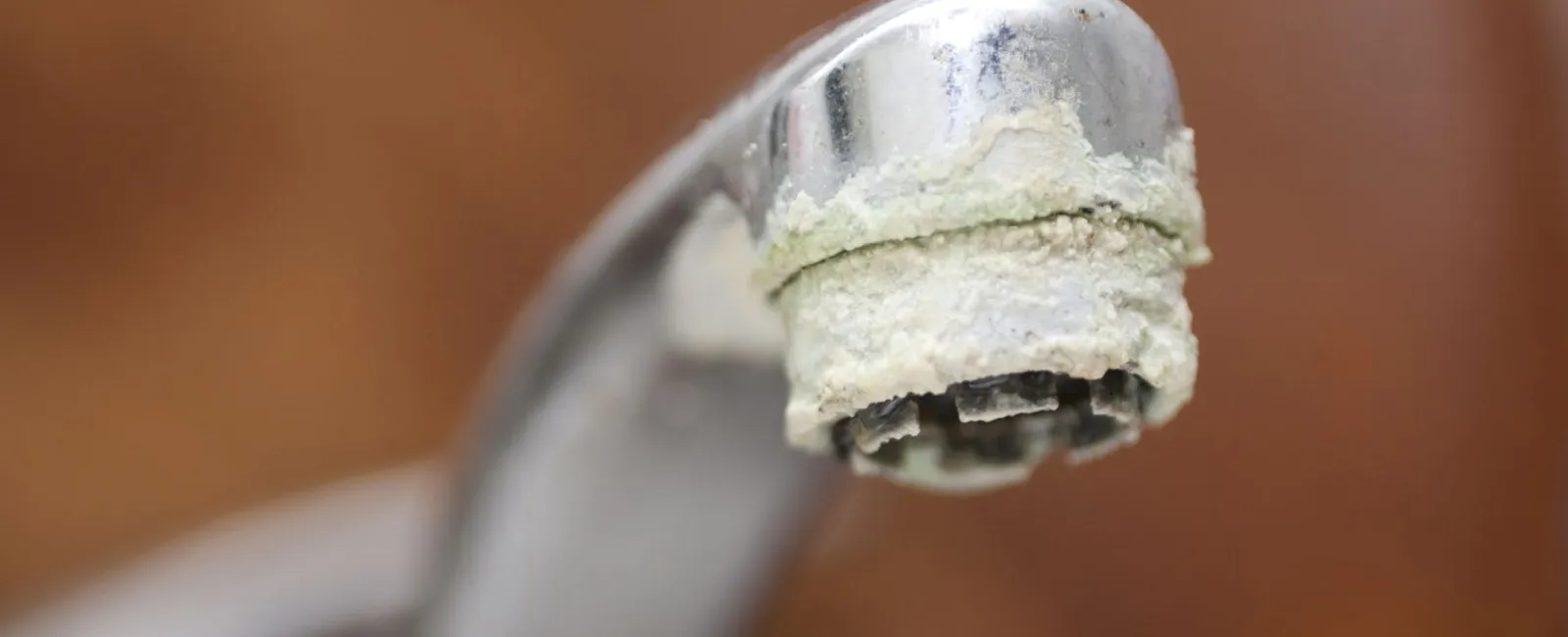
When hard water heats up or sits in pipes, the dissolved minerals separate out and stick to whatever surface they come into contact with. The crusty white buildup that looks like dried toothpaste on your faucet is called limescale, and it's the same stuff forming inside parts of your home you can't see.
The Damage Hard Water Does
Here's the thing about calcium in water: small amounts are normal, but buildup can create serious plumbing problems over time.
Inside your pipes. Scale narrows the inside of your pipes a little more every year. Less room means lower water pressure, weaker showers, and faucets that take forever to fill a pot. In older homes with galvanized or aging copper lines, the minerals can also accelerate corrosion, leading to pinhole leaks and pipe failure.
Inside your water heater. Sediment settles at the bottom of the tank and forms an insulating layer between the heating element and the water. Your heater works longer and burns more energy to do the same job. Industry estimates show this can cut a water heater's lifespan by several years and raise your utility bill noticeably. For expert help, consider water heater services in the Atlanta area.
Inside your appliances. Dishwashers, washing machines, ice makers, and coffee makers all rely on clean waterways. Mineral buildup chokes valves, clogs spray arms, and wears out pumps.
Everywhere you can actually see it. Cloudy glasses, filmy plates, soap scum that won't quit, stiff laundry, dull hair, and dry skin. These are the cosmetic complaints, but they're also clear signs of hard water damage that's likely doing worse work behind the scenes.
Signs You Have a Hard Water Problem
Watch for:
- White or chalky residue on faucets, showerheads, and around drains
- Hard water stains on shower glass, sinks, and toilet bowls that come back days after cleaning
- Stubborn spots on glasses and dishes after a full dishwasher cycle
- Soap that won't lather properly, even with extra detergent
- Weak or steadily declining water pressure across multiple fixtures. Learn how to improve this with our guide to increasing water pressure in your shower.
- A water heater that takes longer to recover or makes popping and rumbling sounds
- Recurring clogs in showerheads or aerators
If two or three of these sound familiar, you're not imagining it.
How to Remove Calcium from Water (and Stop Stains from Coming Back)
There are two parts to fixing a hard water problem: cleaning up what's already there and preventing new buildup.
The surface fixes from the previous section handle visible hard water stains and crusty fixtures, but they won't touch the buildup forming inside your pipes and water heater. For appliances like coffee makers and dishwashers, run a descaling cycle every few months to slow internal scale.
For long-term hard water treatment: A whole-house water filtration system is the most effective answer. The right setup pulls minerals, sediment, and other contaminants out of your water before it ever reaches your pipes, fixtures, and appliances. Common options include:
- Whole-house filtration systems that treat every drop of water entering your home, protecting plumbing and appliances throughout
- Activated carbon filters that pull out chlorine, odors, and many common contaminants
- Reverse osmosis systems that strip dissolved solids, heavy metals, and minerals for highly purified water at specific taps
- UV disinfection that kills bacteria and viruses without adding chemicals
The right system depends on your water hardness, household size, and what else is in your supply. A water quality test is the smartest first step before deciding on anything bigger.
Find Out What's Actually Going On in Your Home
The trickiest part of hard water is that the worst damage is invisible until it isn't, and most homeowners don't act until a water heater fails or a pipe lets go. By then, the easy fix is no longer an option.
Dalmatian Plumbing's licensed Atlanta plumbers will come out, check your water quality, inspect your water heater and visible plumbing for signs of scale and corrosion, and give you a straight answer about what's happening in your home.
If you do need treatment, we'll walk you through the right whole-house water filtration system for your home, with the same satisfaction guarantee we put on every job.
We've been Atlanta's spot-on plumbers for years, with hundreds of five-star reviews from homeowners across Cobb, Cherokee, Fulton, Gwinnett, and surrounding counties. We're licensed, fully insured, and available 24/7 for emergencies.
Catch hard water early, and your pipes, water heater, and appliances will thank you for the next 20 years.
Schedule your water inspection online or call (404) 314-3993 today.