Low water pressure in the kitchen sink is usually caused by a clogged aerator, a partly closed shutoff valve under the sink, or debris inside the faucet cartridge. If the weak flow is only at the kitchen sink, the problem is almost always in the faucet or the lines right below it, and most of those fixes take less than an hour. If every faucet in the house is weak, the cause is farther upstream.
Narrow Down Where the Problem Is
A few quick checks will tell you where to look before you take anything apart:
- Run the bathroom sink and the tub. If they have normal pressure, the issue is limited to the kitchen.
- Run hot water by itself, then cold by itself. Weak flow on only one side points to that side's valve, supply line, or the water heater.
- Unscrew the aerator from the tip of the faucet and turn the water on. If the flow suddenly jumps, the aerator was the restriction.
That last check solves more kitchen sink pressure problems than anything else on this list.
A Clogged Faucet Aerator
The aerator is the small screen at the end of the spout. It mixes air into the stream and catches grit, and over time it fills with mineral scale and sediment. Pressure often drops right after the city works on a water main or you shut off the water for a repair, because that work stirs up sediment in the pipes and it lands in the screen.
Most aerators unscrew by hand, turning counterclockwise when you look up at the spout from below. Some recessed models need the small plastic key that came with the faucet. Put a towel over the drain first so nothing falls in. Take the aerator apart, rinse the screens, and soak them in white vinegar for an hour to dissolve scale. Scrub with an old toothbrush and screw it back on. If the screen is corroded or torn, a replacement costs very little at a hardware store, and taking the old one with you helps you match the size and thread.
Pull-Down Sprayer Problems
Pull-down and pull-out faucets have a spray head with its own screen on the face and a hose that connects under the sink. Mineral buildup in the spray face nozzles makes the stream weak and uneven. Soaking the head in vinegar and rubbing the rubber nozzles clears most of it.
Some pull-down models also have a small filter or check valve where the hose connects to the faucet body. Debris can collect there after water service work. If the spray head is clean and the flow is still weak, check under the sink that the hose isn't kinked or pinched by the counterweight and that the quick connector is fully seated.
Shutoff Valves Under the Sink
Each faucet supply line connects to a shutoff valve under the sink, often called an angle stop. If someone worked under the sink recently, one of those valves may not have been opened all the way. Turn each handle counterclockwise until it stops.
Older multi-turn valves can also fail on the inside. The washer wears or breaks loose, and the valve restricts water even when the handle is wide open. Quarter-turn valves rarely do this. A shutoff valve that won't fully open or drips at the stem needs to be replaced, which means shutting off the main water supply first.
A Clogged or Worn Faucet Cartridge
The cartridge is the valve inside the faucet handle that controls flow and temperature. Sediment that gets past the supply lines can lodge in its small ports, and the rubber seals wear out with age. Weak flow along with a stiff handle, or a handle that has to be turned farther than it used to for full pressure, often means the cartridge is the issue.
To check it, turn off both shutoff valves, open the faucet to release pressure, and remove the handle and retaining nut to pull the cartridge. Rinse out any grit and look at the seals. Cartridges are specific to the faucet brand and model, so bring the old one to the store or look up the part number before buying. If the faucet is old enough that parts are hard to find, replacing the whole faucet is often the more practical choice.
Kinked or Clogged Supply Lines
The flexible supply lines between the shutoff valves and the faucet can get kinked when things are shoved into the cabinet. Older solid supply tubes can also corrode inside. Look for sharp bends and replace any line that's crushed, bulging, or rusty at the fittings. Some faucets also have a small inlet screen where the supply line attaches, and that screen can catch sediment just like the aerator does.
Low Hot Water Pressure at the Kitchen Sink
If cold water is strong but hot water is weak, start with the hot side's shutoff valve and supply line under the sink. If those are fine and the weak hot water is only at the kitchen, the hot side of the cartridge may be partly blocked.
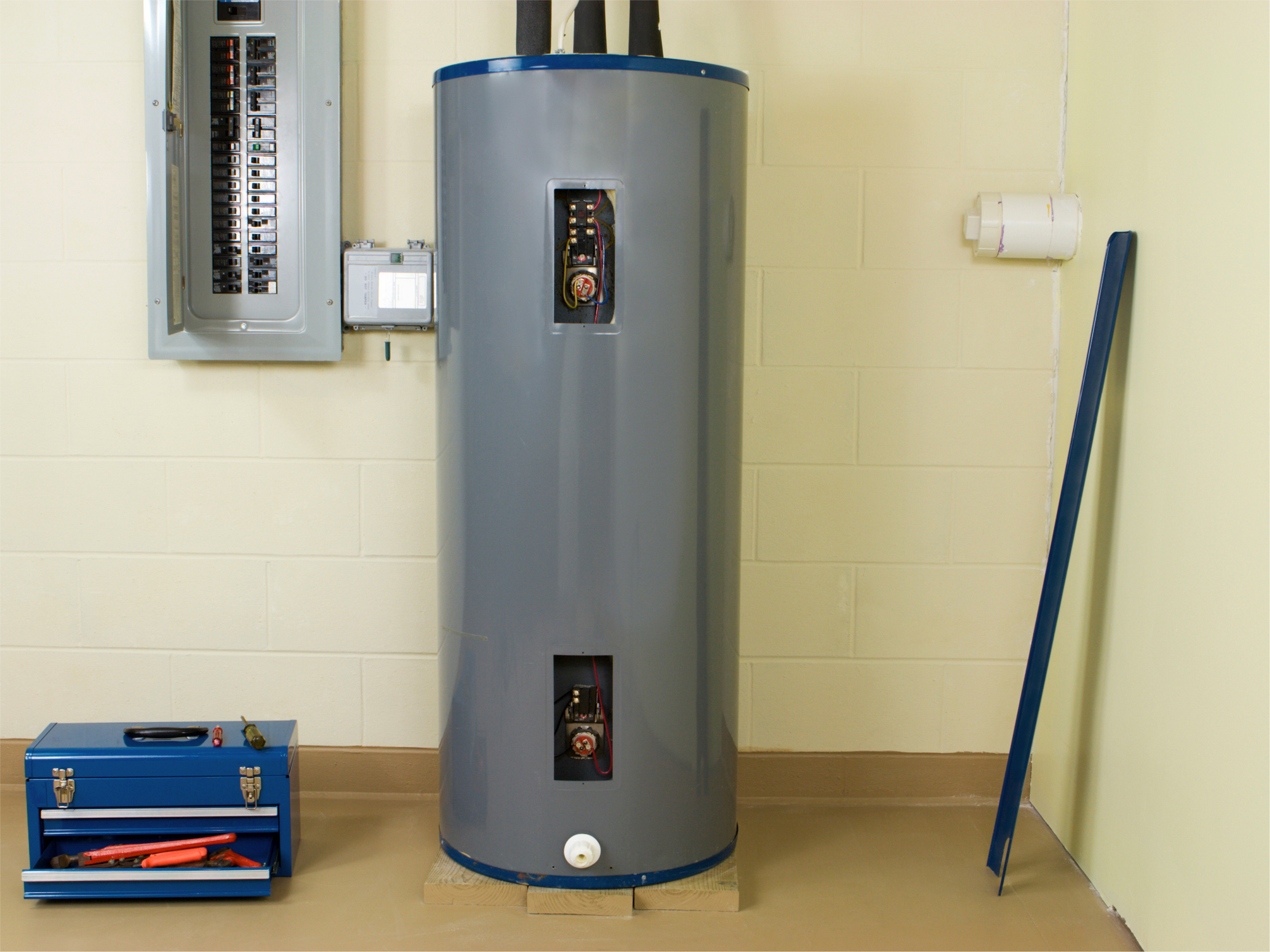
If hot water is weak at every faucet in the house, the problem is likely at the water heater. Sediment that settles in the tank can work its way into the hot water lines, and the shutoff valve on the heater's cold inlet may not be fully open. A plumber can check the heater and the lines leaving it.
Low Flow by Design
Newer kitchen faucets are built to use less water. Federal rules cap kitchen faucet flow at 2.2 gallons per minute, and some states set lower limits. Some faucets ship with aerators rated lower than that. Most aerators have the flow rate printed on the side, so if yours reads 1.5 gpm or less, the faucet may be working exactly as designed. A different aerator within the legal limit for your area can help, but it won't fix a clog somewhere else.
When the Whole House Has Low Pressure
If every fixture is weak, the kitchen faucet isn't the cause. Common reasons include a failing pressure regulator where the water line enters the house, a main shutoff valve that isn't fully open, corroded galvanized pipes that have narrowed on the inside, or a leak in the water line between the meter and the house. A sudden drop across the whole house, especially with a higher water bill or wet spots in the yard, can point to a leak in the main water line.
When to Call a Plumber
Some kitchen sink pressure problems aren't worth fighting on your own. Call a plumber if you see any of these:
- The aerator and spray head are clean, the valves are open, and the flow is still weak.
- A shutoff valve won't turn, won't fully open, or leaks when you move it.
- The cartridge is stuck in the faucet body or you can't find a matching part.
- Several fixtures lost pressure at the same time.
- You notice water under the sink, damp cabinet floors, or a musty smell.
A plumber can test the pressure at the fixture and at the main line to pinpoint whether the problem is in the faucet, the supply lines, or the plumbing that feeds the whole house. That saves you from replacing parts that were never the problem.
Keep Your Kitchen Faucet Flowing
Clean the aerator every few months, more often if your water leaves white scale on your fixtures. Do it again after any water main work or plumbing repair that shut off your water. When you work under the sink, open the shutoff valves all the way afterward. If your faucet is more than 10 to 15 years old and keeps needing attention, a new one will usually perform better and save you repeat repairs.
If your kitchen sink pressure still isn't right, Dalmatian Plumbing's licensed plumbers repair and replace kitchen faucets, diagnose low water pressure, and fix the supply lines and valves that feed them. Call (404) 314-3993 or schedule faucet repair online, and visit our faucet and fixture repair page to see everything we handle.