A 50-foot run of 3/4-inch pipe holds more than a gallon of water. Once that water cools between uses, a bathroom faucet flowing about 1.5 gallons per minute takes close to a minute to clear it before hot water arrives. In a two-story house or a long ranch with the primary suite at the far end, that wait happens at the same sink every morning.
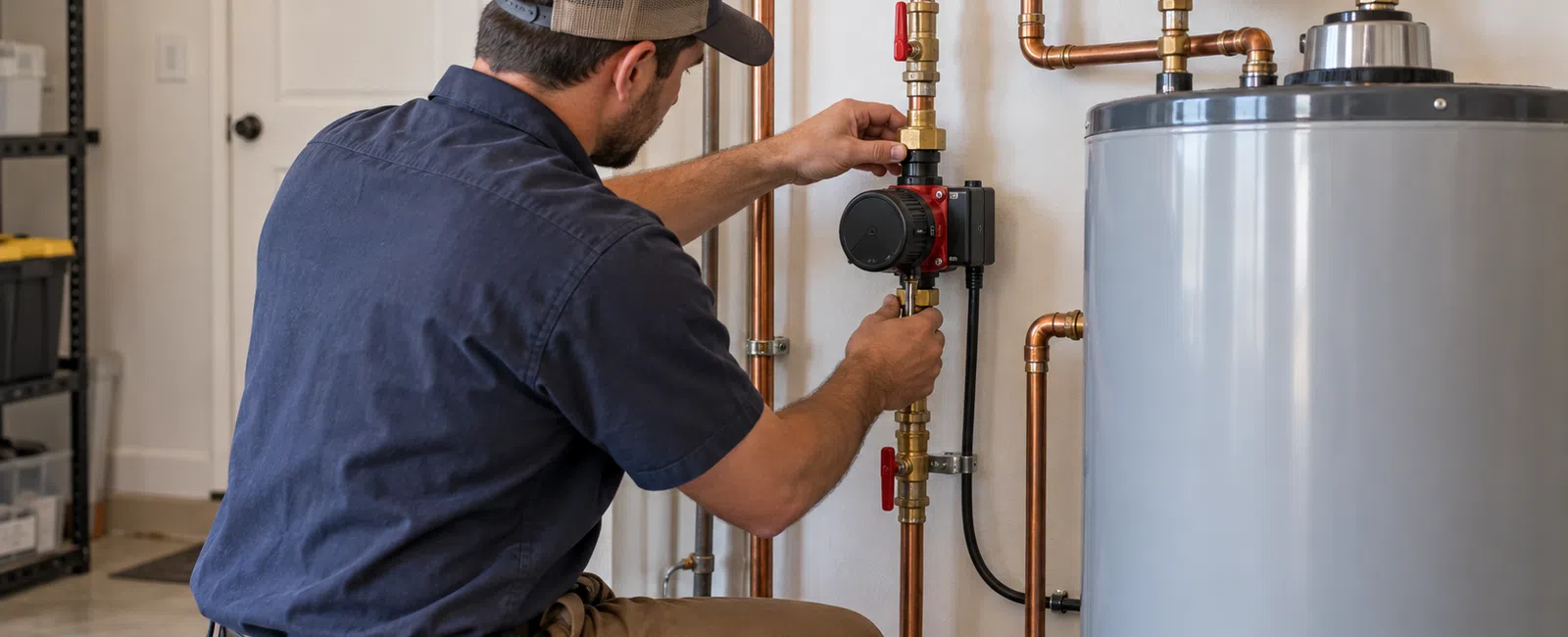
A hot water recirculating pump keeps warm water moving through the hot line so it is already near the fixture when you open the tap. The pump itself is simple. Which setup fits your house depends on how the plumbing was run, and that is where most of the decision sits.
Why Hot Water Takes So Long to Reach the Faucet
The delay has nothing to do with how fast the water heater works. Hot water leaves the tank right away, but it has to push out everything sitting in the line first, and that water has cooled to room temperature. Distance and pipe diameter determine how long you wait. A slow arrival is different from water that never gets fully hot. If the shower warms up and then fades, the problem is usually at the heater or the valve, and our post on a shower that won't get hot covers those causes. Running out partway through a shower is a capacity issue, which we explain in our blog about hot water that runs out fast.
Four Ways to Set Up Hot Water Recirculation
|
Setup |
How it works |
Best fit |
Trade-off |
|
Dedicated return line |
A separate pipe carries cooled water from the farthest fixture back to the heater |
New construction or major remodels |
Retrofitting means opening walls to run new pipe |
|
Crossover valve system |
Pump at the heater, thermostatic valve under the farthest sink |
Existing homes without a return line |
That sink's cold tap can run lukewarm for a few |
| Under-sink pump | Pump mounted at the farthest fixture moves water through a valve into the cold line | Homes where the heater area has no outlet | Needs a power outlet under the sink |
| Tankless with built-in pump | Some tankless units include a recirculation pump and controls | Homes already switching to tankless | Only certain models support it |
Most homes we see in metro Atlanta were built without a dedicated return line, so the crossover valve system is the setup we recommend most often. It installs at the water heater and one sink, with no new pipe through the walls.
Timers, Thermostats, and On-Demand Controls
A pump running around the clock keeps the hot line warm all day, and the heat lost through the pipe walls shows up on the energy bill. Controls fix that. A timer runs the pump during the hours your household actually uses water, a built-in thermostat shuts it off once the line reaches temperature, and on-demand models start the pump from a button or motion sensor a minute before you need it.
Insulating the hot lines in a crawl space or attic makes any of these setups work better, since the water holds its heat longer between cycles.
When a Recirculating Pump Is Worth Adding
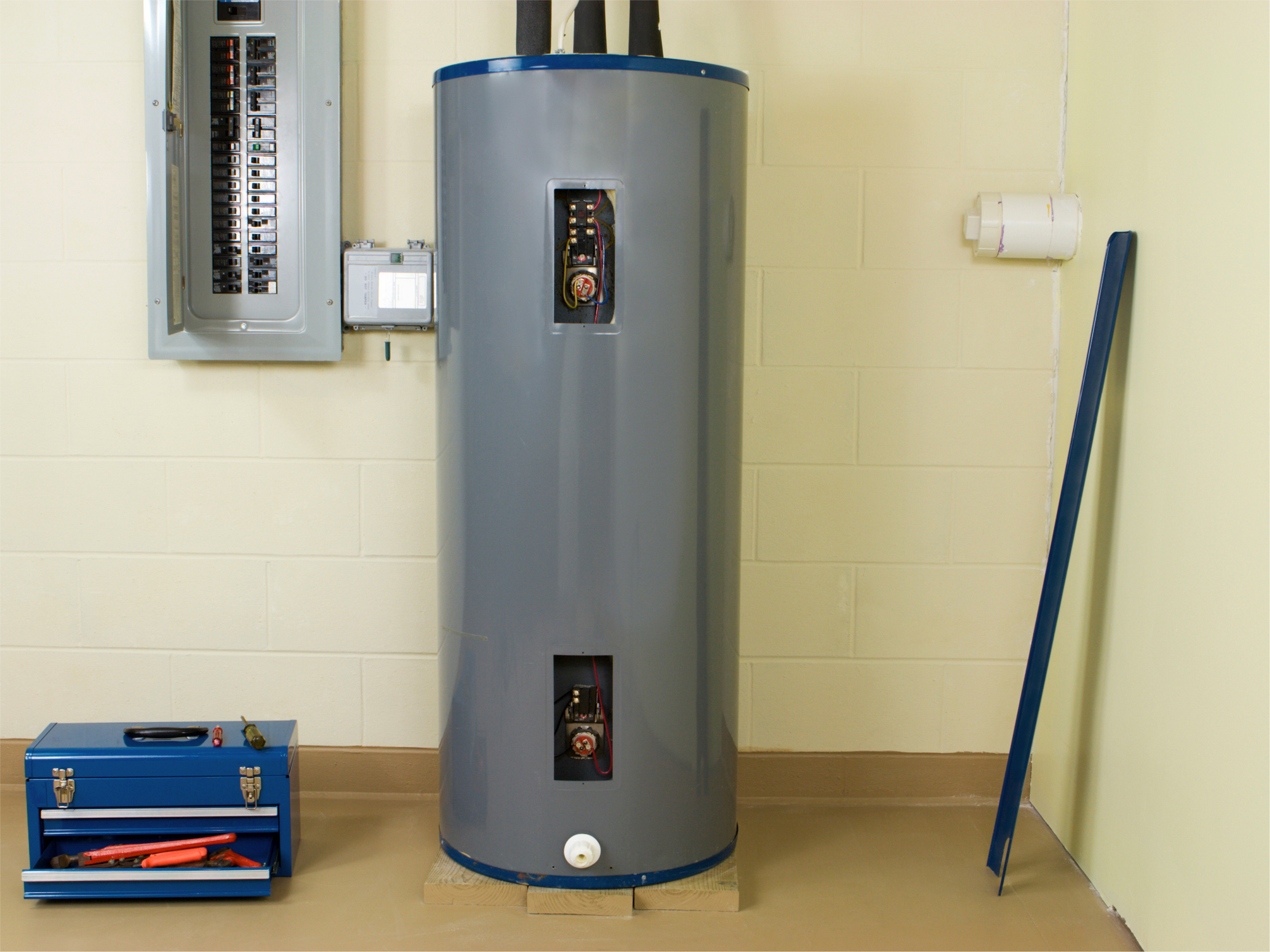
The homes that benefit most have long runs to at least one bathroom, a water heater in a garage or basement corner, or a primary suite at the opposite end of the house from the heater. If the heater sits near the middle of the house and every fixture is within a short run, the wait is usually too short for a pump to change much.
If you are planning water heater replacement anyway, that is the easiest time to add recirculation, since the plumber is already working at the heater connections.
Recirculating Pump FAQ
Do hot water recirculating pumps use a lot of electricity?
The pump motor itself draws little power. The higher cost is heat lost from water kept moving through the pipes, which is why a timer, thermostat, or on-demand control matters more than the pump you choose.
Do recirculating pumps work with tankless water heaters?
They can, but the tankless unit has to be rated for it. Some models include a built-in pump, while others need a specific kit to protect the heat exchanger and warranty. A tankless heater fires only when water is moving, and how a tankless unit heats water on demand explains why that affects recirculation. We check compatibility before any tankless install that includes it.
Where is a recirculating pump installed?
In a crossover or dedicated return system, the pump mounts at the water heater. An under-sink system puts the pump at the fixture farthest from the heater.
Will a crossover valve make my cold water warm?
At the sink with the valve, the cold tap can run lukewarm for a few seconds before cold water arrives. Every other fixture in the house works normally.
Tired of Running the Tap For a Full Minute?
Dalmatian Plumbing looks at how your hot water lines are run and recommends the recirculation setup that fits your house. Licensed, insured, and based in Kennesaw. Call (404) 314-3993 or schedule service online.