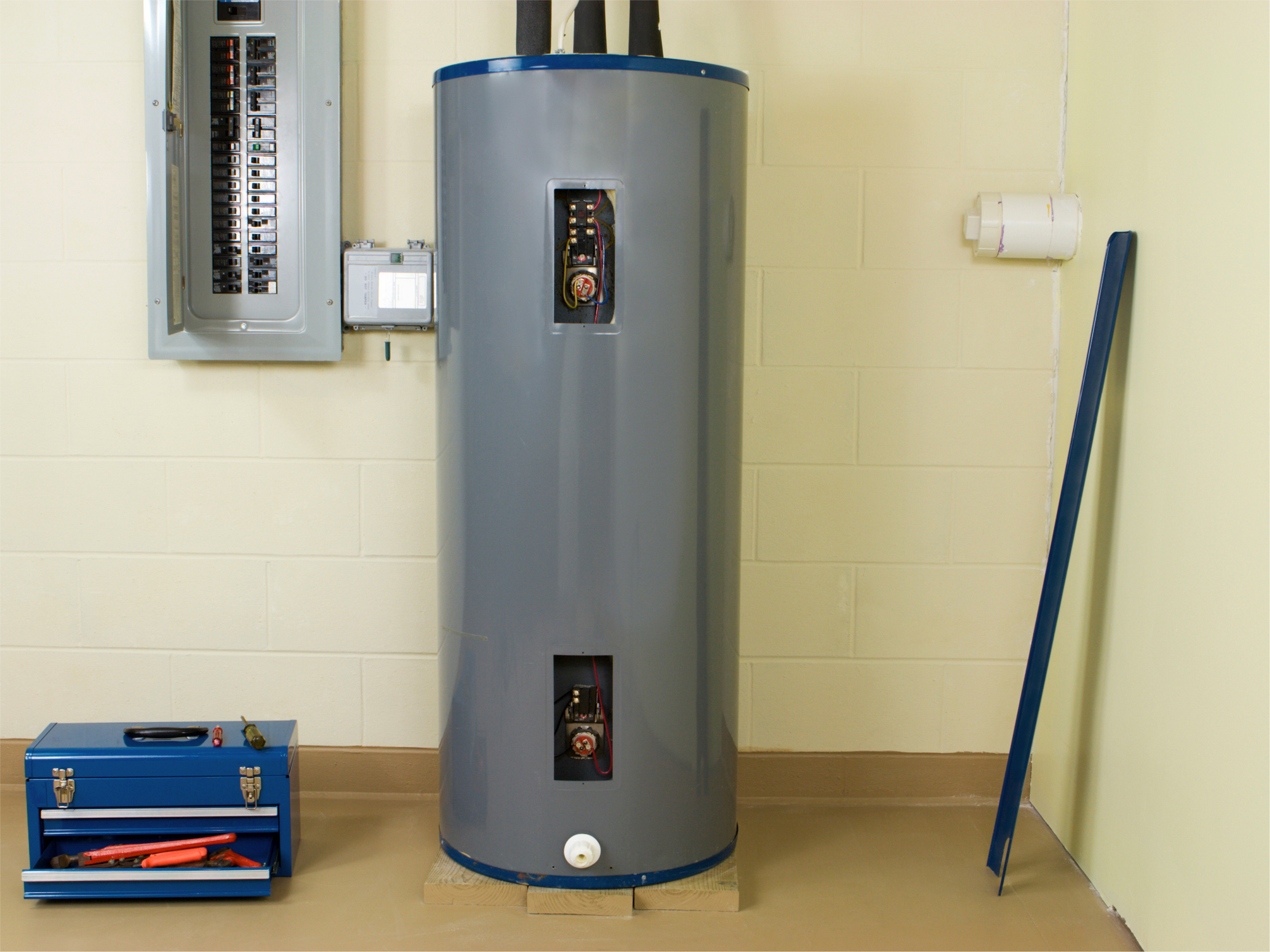
A 40-gallon tank of water grows by roughly half a gallon as it heats up. In some homes, that extra volume pushes back toward the city main and nothing happens. In others, a pressure regulator, check valve, or backflow preventer blocks the way, and the pressure has nowhere to go but into the water heater, the fixtures, and the relief valve on top of the tank.
That second setup is called a closed system, and it is the reason plumbing code requires thermal expansion control on so many water heater installs. Many metro Atlanta homes have a pressure regulator on the main line, so we check for one on every water heater replacement we quote.
What Thermal Expansion Does in a Closed System
Every time the burner or heating elements cycle, the water in the tank expands. In an open system, that small volume slips back toward the street. In a closed system, it presses against the check valve, and pressure throughout the house climbs above where it normally sits.
Normal household water pressure runs around 40 to 80 psi. The temperature and pressure (T&P) relief valve on a water heater opens at 150 psi. In a closed system without expansion control, every heating cycle pushes the house closer to that limit and leans on the last safety device on the tank.
Those repeated spikes wear on the tank lining, flex connectors, faucet cartridges, and toilet fill valves. The damage builds slowly, so it usually shows up as several small problems at once instead of one obvious failure.
Signs Your Plumbing Is Already Fighting Thermal Expansion
The most common sign is a T&P valve that drips after a shower or a dishwasher cycle, then stops once the house sits quiet. Other clues include a toilet that briefly refills on its own, faucets that spurt when first opened, and pressure that jumps right after the water heater fires.
A hose bib pressure gauge with a maximum-reading needle, left on overnight, shows whether pressure spikes while nobody is using water. If the relief valve is already discharging, there are other possible causes too, and our blog on why a water heater starts leaking covers them.
Which Homes Need an Expansion Tank
| Home Setup | Closed System | Expansion Tank |
No pressure regulator, no check valve at the meter |
No | Usually not required |
Pressure regulator on the main line |
Yes, in most cases | Required |
Backflow preventer or check valve at the meter |
Yes | Required |
Tank heater replaced with tankless |
Depends on the unit | Follow the manufacturer and local inspector |
Expansion tank already installed but 5+ years old |
Yes | Test it, replace if waterlogged |
If your home has a pressure-reducing valve on the main water line, you have a closed system. The regulator and the expansion tank work as a pair: one keeps incoming pressure in range, and the other absorbs what the water heater adds.
How an Expansion Tank Works
An expansion tank is a small steel tank, usually around 2 gallons for a standard residential heater, divided by a rubber diaphragm. Water from the cold supply line fills one side, and pressurized air fills the other. When heated water expands, it pushes into the tank and compresses the air instead of straining the plumbing.
Setting the Air Charge
Tanks ship with a factory air charge, commonly 40 psi. Before installation, we match that charge to the home's static water pressure using a gauge and a pump. A tank charged too low fills with water before the heater ever runs, and one charged too high barely accepts any. Either mistake leaves the system acting closed.
When the Tank Itself Fails
The diaphragm eventually wears out. Press the air valve stem on top of the tank: air means the diaphragm is holding, while water means it has ruptured and the tank needs replacing. A tank that sounds full when tapped on the upper half points to the same problem.
We test the expansion tank on every water heater replacement we do, since a new heater connected to a dead tank faces the same pressure that wore out the old one.
Expansion Tank FAQ
What size expansion tank does a 40-gallon water heater need?
At typical household pressure, a tank around 2 gallons covers most 40- and 50-gallon heaters. Higher incoming pressure or a larger heater can call for a 4.5-gallon tank, so sizing goes by the pressure reading at the house, not the heater size alone.
Can I install an expansion tank myself?
The job means cutting into the cold supply line, setting the air charge to match house pressure, and supporting a tank that weighs far more full than empty. In most metro Atlanta jurisdictions, replacing a water heater also requires a permit, and the inspection looks for thermal expansion control.
Does a tankless water heater need an expansion tank?
A tankless unit holds very little water, so thermal expansion is minimal. Some manufacturers and local inspectors still require one in a closed system, and we confirm both before any tankless water heater installation.
How long does an expansion tank last?
Most last around 5 to 10 years, depending on water pressure and how hard the tank works. Testing the air valve once a year catches a failed diaphragm before it shows up as a dripping relief valve.
Relief Valve Dripping After Every Shower?
Dalmatian Plumbing tests your house pressure and your expansion tank, then tells you what your system needs. Licensed, insured, and based in Kennesaw. Call (404) 314-3993 or schedule service online.