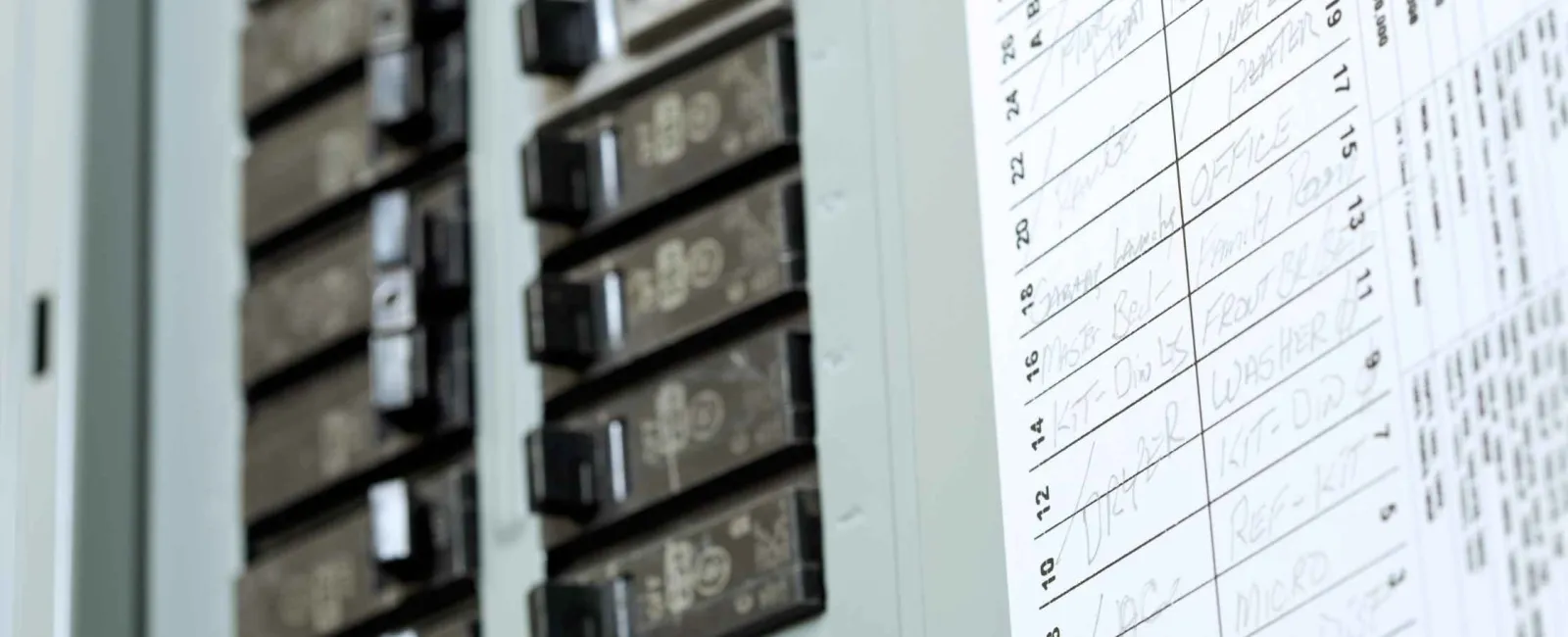
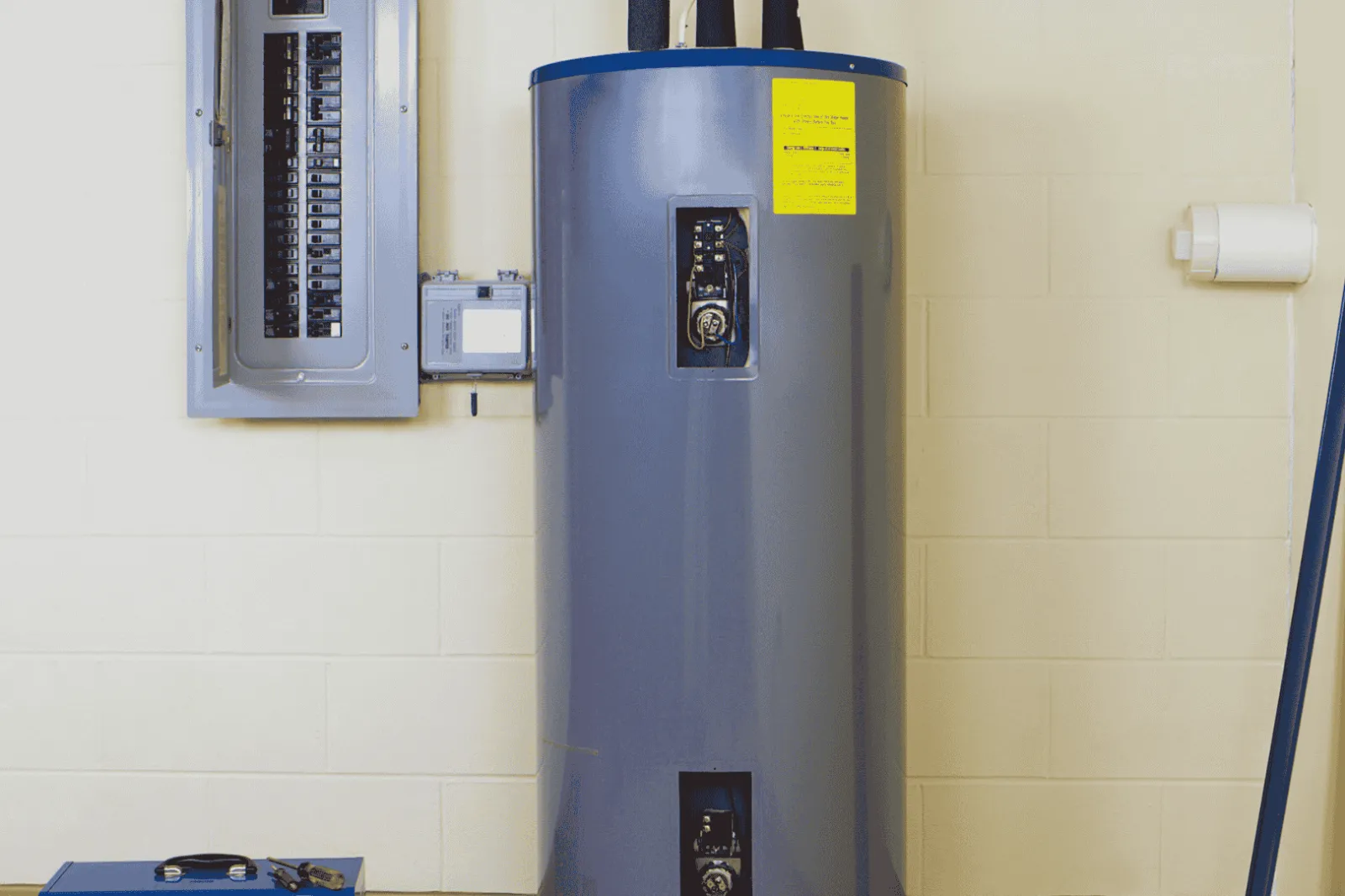
But here's what trips up most homeowners: the breaker size isn't just about your water heater's wattage. It's about understanding how many amps your water heater actually draws, applying the NEC's 125% safety rule, and matching everything to the correct wire gauge. Get any piece wrong, and you're looking at a breaker that trips constantly or, worse, a fire hazard.
This guide covers exactly how to determine the right water heater breaker size for your unit, with charts for quick reference and explanations for when you need to dig deeper.
Water Heater Breaker Size Chart
Use this chart to find the correct breaker size for your water heater based on wattage:
| Wattage | Voltage | Amps Drawn | Breaker Size | Wire Gauge |
|---|---|---|---|---|
| 1,500W | 120V | 12.5A | 15-20 amp | 14-12 AWG |
| 2,000W | 120V | 16.7A | 20 amp | 12 AWG |
| 3,000W | 240V | 12.5A | 20 amp | 12 AWG |
| 3,500W | 240V | 14.6A | 20 amp | 12 AWG |
| 4,500W | 240V | 18.75A | 30 amp | 10 AWG |
| 5,500W | 240V | 22.9A | 30 amp | 10 AWG |
| 6,000W | 240V | 25A | 40 amp | 8 AWG |
The highlighted rows cover the vast majority of residential water heaters. If your unit is 4,500 or 5,500 watts at 240 volts, you need a 30-amp double-pole breaker with 10-gauge wire.
Water Heater Breaker Size by Tank Size
If you know your tank size but not your wattage, this chart provides typical breaker requirements:
| Tank Size | Typical Wattage | Breaker Size | Wire Gauge |
|---|---|---|---|
| Point-of-use (2-6 gal) | 1,500-2,500W | 15-20 amp | 14-12 AWG |
| 30-40 gallon | 4,500W | 30 amp | 10 AWG |
| 50 gallon | 4,500-5,500W | 30 amp | 10 AWG |
| 65-80 gallon | 5,500W | 30 amp | 10 AWG |
| 80+ gallon (high demand) | 5,500-6,000W+ | 40 amp | 8 AWG |
Important: Always verify your actual wattage on the manufacturer's label. Tank size is a general guide, but wattage varies by manufacturer and model.
How Many Amps Does a Water Heater Use?
This is one of the most common questions homeowners ask, and the answer depends entirely on your water heater's wattage and voltage.
To calculate water heater amps, divide wattage by voltage:
Amps = Watts ÷ Volts
For a standard 4,500-watt water heater on 240 volts: 4,500 ÷ 240 = 18.75 amps
Here's how many amps common water heaters draw:
| Water Heater Type | Wattage | Voltage | Amp Draw |
|---|---|---|---|
| Standard 40-50 gallon | 4,500W | 240V | 18.75 amps |
| Standard 50-80 gallon | 5,500W | 240V | 22.9 amps |
| High-demand tank | 6,000W | 240V | 25 amps |
| Point-of-use (small) | 1,500W | 120V | 12.5 amps |
| Whole-house tankless | 18,000-27,000W | 240V | 75-112.5 amps |
Why this matters: Your breaker must be rated higher than the amp draw to prevent nuisance tripping. That's where the NEC's 125% rule comes in.
The NEC 125% Rule Explained
The National Electrical Code requires that breakers for continuous loads, meaning any appliance that runs for three or more hours at a time, be rated at 125% of the calculated amperage. Water heaters qualify as continuous loads since they cycle on and off throughout the day to maintain tank temperature.
Here's the math for a 4,500-watt water heater:
- Calculate amps: 4,500W ÷ 240V = 18.75 amps
- Apply 125% rule: 18.75 × 1.25 = 23.44 amps
- Round up to standard breaker size: 30 amps
Standard breaker sizes are 15, 20, 25, 30, 35, 40, 50, and 60 amps. Since 23.44 amps falls between 20 and 25, and most electricians prefer additional headroom, a 30-amp breaker is the standard choice for residential water heaters.
NEC 422.11(E)(3) specifically permits a 30-amp breaker for water heaters rated up to 5,500 watts, which covers nearly all standard residential units.
What Size Wire for a Water Heater?
The water heater wire size must match your breaker size. Using undersized wire creates a serious fire hazard because the wire can overheat before the breaker trips.
| Breaker Size | Minimum Wire Gauge | Common Application |
|---|---|---|
| 15 amp | 14 AWG | Small point-of-use heaters |
| 20 amp | 12 AWG | Low-wattage tank heaters |
| 25 amp | 12 AWG | Mid-range heaters |
| 30 amp | 10 AWG | Most residential water heaters |
| 40 amp | 8 AWG | High-demand or commercial |
| 50 amp | 6 AWG | Large tankless units |
For a 30-amp circuit, you need 10-gauge wire. This is non-negotiable. A 30-amp breaker with 12-gauge wire won't trip fast enough during an overload, allowing the thinner wire to overheat.
10/2 or 10/3 Wire for Water Heater?
This is a common point of confusion. Most electric water heaters use 10/2 wire, which consists of two insulated conductors (hot wires) and a ground wire.
- 10/2 wire: Two hot conductors (black and white, with white re-identified as hot) plus bare ground. Standard for most residential water heaters.
- 10/3 wire: Two hot conductors, one neutral, plus ground. Only needed if your water heater requires a neutral connection, which is uncommon for standard electric tank heaters.
Check your water heater's wiring diagram. If it shows only two terminal connections plus ground, 10/2 is correct. If it requires a neutral (three-terminal connections plus ground), use 10/3.
Why Water Heaters Need a Double-Pole Breaker
- A water heater circuit breaker for standard 240-volt units must be a double-pole breaker. Here's why:
Your home's electrical panel has two "hot" bus bars, each carrying 120 volts. A double-pole breaker connects to both bars simultaneously, combining them to deliver 240 volts to your water heater.
A single-pole breaker only connects to one bus bar, providing 120 volts. That's not enough for a standard electric water heater to function.
- How to identify a double-pole breaker: It's twice as wide as a single-pole breaker, takes up two slots in your panel, and has both switches physically tied together so they trip simultaneously.
The only exception: small point-of-use water heaters designed for 120-volt operation can use single-pole breakers.
Two Heating Elements, One Wattage
If you look at your water heater's specifications, you might see something confusing: "Upper Element: 4,500W," "Lower Element: 4,500W," but "Total Connected Watts: 4,500W."
This isn't a typo. Electric water heaters use non-simultaneous operation, meaning the two elements never run simultaneously. The upper element heats first, shuts off, and then the lower element takes over.
This means your water heater only draws power from one element at a time, so your breaker only needs to handle a 4,500-watt load, not 9,000 watts. This design keeps electrical requirements manageable for residential circuits.
Hot Water Heater Breaker Requirements for Tankless Units
If you're considering a tankless water heater, be prepared for significantly higher electrical demands. Because tankless units heat water instantly on demand rather than maintaining a stored tank, they require much more power.
| Tankless Type | Wattage | Breaker Configuration | Wire Gauge |
|---|---|---|---|
| Point-of-use (single fixture) | 3,000-4,000W | 1× 20-30 amp | 12-10 AWG |
| Whole-house (small) | 12,000-18,000W | 2× 40 amp | 8 AWG |
| Whole-house (large) | 24,000-36,000W | 2-3× 50-60 amp | 6-4 AWG |
Whole-house tankless water heaters often require multiple dedicated circuits because a single breaker cannot handle the load. A 27,000-watt unit, for example, might need three separate 40-amp circuits, which significantly impacts installation costs and may require a panel upgrade.
Dedicated Circuit Requirement
Water heaters must have a dedicated circuit, meaning no other appliances, outlets, or lights share that breaker. This isn't just best practice; it's an NEC requirement for continuous-load appliances.
Why dedicated circuits matter:
Water heaters draw near-maximum current for extended periods. Sharing a circuit with other devices risks overloading the circuit and causing breaker trips or overheating. A dedicated circuit also ensures the breaker can accurately protect your water heater without interference from other loads.
If your water heater is currently sharing a circuit with outlets or other appliances, it doesn't meet code and should be corrected.
Signs Your Water Heater Circuit Needs an Upgrade
Consider upgrading your water heater electrical circuit if you notice any of these warning signs:
- The breaker trips frequently. Occasional trips during electrical storms are normal, but regular trips indicate the circuit is undersized or there's a problem with the water heater itself.
- You're installing a larger replacement. If your old 4,500-watt heater is being replaced with a 5,500-watt or 6,000-watt model, verify the existing circuit can handle the increased load before installation.
- You're upgrading to tankless. Tankless water heaters almost always require electrical upgrades. Budget for new circuits and, if planning the switch, potentially a panel upgrade.
- Wires feel warm to the touch. Warm wires near the water heater or inside the breaker panel indicate the circuit is working too hard. This is an immediate fire hazard; call an electrician right away.
- Your home has old wiring. Homes built before the 1980s may have undersized circuits that don't meet current code for modern water heaters. If your water heater was upgraded but your electrical system wasn't, there may be a mismatch.
Common Water Heater Breaker Sizing Mistakes
- Forgetting the 125% rule. Calculating amps without applying the continuous load safety factor results in an undersized breaker that trips frequently.
- Mismatching breaker and wire gauge. A 30-amp breaker with 12-gauge wire is dangerous. The breaker won't trip before the thinner wire overheats, creating a fire risk.
- Using a single-pole breaker for 240 volts. A 240-volt water heater on a single-pole breaker won't work correctly and creates safety hazards.
- Oversizing "for safety." A 50-amp breaker on a 4,500-watt water heater isn't safer; it's dangerous. The oversized breaker may not trip during a fault, allowing wires to overheat before protection kicks in.
Frequently Asked Questions
What size breaker do I need for a 50-gallon water heater?
Most 50-gallon water heaters are 4,500 to 5,500 watts at 240 volts and require a 30-amp double-pole breaker with 10-gauge wire. Always verify the wattage on your unit's label rather than relying on tank size alone.
Can a water heater be on a 40-amp breaker?
Only if your water heater's wattage requires it. Standard 4,500W and 5,500W heaters should use 30-amp breakers. Using a 40-amp breaker on these units is oversized and creates a safety hazard because the breaker may not trip during a fault condition.
How many amps does a 4500-watt water heater use?
A 4,500-watt water heater at 240 volts draws 18.75 amps (4,500 ÷ 240 = 18.75). With the NEC's required 125% safety factor, this translates to a 30-amp breaker requirement.
Do I need 10/2 or 10/3 wire for a water heater?
Most residential electric water heaters use 10/2 wire, which has two hot conductors plus ground. Only use 10/3 if your water heater specifically requires a neutral connection, which is uncommon for standard tank heaters. Check your unit's wiring diagram to confirm.
Does a water heater need a double 30-amp breaker?
Yes, if your water heater operates on 240 volts (most residential units do). The double-pole breaker connects to both hot bus bars in your panel to provide the required 240-volt supply.
Why does my water heater keep tripping the breaker?
Common causes include an undersized breaker, a failing heating element, a bad thermostat, water leaking onto electrical components, or loose wire connections. If the breaker is correctly sized for your water heater's wattage, have the unit professionally inspected.
When to Call a Professional
While understanding the size of the water heater breaker helps you make informed decisions, electrical work should typically be handled by licensed professionals. Contact an electrician if you need to install a new circuit, your wiring appears damaged or undersized, you're upgrading to a tankless water heater, or the breaker continues tripping after proper sizing is confirmed.
At Dalmatian Plumbing, we coordinate with licensed electricians on water heater installations throughout the Atlanta metro area to ensure both plumbing and electrical work meet code requirements. With 25+ years of local experience and a 4.9-star rating across 600+ Google reviews, we're here to help you get hot water flowing safely.
Call 404-314-3993 to schedule water heater service or get answers to your electrical questions.