A garbage disposal leaking from the bottom usually has a worn internal seal or a cracked housing. A crack in the housing almost always means the unit needs to be replaced. A worn seal or a loose connection can sometimes be repaired. Before deciding which one you're dealing with, confirm that the water actually starts at the bottom. Leaks higher up on the unit often run down the outside and drip from the lowest point, which makes a simple fix look like a dead disposal.
How Water Ends Up at the Bottom of a Disposal
A garbage disposal hangs below your sink with several connections feeding into it. Water from any of those connections follows gravity, so it slides down the metal or plastic shell and collects at the base. That's why a puddle on the cabinet floor directly under the unit doesn't tell you much on its own.
Here's a common example. A homeowner finds a wet cabinet after running the dishwasher and assumes the disposal has failed. When a plumber dries the unit and runs water through each connection one at a time, the drip turns out to start at the dishwasher hose fitting on the side. The bottom of the disposal was just where the water landed.
Tracing the leak to its true starting point determines everything else. It separates a quick connection repair from a full replacement.
Common Causes of a Garbage Disposal Leaking From the Bottom
When the water really is coming from the base of the unit, the cause is almost always inside the disposal itself.
Worn Internal Seals
Disposals have internal seals that keep water in the grinding chamber and away from the motor. Over years of use, those seals wear down. Once they start to fail, water can work its way past them and seep out the bottom of the unit. Depending on the unit and how far the wear has gone, a seal problem may be repairable or may signal that the disposal is nearing the end of its life.
A Cracked Housing
The outer housing holds the grinding chamber together. Age, corrosion, and hard objects that get dropped into the sink can all lead to cracks. A cracked housing can't be sealed or patched reliably, so it usually means the disposal needs to be replaced. Water dripping steadily from the bottom every time the sink is used is a classic sign of this problem.
Leaks That Only Look Like They Come From the Bottom
Several connections above the base can send water down the side of the unit. These are the usual suspects:
- Sink flange: the seal where the disposal mounts to the underside of the sink drain. It can loosen or lose its seal over time.
- Dishwasher hose connection: the fitting on the side of the disposal where the dishwasher drains in. Leaks here often show up only when the dishwasher runs.
- Discharge pipe: the drain line that carries water from the disposal to the rest of the sink plumbing. Its connection can loosen, or its gasket can wear.
The upside of finding the leak in one of these spots is that you can often repair a loose drain connection without replacing the whole disposal.
Repair or Replace a Leaking Garbage Disposal
The decision comes down to where the water starts and the overall condition of the unit. A leak from a loose drain connection or a worn seal can often be repaired. A leak from a cracked housing usually means replacement.
Age matters too. An older disposal that is leaking and also jamming, humming, or grinding loudly is likely reaching the end of its life. Putting money into a repair on a unit like that often just delays the replacement. In that situation, replacing the disposal tends to be the more practical choice, and a technician can tell you which way your unit leans after looking at it.
Replacement isn't a simple swap. It involves electrical connections and sealed plumbing fittings. The new unit also has to tie back into the sink drain and, if you have one, the dishwasher drain. If a connection isn't sealed correctly during installation, it will leak just like the old unit did.
Why Leaks Under the Sink Shouldn't Wait
A disposal leak can seem minor because it's tucked away inside a cabinet, but that's exactly what makes it a problem. Slow drips under a sink can go unnoticed for weeks. Over that time, they can rot the cabinet base, warp the flooring underneath, and give mold a damp, dark place to grow.
Leaks also tend to get worse. A seal that seeps a little today can fail faster, and a hairline crack in a housing can widen each time the unit runs. Catching it early often keeps the repair limited to the disposal, instead of the disposal plus a cabinet and a section of floor.
If you're seeing water under the sink but can't tell where it's coming from, professional water leak detection & repair can pinpoint the source. That way you aren't replacing parts based on a guess.
How a Plumber Diagnoses a Leaking Disposal
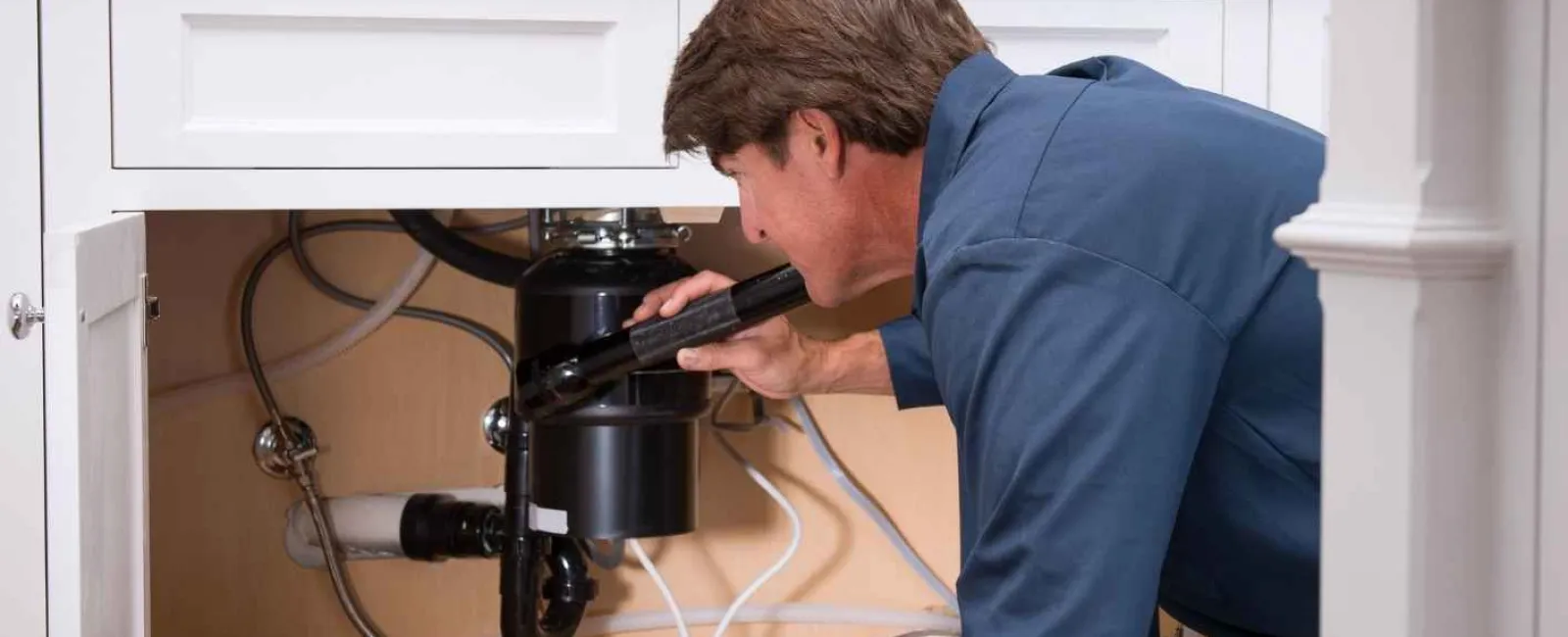
A licensed plumber starts by drying the unit and the surrounding connections completely. Then they run water through the sink and, if needed, the dishwasher, watching each connection for the first drop. That isolates the leak to a specific fitting, seal, or crack in the housing.
From there, you get a clear recommendation on whether the unit can be repaired or should be replaced. At Dalmatian Plumbing, our trucks are stocked with parts and replacement disposals, so we can often finish the work in a single visit. If a slow or backed-up sink is part of the problem, drain cleaning can be handled during the same trip. If a worn faucet or sprayer is adding to the mess, our faucet and fixture repair service covers that too.
Get a Leaking Garbage Disposal Fixed Fast
Dalmatian Plumbing's licensed, background-checked technicians handle garbage disposal repair, replacement, and installation. Same-day service is available for urgent problems. If your disposal is leaking from the bottom, call (404) 314-3993 or schedule service online, and we'll find the source and get your kitchen sink working again.