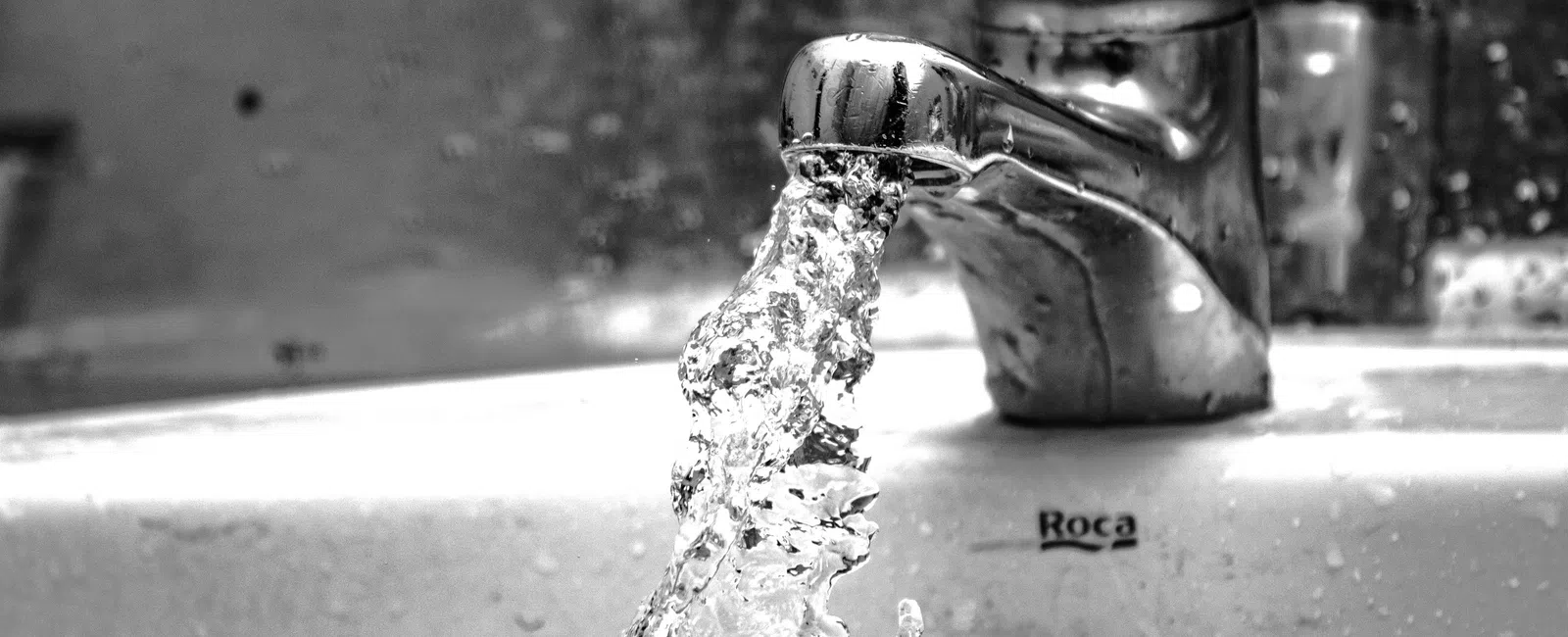
Air in water lines is the most common reason a faucet sputters, coughs or spits water in uneven bursts. Air usually gets into the pipes when the water supply is shut off and the lines partly drain, and it often clears once the water has run for a minute. When the sputtering keeps coming back, shows up only on the hot side, or arrives with low pressure or discolored water, it points to a problem with the water heater or the water line that needs a plumber's attention.
What Air in Your Water Lines Looks and Sounds Like
You turn on the kitchen tap and get a burst of water, a loud spit, another burst, and then a steady stream. That stop-and-start flow is the classic sign of an air pocket working its way out of the pipe. You might also hear a hiss or gurgle from the faucet before any water shows up, or notice the toilet tank making more noise than usual as it refills.
Air can also show up in the glass. Water that looks milky or cloudy and then clears from the bottom up is full of tiny air bubbles rising to the surface. It looks alarming, but it is the same trapped air, just in smaller pieces.
Not every sputter is air, though. A faucet aerator clogged with mineral buildup can make the stream spray sideways or pulse, and a worn cartridge can make flow uneven at a single fixture. A failing pressure regulator on the main line can make pressure surge and drop across the whole house. These problems can look a lot like air in the pipes, which is why the pattern matters as much as the symptom.
What Causes Air in Water Lines
A recent water shutoff is the cause behind most sputtering faucets. When the water utility works on the street main, or a main break forces a shutoff, the pipes in your home partly drain. Air fills that empty space, and when service comes back on, it gets pushed out through the first faucets you open. Say you come home to a notice on the door about water work on your street. The next morning, the bathroom sink coughs and spits for a few seconds before running normally. That is trapped air from the outage, and it typically works itself out after the faucets around the house have been used a few times.
Plumbing work inside your home can leave air behind for the same reason. Replacing a water heater, installing a new faucet, or repairing a pipe all mean shutting off the water and refilling the lines afterward. A plumber should purge the air before leaving, and a little sputtering right after the work is expected. Sputtering that is still happening days later is not.
If only the hot water sputters, look at the water heater. Gas can build up inside a tank, especially one that has sat unused for a while, and it comes out at the hot side of the faucet the next time someone runs it. Sediment collecting at the bottom of the tank can also cause bubbling and uneven hot water flow.
The version to take seriously is an overheating water heater. If hot water spits steam, hisses hard, or comes out noticeably hotter than usual, stop using the hot water and call a plumber. That points to a problem with the thermostat or the temperature and pressure relief valve, and it is a safety issue rather than a nuisance. Our water heater repair and installation team handles both tank and tankless units.
The main water line is the next place to look when sputtering keeps returning. Small leaks push water out of a pressurized pipe rather than pulling air in, so a drip under the sink will not make your faucets sputter.
A larger break on the main line is a different story. A damaged line loses pressure, often has to be shut off for repair, and can cause repeated pressure dips that leave air in the system. Main line trouble rarely shows up alone, either. Watch for low or inconsistent water pressure, wet or soggy spots in the yard, rusty or discolored water, and a water bill that jumps for no clear reason. If any of those come with the sputtering, the line deserves a closer look through water line repair or professional leak detection.
Homes on a private well have their own set of causes. A failing pump, a waterlogged pressure tank, or a low water level in the well can all draw air into the lines, and air that never seems to go away in a well-fed home usually traces back to that equipment.
What the Sputtering Pattern Tells You
Where the sputtering happens narrows down the cause faster than anything else. Before you call, take note of which faucets are affected and when it started:
- Every faucet sputters right after a water shutoff or plumbing job, which usually means trapped air that will clear with normal use.
- Only hot water sputters, which points to the water heater.
- A single faucet sputters while the rest of the house runs smoothly, which suggests a problem with that fixture's aerator or cartridge rather than air in the pipes.
- If the sputtering keeps returning with no shutoff and comes with low pressure or rusty water, it points to the main water line.
When a Sputtering Faucet Needs a Plumber
A burst of air after a shutoff is harmless. It is annoying, it might splash you, and it goes away. Air that keeps coming back is a different matter, mostly because of what is causing it. Repeated air pockets can make pipes rattle or bang as water forces its way through, and the sudden starts and stops put extra wear on faucets and valves. A water heater releasing steam or a main line that keeps losing pressure will also get worse with time, and the sputtering is often the first sign you notice.
After any shutoff, give the faucets a day of normal use. If the problem has not cleared up, or you notice any of the following, it is time to have it checked:
- Sputtering that lasts more than a day or returns without any water shutoff
- Hot water that sputters, hisses, or spits steam
- Lower water pressure or discolored water alongside the sputtering
- Wet spots in the yard or a sudden rise in your water bill
- One fixture that still sputters after every other faucet runs clean
How a Plumber Finds the Source
A good diagnosis starts with the pattern. A plumber will check whether the problem is on the hot side, the cold side, or both, and whether it affects one fixture or the whole house. From there, the water heater, the fixture, and the main water line can each be ruled in or out.
Single-faucet problems often come down to the aerator, cartridge, or valve, which our faucet and fixture repair service covers, including low-water-pressure diagnosis. Hot-side problems lead to an inspection of the water heater. When the evidence points underground, leak detection and camera inspections help find the damaged section of the main line without guessing. Either way, you should get a clear explanation of what is wrong and upfront pricing before any work begins.
Dalmatian Plumbing's licensed plumbers repair water heaters, faucets and fixtures, and main water lines, so the same team can track a sputtering faucet back to its source and fix it. Our phone lines are open around the clock, and we offer same-day appointments for urgent issues. Call (404) 314-3993 or schedule service online to have a plumber take a look.