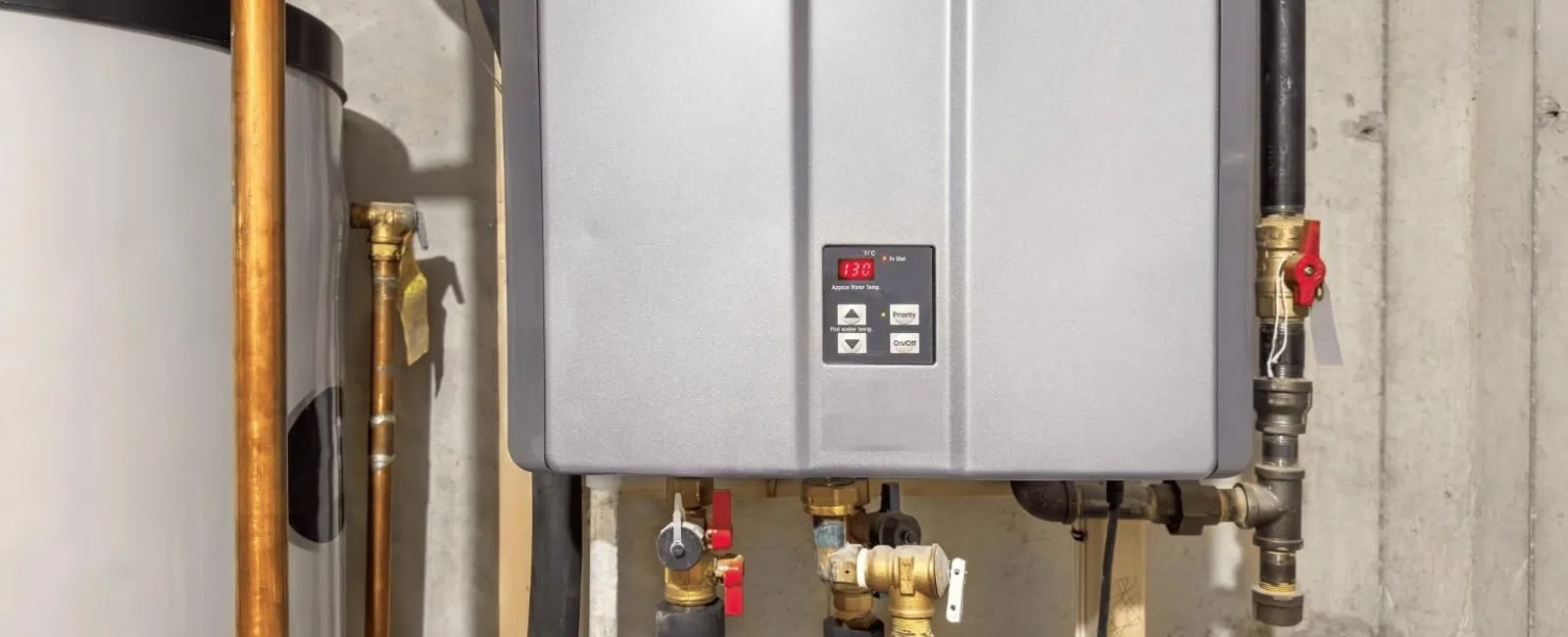
What a Tankless Water Heater Actually Is
A standard water heater keeps 40 or 50 gallons hot around the clock, waiting for you to need it. That means it burns energy even while you are at work or asleep. A tankless model takes the opposite approach. It is a compact, wall-mounted unit with no storage tank, and it remains idle until a hot-water tap opens somewhere in the house. Because they heat water on demand rather than store it, people also call these on-demand water heaters. The trade is simple in theory: no standby energy loss, and no hard limit on how long the hot water lasts.
How Does a Tankless Water Heater Work
A flow sensor inside the unit detects water passing through it and wakes the system. That signal fires up either a gas burner or a set of electric heating elements, depending on the model. The incoming cold water then passes over a heat exchanger, a coiled component that rapidly transfers heat from the burner or elements into the water as it flows through. By the time the water reaches your faucet, it has climbed to your set temperature.
When you shut the tap off, the flow stops, the sensor notices, and the unit powers down until the next request. There is no reheating a tank and no waiting for a fresh batch. The heater only runs while water is actually moving, which is where the efficiency comes from. The one number that governs everything is the flow rate, measured in gallons per minute, which determines how much hot water you can actually use at once.
How Does a Gas Tankless Water Heater Work
Gas is the more common choice for whole-home use, and for good reason. In a gas tankless water heater, everything centers on a powerful burner. Once the flow sensor triggers it, the burner heats the exchanger, and combustion gases vent out through a dedicated flue. Gas units generally deliver a higher flow rate than electric ones, so they can keep up with a shower and a dishwasher running at the same time. That power comes with a few requirements, including a properly sized gas line and correct venting, which is why installation is a job for a licensed plumber rather than a weekend project.
How Does a Tankless Electric Water Heater Work
Electric models replace the burner with heating elements, similar in principle to the elements that warm the water in a coffee maker. When you look into how a tankless electric water heater works, the flow sensor still leads the process, but instead of igniting gas, it energizes electric elements that heat the exchanger. There is no combustion or venting to worry about, which makes electric units smaller and simpler to install. The catch worth noting is electrical capacity. These units draw a serious amount of power, so a home often needs an upgraded electrical panel or dedicated circuits to run one safely.
Are Tankless Water Heaters Gas or Electric
Both! Neither option is automatically better, and the right pick depends on your house. Gas tankless heaters tend to suit larger households and homes that already run on natural gas, since they push more hot water at once. Electric tankless heaters shine in smaller homes, additions, or spots where running a gas line and vent is impractical. Both heat water on demand using the same basic flow-sensor-and-heat-exchanger design, so the everyday experience feels similar. The differences show up in flow capacity, the fuel bill, and what your home needs to support the unit. Weighing that alongside the long-term savings of a more efficient water heater is the smart way to decide.
Why Flow Rate and Sizing Matter
Endless hot water does not mean unlimited hot water. A tankless unit can run all day, but only up to its flow rate. If a model handles five gallons per minute and your shower, sink, and washing machine together demand more than that, the water reaching each fixture will not be as hot. Cold weather makes this tighter because incoming groundwater in the winter starts out colder, and the heater has to work harder to reach your target temperature. This is why sizing is the make-or-break part of any tankless install. A unit that is perfect for a couple can leave a big family lukewarm, so matching the heater to your household's real demand is where professional guidance pays off.
Keeping a Tankless Unit Running Its Best
Tankless heaters are built to last, but they are not maintenance-free, especially around Atlanta where hard water is common. Minerals build up on the heat exchanger over time and can reduce performance or trigger error codes. Routine descaling, sometimes called flushing the system, clears that buildup and keeps the unit heating efficiently. If you ever notice your unit struggling and want to understand why a tankless water heater isn't getting hot, mineral scale is a common culprit. Regular service from a plumber who knows these systems is the simplest way to protect the investment.
Thinking About a Tankless Upgrade? Talk to Dalmatian Plumbing
Choosing, sizing, and installing a tankless water heater is where experience earns its keep, and Dalmatian Plumbing has more than 25 years of it serving Atlanta-area homes. Our licensed, background-checked plumbers bring more than 75 years of combined technician experience, a 4.9-star rating across 600-plus Google reviews, parts stocked on every truck, and same-day service backed by a 100% satisfaction guarantee. Whether you are replacing an aging tank or curious whether tankless is right for your home, call us today or contact us online, and we will help you get it right the first time.