Blue or
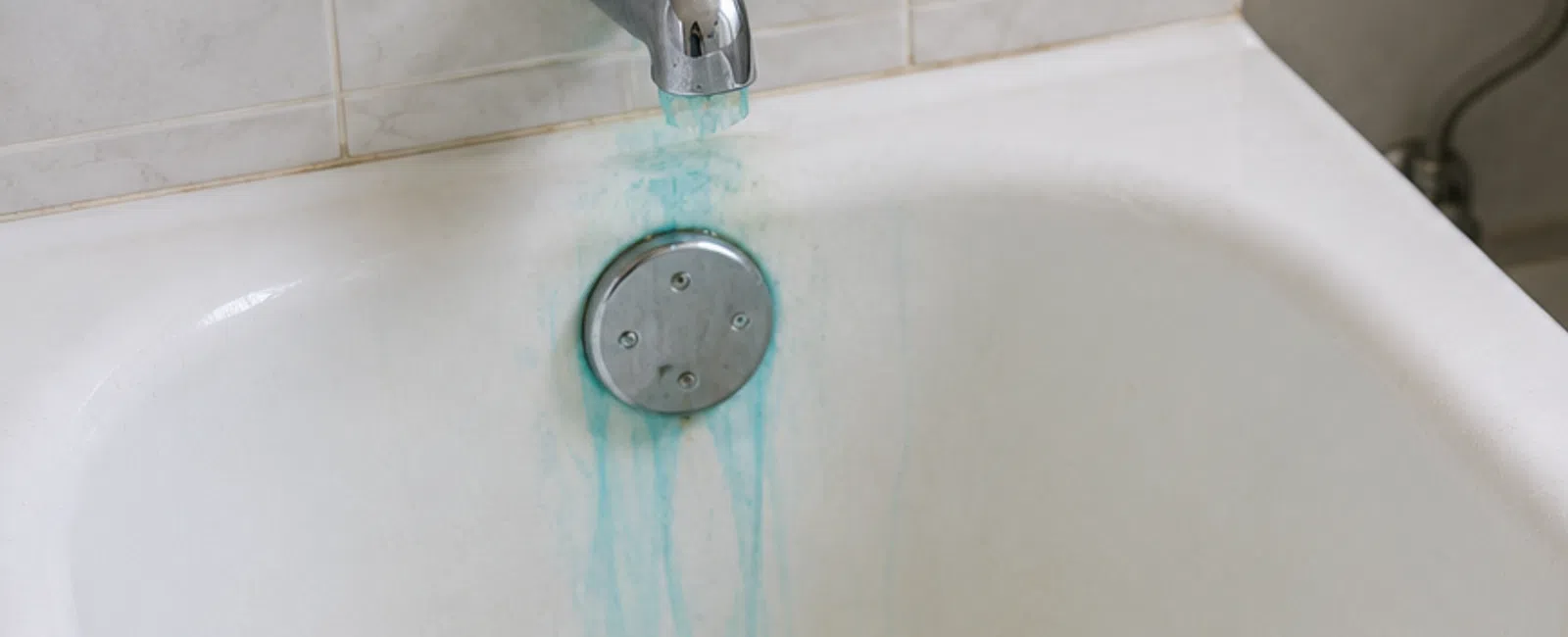
blue-green stains in a bathtub, sink, toilet, or around plumbing fixtures are
more than a cosmetic or cleaning issue. Although these stains can often be
removed with regular cleaning, their tendency to return usually indicates an
underlying issue with the home's plumbing or water chemistry.
In many cases, blue-green
staining is caused by copper that has dissolved into the water as it passes
through copper pipes or plumbing components. When that water reaches a fixture
and evaporates or sits on the surface, it can leave behind noticeable blue,
green, or turquoise deposits. Understanding why copper is entering the water is
the first step toward addressing the stains and preventing potential damage to
the plumbing system.
What the Blue-Green Color Actually Is
Copper produces a distinctive
blue-green compound when it corrodes. You have seen the same chemistry on the
Statue of Liberty and on old copper roofing, where it is called patina or
verdigris. Inside your plumbing it happens on a much smaller scale and in
solution rather than in open air, but the color is coming from the same place.
When water sits in or moves
through copper supply lines, a small amount of copper can dissolve into it.
That dissolved copper travels to your fixtures. Wherever the water evaporates
or lingers, at the lip of a faucet, in a slow drip path down the tub, at the
waterline of a toilet bowl, the copper is left behind and oxidizes into that
blue-green deposit.
Two things follow from that.
First, the staining is heaviest where water sits longest, which is why the tub
and the toilet usually show it before anything else. Second, the copper is
coming from your home, not from the utility. That distinction matters for what
you do next.
The Most Common Cause: Acidic Water Eating
at Copper Pipe
The dominant cause of blue
staining is water with a low pH. Water below 7.0 on the pH scale is acidic, and
the EPA recommends drinking water be held between 6.5 and 8.5. Acidic water is
described as aggressive or corrosive because it slowly strips material from the
inside surface of metal pipe. With copper supply lines, what it strips is
copper.
The lower the pH, the faster it
happens. Water in the low 6 range works at copper noticeably. Water in the 5
range works at it quickly, and homes on that kind of supply tend to see
staining develop within months of a repipe rather than over years.
Low pH does not always work
alone. Water that is very soft, meaning low in dissolved minerals, is more
aggressive toward metal than mineral rich water, because those minerals form a
thin protective scale layer on the pipe wall. Water high in dissolved carbon
dioxide is more acidic. Water that sits stagnant in a line overnight or during
a vacation picks up more copper than water that moves regularly, which is why
the first draw of the morning is often the worst.
Electrolysis and Mixed Metals
The second cause has nothing to
do with water chemistry and everything to do with how the plumbing was
assembled. When two dissimilar metals are joined directly, copper to galvanized
steel being the classic pairing, the contact point becomes a small electrochemical
cell. One metal gives up material to the other. This is galvanic corrosion, and
plumbers commonly refer to the effect as electrolysis.
The fitting that prevents it is
called a dielectric union, and it separates the two metals so the reaction
cannot occur. In older homes, and in homes where a repair was made quickly or
by someone unfamiliar with the requirement, that fitting is often missing. The
result is accelerated corrosion at every junction where the two metals meet.
A related version involves
electrical grounding. In many homes the electrical system is bonded to the
metal water piping. When that bond is done improperly, or when a stray current
finds its way onto the plumbing, the current accelerates corrosion along the
pipe. Staining from this cause tends to show up in a localized pattern rather
than uniformly across the house, which is a useful diagnostic clue.
Why the Stain Keeps Coming Back After You
Clean It
Blue-green copper deposits can
be removed from porcelain and most fixture surfaces. That part is true, and a
search for how to get rid of blue stains in a bathtub will turn up plenty of
methods. What none of them do is address why the copper is arriving.
If you clean the stain and the
underlying condition is untouched, the deposit rebuilds on the same schedule it
built on the first time. Homeowners often end up on a cleaning treadmill for a
year or more before anyone tells them the stain is a symptom rather than the
problem.
There is a more practical reason
not to treat this as a cleaning task. The visible stain is the only free
warning you get. Every bit of copper showing up in your tub came out of a pipe
wall, and pipe walls only get thinner. Scrubbing the evidence away does not
slow that down, it just removes your ability to notice it getting worse.
Why Is My Toilet Turning Blue?
There are two completely
unrelated explanations as to why a toilet may turn blue, and people frequently
land on the wrong one.
The first is the simple one.
In-tank cleaning tablets, the kind that turn the water a bright blue as they
dissolve, will tint the entire bowl and can leave blue residue on the porcelain
over time. If your water is uniformly blue and there is a tablet in the tank,
that is your answer. Worth knowing separately: those tablets sit against the
rubber flapper and tank components continuously, and the chemicals in them
shorten the life of those parts considerably, which is why plumbers generally
advise against them.
The second is copper, and it
looks different. Copper staining in a toilet shows up as a ring or a band at
the waterline, or as blue-green streaks running down the back of the bowl below
the rim jets. The water itself is clear. The stain is a deposit on the
porcelain rather than a tint in the water, and it returns after cleaning, which is why a toilet repair & installation professional may be needed.
Blue Stains on Well Water
Private wells are where blue
staining shows up most aggressively, and homeowners in the outer counties
around metro Atlanta, places like Cherokee, Forsyth, Paulding, and the rural
edges of Cobb and Gwinnett, run into it regularly.
The reason is that well water is
untreated by default. A municipal utility is required under federal rules to
manage the corrosivity of the water it delivers, which usually means adjusting
pH and adding corrosion inhibitors before it reaches your house. A private well
has none of that unless the homeowner installed it. Groundwater across much of
north Georgia moves through granite and gneiss bedrock, which contributes very
little of the dissolved mineral content that would buffer the water and raise
its pH. Soft, slightly acidic groundwater going straight into copper supply
lines is exactly the combination that produces blue staining.
Well owners also sometimes
report blue or blue-green sediment, small particles rather than a stain. That
is usually copper corrosion product that has flaked loose from a pipe wall
rather than staying dissolved, and it points to corrosion that is further along.
On a private well the fix is a
treatment system sized to the actual water, and that starts with a lab test
rather than a guess. A neutralizing filter that raises pH is the common
solution for acidic well water. It is worth noting that a conventional softener addresses hardness rather than pH and can make water slightly more aggressive,
so it is not a substitute here, though a water softener still has a real role in homes dealing with scale and
mineral buildup alongside the pH issue.
Blue-Green Limescale and Buildup on Shower
Heads
The crusty blue-green material
that collects around shower heads and aerators is often called blue-green
limescale, though the name is a little misleading. Limescale itself is calcium
and magnesium, and it is white or off-white. When it comes out blue-green,
copper has been deposited into the scale as it formed.
That combination tells you two
things at once. You have mineral content in the water, and you have copper
coming out of solution. It is common in homes where a water heater or a section
of the supply is corroding and the resulting copper is being trapped in the
scale that forms at the outlet.
Shower heads and aerators are
the easiest place to spot this early, because they are the smallest openings in
the system and they collect first. If restricted flow has come along with the
discoloration, the buildup has progressed enough to affect the fixture, and fixture and
faucet repair may be needed alongside whatever is done about the water.
Why This Matters More Than a Stain
It is easy to file blue staining
under cosmetic annoyance. It is worth understanding what it is actually
reporting.
Corrosion thins pipe from the
inside. Copper supply lines that are being steadily eroded eventually develop
pinhole leaks, small perforations that often start behind a wall or above a
ceiling and go unnoticed until there is damage to drywall, insulation, or
flooring. Homes with visible blue staining are, by definition, homes where that
process is already underway somewhere in the system.
Pinhole leaks are also difficult
to locate by eye, because the water travels along framing and shows up
somewhere other than the source. This is where professional leak
detection earns its keep, since finding the failure point without opening
walls is the difference between a targeted repair and a demolition project.
There is a water quality
dimension as well. Copper is a required nutrient in small amounts, but at
elevated levels in drinking water it can cause gastrointestinal upset, and the
EPA sets an action level of 1.3 milligrams per liter for public systems. If you
are seeing enough copper to stain porcelain, having the water tested is a
reasonable step rather than an alarmist one. Running the tap for a short time
before drinking or cooking reduces exposure from water that has been sitting in
the lines, though that is a stopgap and not a solution.
Blue staining also rarely
travels alone. If you are seeing it alongside other water quality changes, such
as discolored
or brown water at the tap, the combination usually points to a broader
corrosion issue across the supply system rather than a single failing section.
What a Plumber Actually Checks
Sorting out blue staining is a
diagnostic process, and it works from the water backward into the plumbing.
- A water test establishing pH, hardness, total dissolved solids, and copper concentration, drawn both first thing in the morning and after the line has been flushed, since the difference between those two readings says a great deal
- An inspection of accessible supply piping to identify materials, age, and any point where dissimilar metals meet without a dielectric union
- A check of the electrical bonding at the water service, looking for improper grounding or stray current on the pipe
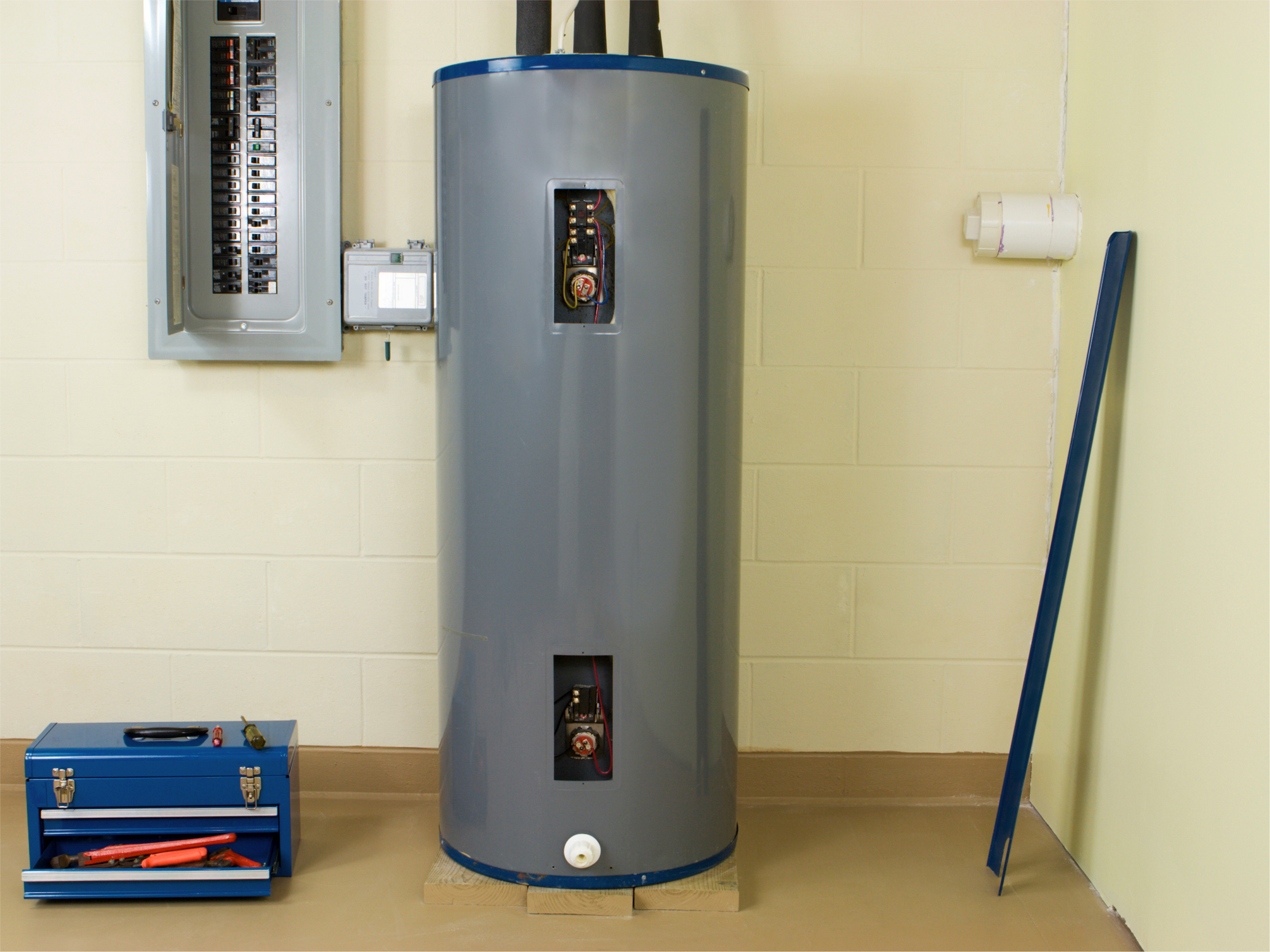
- An assessment of the water heater, which is frequently a corrosion hot spot and where a depleted anode rod can accelerate the whole process
- A survey for existing leaks, since visible staining and an undetected pinhole leak often show up in the same house
From there the path depends on
what the testing shows. It may be a treatment system to correct the water
chemistry, a repair to a specific junction or grounding fault, or, where
corrosion is advanced across the system, a conversation about repiping. What it
should not be is a guess, because each of those is a meaningfully different
scope of work.
Stop Cleaning It and Find Out What It Is
If blue-green staining keeps
returning to the same spots in your tub, sink, or toilet, your plumbing is
giving you an early and unusually clear warning. Catching it while it is still
a stain is a considerably better position than catching it when a pinhole leak
opens up behind a wall.
Dalmatian Plumbing has served
Atlanta area homeowners for more than 25 years, backed by a technician team
with over 75 years of combined experience. Every technician is licensed and
background checked, we stock parts on every truck so most work gets handled on
the first visit, and same day service is available. Our work carries a 100
percent satisfaction guarantee, and we have earned a 4.9 star rating across
more than 600 Google reviews from neighbors throughout the metro area.
Call Dalmatian Plumbing at
404-314-3993 to have those stains diagnosed properly.