The reset
button on a water heater is an important safety feature designed to shut the
system down when it detects excessively high temperatures. While pressing the
button may restore hot water temporarily, a reset button that trips repeatedly
is typically a sign of an underlying problem that needs to be addressed.
Unlike a standard power or
restart button, the reset button is part of the water heater's high-temperature
safety system. When it trips, it is responding to conditions that could cause
the water heater to overheat or operate improperly. Understanding why this
happens can help homeowners determine whether the issue is a simple component
failure or a sign that the water heater needs professional repair.
What the Reset Button on a Water Heater Is
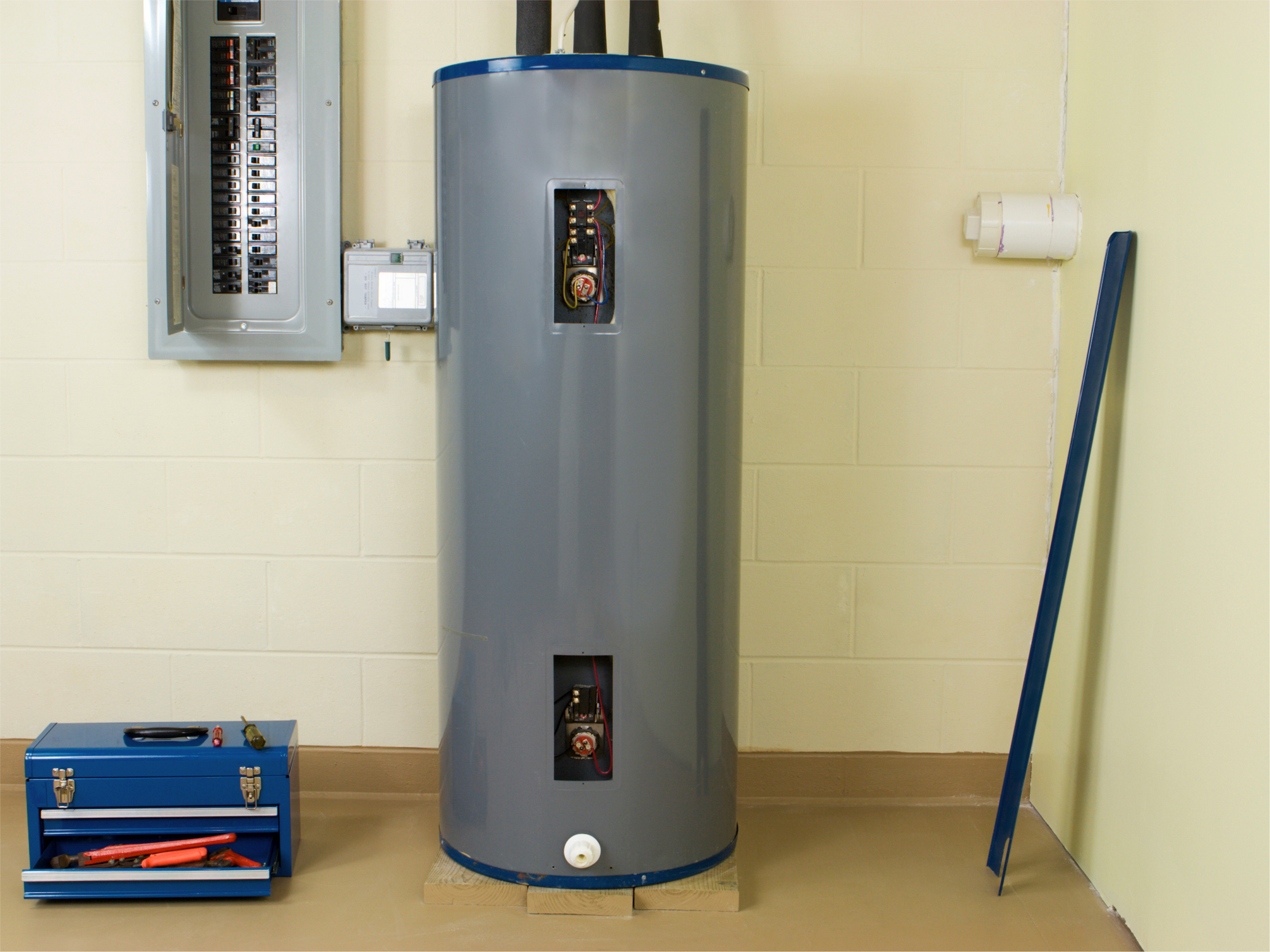
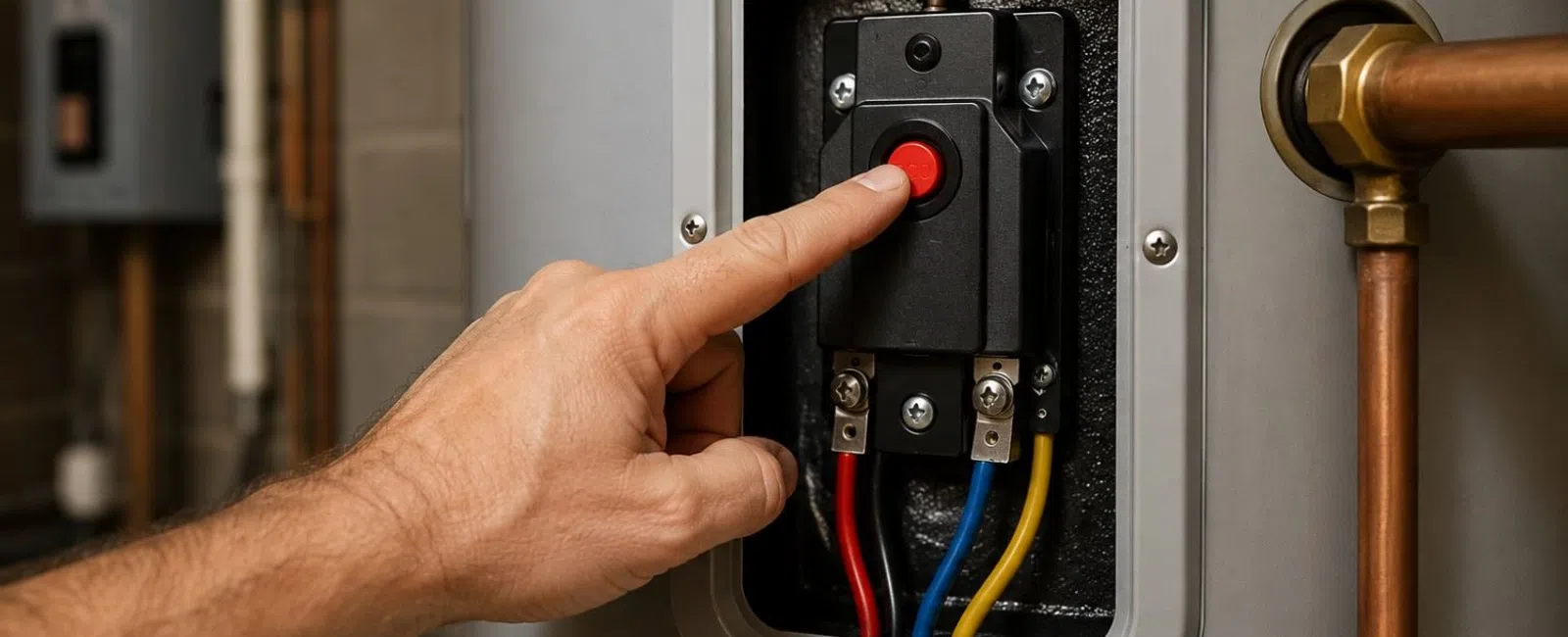
On an electric water heater,
that red button is part of a component called the ECO, short for energy cut-off. You will also see it referred to as the high limit switch, the thermal
switch, or simply the water heater safety switch. It sits behind the upper
access panel on the side of the tank, mounted directly above the upper
thermostat.
The ECO has one job. It monitors
the temperature of the water inside the tank, and if that temperature climbs
past its factory setting, usually somewhere around 180 degrees Fahrenheit, it
cuts all electrical power to both heating elements at once. That event is what
the industry calls a high-temperature shutdown. The water in your tank stops
being heated, and the water at your taps goes cold.
Pressing the button back in does
not repair anything. It re-arms the safety device and allows power to flow to
the elements again. The underlying fault that pushed the water past 180 degrees
in the first place is still sitting there, waiting to do it again.
One important note about
location: on an electric unit, that access panel is covering 240-volt wiring
and live terminals. This is not a homeowner panel in the way a breaker box is.
If you are not certain what is behind it, leave it closed and have a licensed
plumber open it.
What It Means When the Reset Button Trips
Your water heater has layered
safety systems. The thermostat is the first line, and it is supposed to shut
the elements off when the water reaches your set temperature, typically 120
degrees. The ECO is the second line, and it only acts when the first line has
already failed. The temperature and pressure relief valve on the side of the
tank is the third line, and it is the one that opens when things have gone
badly wrong.
So, a tripped reset button means
your thermostat stopped doing its job, or something else allowed the elements
to keep heating when they should have shut off. Water heated past 180 degrees
is a serious scald hazard, and because pressure inside a sealed tank rises
along with temperature, it is a pressure concern as well. The ECO tripping is
the system working correctly. The fact that it had to work is what concerns us.
Why Your Water Heater Reset Button Keeps
Tripping
Several distinct faults produce
the same symptom. A plumber sorting this out is working through them in order,
and only testing tells you which one you have.
A
Thermostat That No Longer Shuts Off
This is the most common cause.
Water heater thermostats are mechanical devices that eventually stick or lose
calibration. When one fails in the closed position, it keeps sending power to
its heating element long after the water has reached temperature. The water
climbs steadily past 120, past 140, past 180, and the ECO cuts in. Homeowners
searching for a water heater thermostat reset button are usually dealing with
exactly this scenario, and the fix is a thermostat replacement, not a reset.
A Shorted
or Failing Heating Element
Heating elements degrade over
years of service, and when the sheathing breaks down an element can develop an
internal short to ground. A shorted element keeps drawing current and producing
heat even when the thermostat has opened and told it to stop. Because nothing
upstream can shut it off, the tank overheats and the safety switch is the only
thing left to stop it. This failure often shows up alongside a breaker that
trips too, which is why some homeowners chase both symptoms at once.
Loose or
Corroded Wiring Connections
Every terminal inside the access
panel carries substantial current. When a connection works loose or corrodes,
resistance at that point increases, and increased resistance generates heat
right at the terminal. That localized heat can be enough to trip a thermal
switch mounted inches away, even when the water temperature itself is fine.
Loose connections are also a genuine fire risk, which is one more reason
repeated resets are the wrong response.
A Worn-Out
High Limit Switch
Sometimes the ECO itself is the
problem. These switches are not designed for repeated cycling, and after enough
trips the internal contacts weaken. A worn switch starts tripping at
temperatures well below its rating, which means your water heater shuts down
for no real reason. The more concerning version of the same wear is a switch
that eventually fails to trip when it genuinely needs to.
Sediment
Built Up in the Bottom of the Tank
Minerals that settle out of the
water collect on the tank floor and form an insulating crust over the lower
element. That crust traps heat against the element rather than letting it
transfer into the water, so the element runs hotter than it should and localized
temperatures spike. Sediment also shortens element life considerably. Staying
current on regular
water heater flushing is the single best thing a homeowner can do to keep
this from developing.
A Tank
That Is Leaking Onto the Wiring
When a tank begins to fail
internally, water can seep into the insulation and reach the element gaskets
and terminal connections. Moisture at a live 240-volt terminal creates a ground
fault, and a ground fault will trip the safety switch, the breaker, or both. If
the reset button issue arrived alongside dampness at the base of the unit, the
conversation is usually about replacement rather than repair. Learn more about water heater leaking and what to do if you notice symptoms.
What About Gas Water Heaters?
A lot of people search for the
gas water heater reset button, and it is worth clearing up what they are
actually looking at, because a standard gas unit does not have an ECO reset
button in the way an electric one does.
On an older standing pilot
model, the component doing similar work is the thermocouple, a small sensor
sitting in the pilot flame. If the pilot goes out, the thermocouple cools, and
the gas valve shuts off the fuel supply. There is no button to press. On a
newer model with an electronic gas control valve, there is usually a status
light and a control knob, and the unit can enter what is called an ignition
lockout after a set number of failed ignition attempts.
Many gas water heaters
manufactured in the last two decades also carry a thermal switch near the
burner assembly. This is part of the flammable vapor ignition-resistant design,
and it shuts the unit down when the air intake at the base of the heater becomes
restricted, most often by lint, dust, or stored items crowded up against the
unit. That is a real safety shutdown with a real cause behind it.
The common thread across both
fuel types is the same. Repeatedly relighting a pilot or clearing a lockout
without finding out why the unit shut down means overriding a device that is
trying to tell you something.
Why Pressing the Button Again and Again Is
the Wrong Move
If the reset button holds after
a single press and you never think about it again, a one-time event probably
happened, such as a brief power irregularity. That is worth noting but not
worth worrying about.
The situation to take seriously
is the repeat. If you are pressing that button weekly, daily, or more than once
in a single evening, the fault is active, and it is not going to resolve on its
own. Every reset asks a safety component to absorb a problem it was never
designed to absorb on a schedule, and the contacts inside it weaken a little
more each time. Eventually you are relying on a fatigued safety switch to
protect a tank that is genuinely overheating, and behind that switch there is
only the temperature and pressure relief valve standing between an overheated
tank and a very bad afternoon.
There is also a simpler
practical point. Every one of the causes above gets more expensive to deal with
the longer it runs. A failing thermostat caught early is a component
replacement. That same failing thermostat left alone for two months of
overheating cycles can take out an element and stress the tank on the way.
Signs It Is Time to Stop Resetting and Call
a Plumber
Reach out to a licensed plumber
if you notice any of the following:
- The reset button trips more than once, or will not stay pressed in at all
- Water at the taps comes out scalding, or the temperature swings unpredictably
- The breaker serving the water heater trips along with the reset button
- You hear popping, rumbling, or crackling from inside the tank
- There is moisture, rust, or standing water anywhere around the base of the unit
- You smell anything burning, or see scorching or discoloration near the access panel
- The relief valve on the side of the tank is discharging water
- You smell gas anywhere near a gas-fired unit, which calls for leaving the house and calling your gas utility first
A tripped reset button is also
worth investigating when it shows up alongside other hot water complaints. If
part of the house has hot water and part does not, or the
shower runs cold while the sinks run hot, the pattern of symptoms helps
narrow down whether the heater or the distribution side of the system is at
fault.
Why Atlanta Water Heaters End Up in This
Position
A few things about how homes
around metro Atlanta are built make this a call we take regularly.
Water heaters here are
frequently installed in unconditioned space, in an attached garage, a
crawlspace, or an attic, rather than in a conditioned utility closet. Those
spaces swing hard between a humid August and a cold January snap, and that
temperature cycling is harder on thermostats, wiring terminals, and element
gaskets than a climate-controlled closet would be. Garage and crawlspace
installs also mean corrosion at terminal connections tends to progress faster.
There is also a timing factor. A
large share of the housing stock across Cobb, Gwinnett, Fulton, and the
surrounding counties went up during the growth waves of the late 1990s and
2000s. Those homes are now on their second or third water heater, and a tank past the ten- to twelve-year mark is operating on borrowed time regardless of how well it has been maintained. In-town neighborhoods have the opposite version
of the same problem, where an older home may be running a modern appliance load
on electrical service that was never planned for it.
That electrical side matters
more than most homeowners expect. A water heater on an undersized or aging
circuit runs closer to its limits all the time, and small problems escalate
faster. If you are planning a replacement or an upgrade, understanding what
size breaker a water heater needs is worth sorting out before the new unit
goes in. Homeowners weighing a change in direction entirely sometimes look at how
a tankless system heats water on demand, which removes the stored tank from
the equation but comes with its own electrical or gas supply requirements.
What a Licensed Plumber Actually Checks
Diagnosing a tripping reset
button is a testing process, not a guessing process. A technician shuts off
power at the breaker, confirms the circuit is dead, and then works through the
components in sequence: continuity and resistance readings at both heating
elements to find a short or an open, calibration and switching behavior at both
thermostats, a physical inspection of every terminal for looseness, corrosion,
or heat discoloration, a check of the ECO itself against its rated trip point,
and an assessment of the tank interior and sediment load.
That sequence identifies which
fault you actually have rather than replacing parts and hoping. It also happens
around live 240-volt service inside a panel that is not designed for casual
access, which is the practical reason this belongs with someone licensed and
insured rather than on a weekend project list.
Get Your Hot Water Back, and Keep It
If the reset button on your
water heater has tripped more than once, the tank is telling you something
specific, and it is worth listening to. Dalmatian Plumbing has been serving
Atlanta-area homeowners for over 25 years, with a technician team carrying more
than 75 years of combined experience. Our water heater repair and
installation services cover diagnosis, component replacement, and full
system replacement, and every technician is licensed and background-checked.
Stop pressing the button and let us find out why it keeps tripping. Call Dalmatian Plumbing at 404-314-3993 to schedule your water heater service.